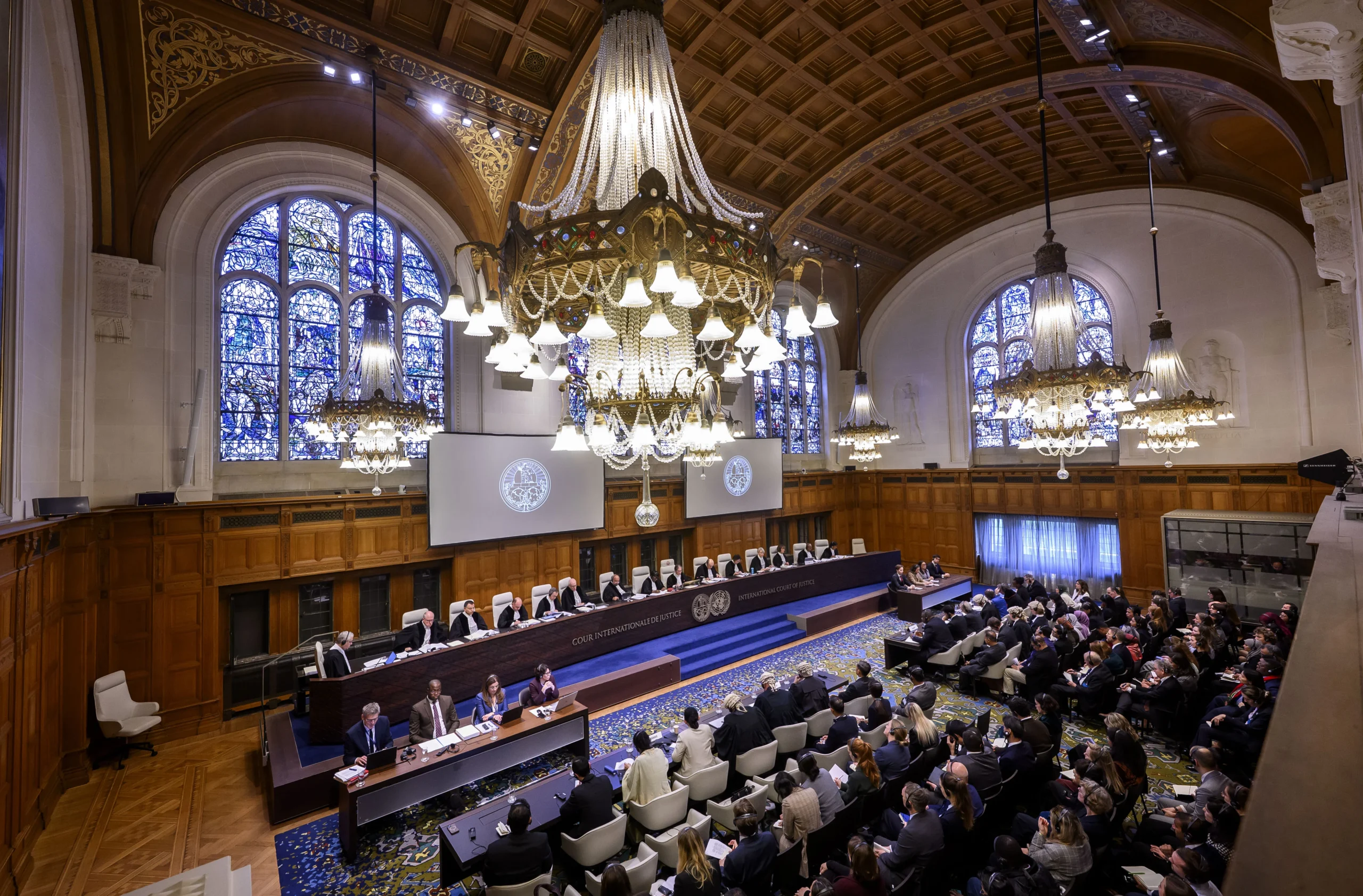


Metro Manila, Philippines – The principal judicial organ of the United Nations ruled Thursday, Nov. 19, that Myanmar committed genocide against the Rohingya Muslim minority during its 2017 military operations, ordering the Southeast Asian country to compensate victims and investigate suspects in the atrocities.
In a landmark judgment, the International Court of Justice (ICJ), voting 9-6, said Myanmar violated obligations under the Convention on the Prevention and Punishment of the Crime of Genocide through its treatment of the Rohingya population in northern Rakhine State.
The ruling marks a major development in the years-long legal battle over Myanmar’s 2017 military crackdown, which forced hundreds of thousands of Rohingya to flee to neighboring Bangladesh.
The court also ruled, by a vote of 9-6, that Myanmar failed to prevent genocide committed by persons acting alongside security forces.
The judgment followed a case brought by The Gambia in November 2019, accusing Myanmar of violating the 1948 Genocide Convention through military operations targeting the Rohingya.
Myanmar had challenged the allegations and the court jurisdiction, but the ICJ rejected its preliminary objections in 2022, allowing the case to proceed.
Compensating Rohingya victims
Beyond establishing Myanmar’s responsibility for genocide, the court ordered the country to provide reparations to the Rohingya population.
By a vote of 10-5, the judges ruled that Myanmar must compensate the Rohingya group and its members for damage caused by violations of the Genocide Convention, to the extent that the damage cannot be remedied through restitution.
The court also ordered Myanmar to adopt measures of restitution and provide assurances that similar violations would not occur again.
However, the judges did not immediately determine the amount of compensation.
Instead, the court ordered Myanmar to submit a report within two years to help establish the amount and arrangements for compensation and other reparations.
The ICJ reserved further proceedings to settle those questions.
Investigation and prosecution
The court also directed Myanmar to take immediate and effective steps to investigate individuals reasonably suspected of participating in acts prohibited under the Genocide Convention during the 2017 military operations.
By a vote of 13-2, the judges ruled that Myanmar must prosecute and punish those responsible when warranted by the evidence.
The order placed responsibility on Myanmar to pursue accountability for individuals suspected of participating in the atrocities.
It also ruled that Myanmar failed to enact the necessary domestic legislation to give effect to its obligations under the treaty.
The judges ordered Myanmar to address that failure by adopting legislation that fully implements the convention.
Persecution, displacement
The case stems from Myanmar’s military operations in Rakhine State in 2017, which followed attacks on security posts by Rohingya militants.
The military’s subsequent operations involved widespread allegations of killings, sexual violence, village destruction and forced displacement.
Hundreds of thousands of Rohingya fled across the border into Bangladesh, creating one of the world’s largest refugee crises.
The ICJ examined evidence concerning attacks on Rohingya communities, including killings, sexual violence,
Implications for ASEAN
The ruling carries significance for the Association of Southeast Asian Nations (ASEAN), of which Myanmar is a member.
The regional bloc has struggled to address Myanmar’s political and humanitarian crisis since the military seized power in February 2021.
The Philippines, which chaired ASEAN this year, placed Myanmar among the regional challenges during the 49th ASEAN Summit.
ASEAN has continued to pursue its Five-Point Consensus, which called for an end to violence, dialogue among the parties, humanitarian assistance, and a political solution to the crisis.
Unlike the International Criminal Court, which prosecutes persons for international crimes, the ICJ resolves disputes between states and determines their responsibilities under international law.
Thursday’s judgment establishes Myanmar’s responsibility under the Genocide Convention but does not itself convict military commanders or government officials of criminal offenses.
The decision was delivered at the Peace Palace in The Hague by the court presided over by Judge Yuji Iwasawa.