

Metro Manila, Philippines – An international alliance of lawmakers has launched a campaign to promote peace and stability in the South China Sea and Taiwan Strait, warning that developments in the two strategic waterways have implications on global security, international law, and economic stability.
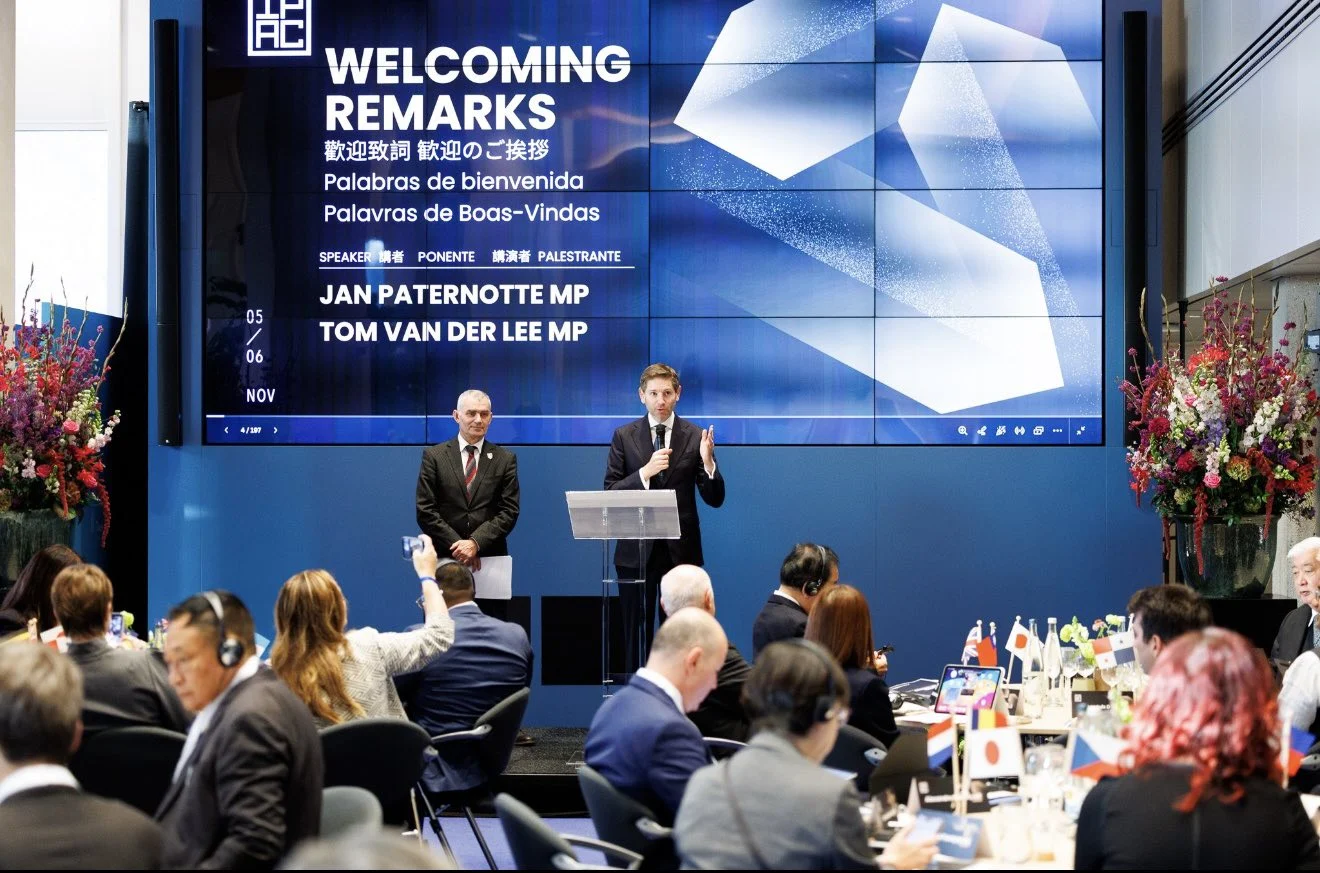
According to a statement from the Inter-Parliamentary Alliance on China (IPAC), a cross-party network of 325 lawmakers across 45 parliaments, the initiative was announced during its sixth annual summit in The Hague, Netherlands.
The campaign is one of two strategic priorities adopted by the alliance, alongside efforts to strengthen international resilience against China’s economic leverage.
IPAC said the initiative will emphasize the global importance of maintaining stability in the South China Sea and Taiwan Strait, particularly in protecting the rules-based international order and safeguarding economic interests.
The announcement comes amid maritime tensions between the Philippines and China, in particular overlapping territorial and maritime claims that have fueled confrontations involving vessels from both sides.
Manila has repeatedly challenged Beijing’s expansive maritime claims, citing the 2016 arbitral ruling that invalidated the basis of China’s claims to historic rights within its nine-dash line under the United Nations Convention on the Law of the Sea.
China has rejected the ruling and continues to assert sovereignty over much of the disputed waterway.
The Taiwan Strait, meanwhile, remains another major source of regional security concerns amid tensions between Beijing and Taipei.
China considers Taiwan part of its territory and has not ruled out the use of force to achieve unification. Taiwan’s government rejects Beijing’s sovereignty claims.
The two waterways are strategically significant to international trade and maritime transportation, making stability in the region a concern beyond the countries directly involved in the disputes.
IPAC said its members would work together to advance the campaign through international parliamentary cooperation.
The campaign also comes as the Association of Southeast Asian Nations (ASEAN) and China continue negotiations on a long-awaited South China Sea Code of Conduct (COC).
During the 49th ASEAN Summit in Manila on Nov. 15-17, President Ferdinand Marcos Jr. acknowledged that the regional bloc and China had failed to finalize the agreement under the Philippines’ 2026 chairship.
“We had, of course, hoped that during the Chairship of the Philippines that we would be able to announce that the COC was finished. However, that’s not the case,” Marcos said at a news conference on Nov. 17.
The president said an estimated 85 percent to 90 percent of the negotiations had been completed, with remaining issues involving definitions and provisions that still require clarification.
Beyond maritime security, the alliance adopted a second strategic priority aimed at reducing vulnerability to Chinese economic pressure.
IPAC said it would promote a “whole of society” approach to economic resilience, including raising public awareness, pursuing parliamentary motions and engaging government officials on economic security.
The alliance also called for stronger action against alleged Chinese foreign interference and transnational repression following the presentation of a report by the human rights organization Safeguard Defenders.