

Metro Manila, Philippines – President Bongbong Marcos on Friday described Chinese Ambassador Jing Quan’s remarks about Beijing’s ability to defeat the Philippines by force as a threat, and said the statement warranted a discussion with the envoy.
Speaking to reporters after the Philippine Coast Guard’s 125th founding anniversary in Manila on Friday, Oct. 16, Marcos criticized the ambassador’s remarks as undiplomatic.
“Well, it sounds very much to me like a threat, and it is not a very diplomatic statement to be made,” Marcos said.
“So, we perhaps would like to understand what exactly it is that he means,” he added.
Asked whether he would summon the Chinese ambassador, Marcos stopped short of confirming a formal summons but indicated that he wanted to discuss the remarks personally.
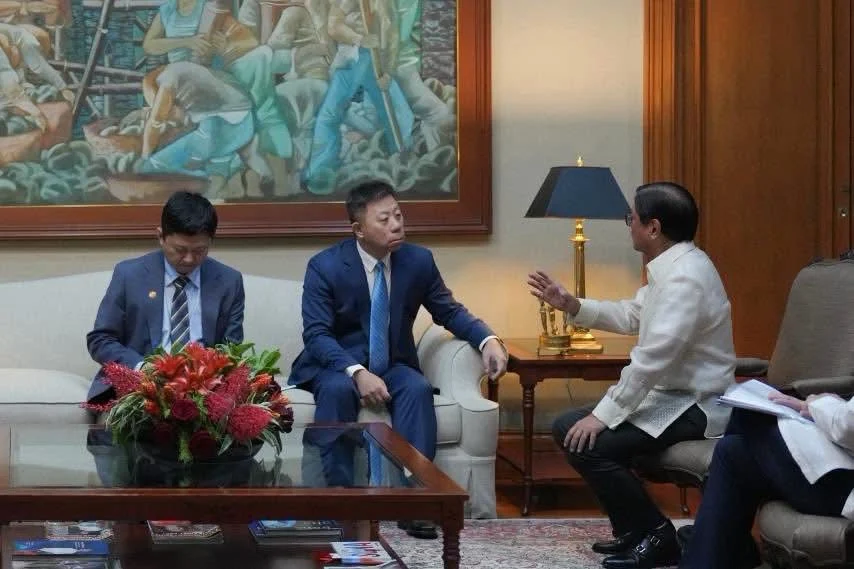
“I think that deserves a discussion between the Ambassador and myself,” the president said.
The controversy erupted after Jing said China could easily prevail if it chose to use force, while insisting that Beijing preferred peace.
“If we want to use force, we may easily win. But no, we will not choose force, and we love peace,” Jing said during a media interview on the sidelines of the second Diliman Dialogue.
The ambassador made the remarks after he was asked to respond to Defense Secretary Gibo Teodoro Jr.’s characterization of China as the region’s “troublemaker.”
Jing rejected the description, accusing Philippine officials of targeting Chinese teachers and workers and repeatedly criticizing Beijing.
“We should feel fortunate enough that you have a neighbour like China in this region,” the ambassador said.
The Department of Foreign Affairs criticized Jing’s remarks Thursday, describing them as a “poor choice of words” that appeared to convey a threat of military force.
“It is regrettable that Chinese Ambassador Jing Quan today had a poor choice of words that would seem to convey a thinly veiled threat of the use of force,” the DFA said in a statement.
The department said diplomacy required tact and restraint, particularly amid complicated relations between Manila and Beijing.
The Chinese embassy pushed back against the DFA’s statement, accusing the department of selectively quoting and overinterpreting the ambassador’s remarks.
“It is regrettable that the Department of Foreign Affairs has issued such a statement. This kind of selective quotation and overinterpretation demonstrates that there is still a long way to go in fostering effective communication and dialogue between China and the Philippines,” the embassy said.
The embassy warned that bilateral relations were at an “extremely sensitive stage” and called on the DFA to prevent actions that could push ties into a “dangerous and uncertain situation.”