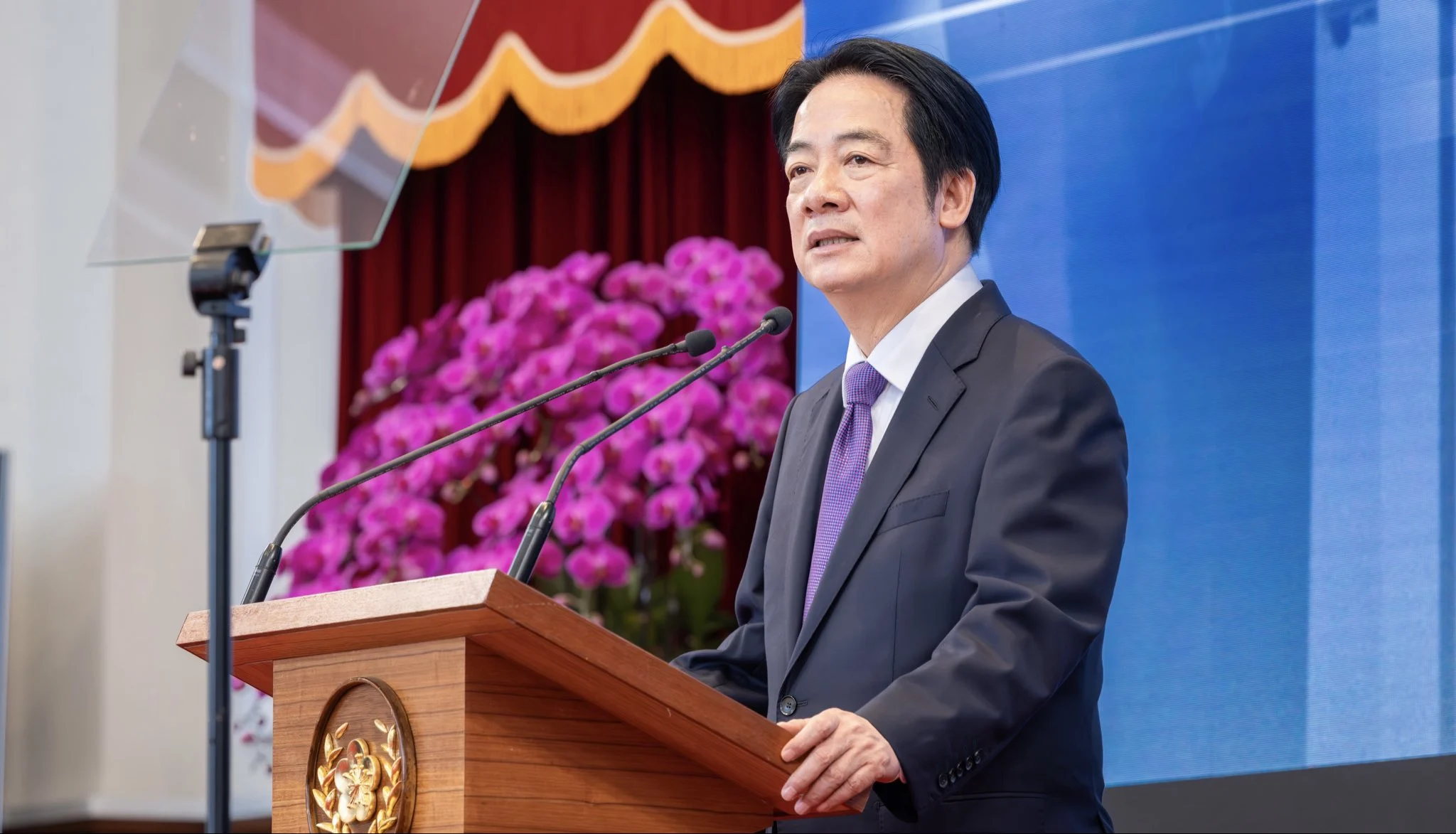


Taipei, Taiwan – Taiwan is set to spend a record NT$1.1225 trillion on defense in 2027, stepping up its military buildup as it prepares for growing security threats from China and sustained pressure around the self-governing island.
The proposed spending will exceed 3 percent of Taiwan’s gross domestic product, according to President Lai Ching-te, who described the military budget spike as an “investment in peace.”
“Investing in defense is investing in peace; we will continue to build a more solid defence force to maintain peace and stability in the Taiwan Strait and the region,” Lai said on Monday, Aug. 17.
The record spending comes as China continues to deploy military aircraft and naval vessels around Taiwan. Beijing considers the island part of its territory and has not ruled out the use of force to achieve reunification.
Taiwan has responded by accelerating military modernization and strengthening its ability to withstand a potential blockade or other forms of military pressure.
The island recently concluded its annual Han Kuang military exercises alongside civil defense drills designed to test its readiness for scenarios including disrupted communications and attacks on critical infrastructure.
Need for international support
Luo Wen-jia, vice chairman of the Straits Exchange Foundation, said Taiwan has also increased investments in capabilities such as drones and unmanned vessels.
“In the past few years, we have seen that the Taiwanese government is making every investment, be it the resources or the budgets. We have tried to strengthen our military force,” Luo said.
“We have made a lot of military procurement when it comes to drones or unmanned vessels,” he added.
Luo said, however, that Taiwan cannot depend solely on military capabilities or its importance to the global semiconductor industry to deter pressure from Beijing.
“When it comes to standing against the pressure coming from the PRC (People’s Republic of China), we cannot only rely on our high-tech development or the so-called Silicon Shield,” Luo said.
He said Taiwan also needs international support, stronger national defense capabilities and greater resilience among its population.
The developments are closely watched by the Philippines because of its proximity to Taiwan and the presence of more than 180,000 Filipinos on the island.
President Ferdinand Marcos Jr. has acknowledged that a conflict over Taiwan would inevitably affect the Philippines but maintained that Philippine territory would not be used to launch attacks.
“No, there will be no attacks on anyone from the Philippines. The Philippines has no desire to be a belligerent nation in the region,” Marcos said.
“All we are concerned about is the defense of our territory and the maintenance of peace and stability in the region,” he added.
The Philippines maintains a One China policy and has no formal diplomatic relations with Taiwan, although the two sides maintain extensive economic and people-to-people ties.
Marcos has also ruled out joint maritime patrols with Taiwan, citing the same policy.