

Dhaka, Bangladesh – The measles outbreak has claimed 1,057 lives in Bangladesh, with nearly 180,000 suspected cases nationwide.
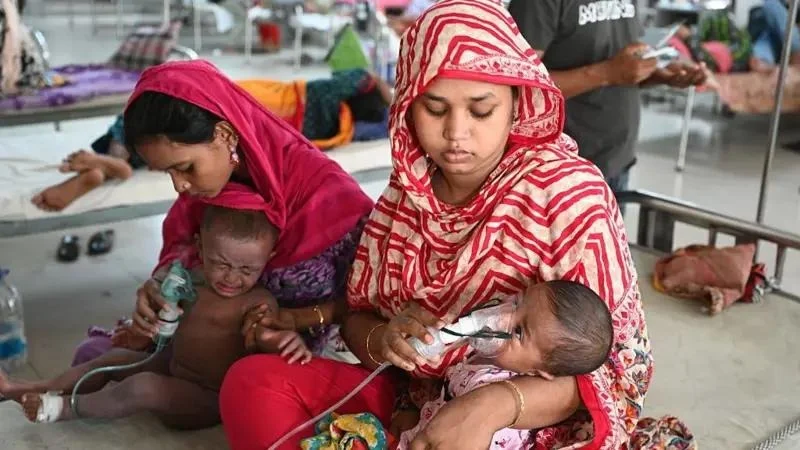
Young children are bearing the brunt of the outbreak, as hospitals in the capital, Dhaka, struggle with a relentless influx of patients.
Footage captured on Sunday shows sick children at Mugda Medical College Hospital as nurses administer oxygen, drips and medication, while mothers cradle their children in crowded wards.
Dr Nurul Islam, deputy director of Mugda Medical College Hospital, stated that gaps in vaccination coverage, particularly in remote areas, were helping the virus spread.
“A significant number of children are excluded from vaccination, which may have led to additional measles infections in these areas,” Islam said.
“Since measles is a highly contagious disease, the overall number of patients has increased as new children become infected,” he added.
Families described crowded conditions and difficulty finding beds. Ayesha Akhter, who travelled from Narayanganj with her sick son, said another hospital sent them to Mugda after running out of space.
“When we arrived here, I was on the mezzanine without a bed, but now I have a bed. Unfortunately, I still haven’t seen a senior doctor to treat my son,” Akhter explained.
Abdur Rahim said his son was initially treated at home before a private doctor advised the family to take him to hospital.
“We consulted a doctor in a private clinic who mentioned that he exhibited symptoms of measles and advised us to go to a government hospital. I have been at this hospital with my son for the past two days,” the father expplained.
Bangladesh has been battling widespread measles transmission since early 2026. WHO said in April that infections had been reported in 58 of the country’s 64 districts, with children under five accounting for most cases.
Health authorities have linked the outbreak to gaps in routine immunisation. The WHO cited a nationwide measles-rubella vaccine stockout during 2024 and 2025, disrupted routine vaccination and the absence of regular nationwide supplementary campaigns since 2020.
The government, WHO, UNICEF and other partners have launched vaccination campaigns, with wider efforts targeting around 20 million children aged six months to 59 months. However, hospitals continue to face heavy pressure as new patients arrive.
With reports from Viory