

Metro Manila, Philippines – The alliance between the Philippines and the United States remains strong 75 years after the signing of their Mutual Defense Treaty (MDT), Philippine Ambassador to Washington Jose Manuel Romualdez said, as the two countries reaffirmed their security commitments amid continuing tensions in the Indo-Pacific.
The Philippines and the United States signed the MDT on Aug. 30, 1951, which remains the foundation of their decades-old defense alliance.
“Well, it’s as strong as you can get because of the interest of both our countries,” Romualdez told NewsWatch Plus’ The Newsmaker.
“It has become even more stronger now because, as I said, it’s mutually beneficial for both our countries at this time,” he added.
The anniversary comes as the Philippines faces persistent tensions with China in the West Philippine Sea and the United States manages security commitments across several regions.
Romualdez said the Philippines has also expanded its defense relationships beyond Washington as Manila builds a broader network of partners.
“At this time, we still have a very strong alliance with the United States, but we also have alliances with many other countries. The United States is not the only one,” he said.
Romualdez said these partnerships support a multilateral approach to maintaining peace and stability in the Indo-Pacific.
US reaffirms ‘ironclad’ alliance
The U.S. State Department reaffirmed Washington’s obligations under the treaty as the two countries marked the anniversary.
“Today, we celebrate the 75th anniversary of the 1951 United States-Philippines Mutual Defense Treaty, the foundation of our ironclad alliance,” State Department spokesperson Tommy Pigott said.
“The Treaty remains an enduring testament to our unwavering commitment to each other’s defense and security,” he added.
The United States also pledged to deepen its relationship with the Philippines and honor its obligations under the MDT.
This year also marks the 80th anniversary of diplomatic relations between Manila and Washington.
The Department of National Defense (DND) described the MDT as a “cornerstone” of the countries’ shared commitment to peace, stability and the defense of a free and open Indo-Pacific.
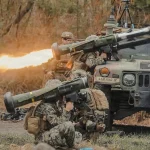
The DND said cooperation has expanded through bilateral and multilateral military exercises, operational coordination, capability development, maritime security and humanitarian assistance and disaster response.
“These efforts have enhanced interoperability, strengthened deterrence, and demonstrated our collective resolve to uphold regional security and stability,” the DND said.
Exercises to continue
Romualdez said there was no indication that major military activities between Manila and Washington would be reduced.
“As far as we know, there is no change. The Visiting Forces Agreement will continue,” he said.
“In fact, bigger and stronger types of exercises, including maritime exercises, we’re continuing that one with other countries also.”
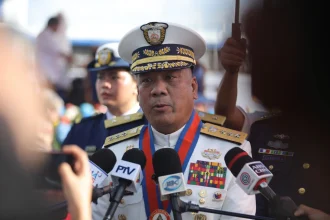
The Armed Forces of the Philippines also reaffirmed its commitment to the alliance, citing military exercises, maritime security cooperation and humanitarian assistance among the areas of continuing engagement.
“As we mark this milestone, the AFP reaffirms its commitment to further strengthen the alliance, enhance our defense capabilities and interoperability, and contribute to a free, open, peaceful, and secure Indo-Pacific,” the AFP said.
Romualdez said the Philippines ultimately wants to strengthen its own economic and military capabilities to become a more equal contributor to the alliance.
“We need to be economically strong or economically prosperous for our economic security,” he said.
“We are not just mendicants who are always asking for aid. We want to be a real partner.”