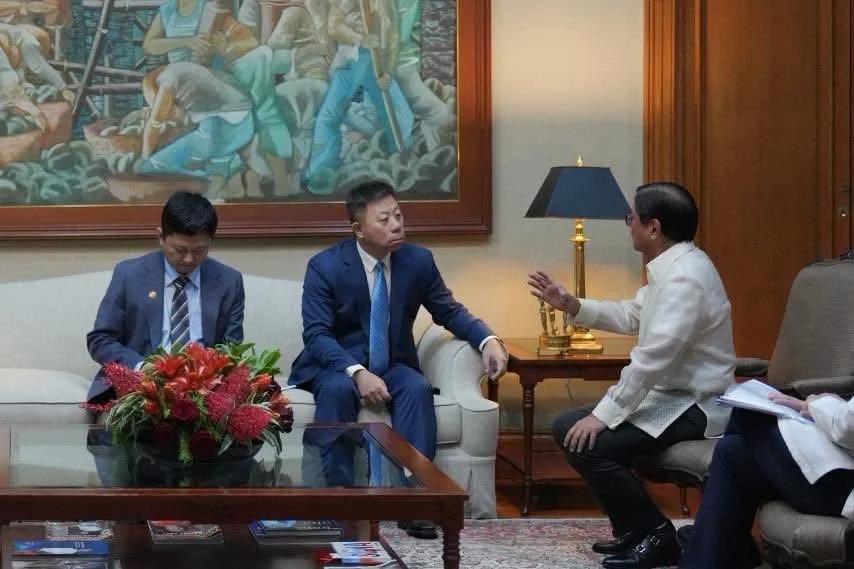


Metro Manila, Philippines – President Bongbong Marcos frowned upon calls to declare Chinese Ambassador Jing Quan persona non grata despite growing calls from lawmakers for his expulsion over remarks interpreted as a threat of force against the Philippines, Malacañang said Monday, Oct. 19.
Communications Undersecretary Claire Castro said Marcos preferred to resolve the diplomatic dispute through dialogue, stressing that decisions involving foreign representatives could have broader consequences.
“Alam natin ang pananaw ng pangulo, hindi po niya nanaisin na magkaroon ng ganitong klaseng pagdedeklara kahit kanino pa man na representative ng ibang bansa dito sa ating bansa,” Castro said.
[Translation: We know the president’s position. He would not want this kind of declaration against any representative of another country in the Philippines.]
Castro made the statement when asked on whether the administration continued to consider an unwelcome declaration against the ambassador as among the most serious diplomatic measures, given the possibility of retaliatory action or a downgrade in diplomatic relations.
The Palace official acknowledged the concerns raised by senators and other lawmakers but emphasized that Marcos must consider the implications of his decisions on foreign relations.
“Kung anuman ang opinyon ng ibang mga lider, mga senador, iginagalang po natin ang kanilang mga saloobin o kanilang mga opinyon at nararamdaman,” Castro said.
[Translation: Whatever the opinions of other leaders and senators, we respect their views and sentiments.]
“But still, sabi nga po natin, ang pangulo ay hindi umaakto nang hindi sa diplomatikong pamamaraan,” she added.
(But still, as we have said, the president acts through diplomatic means.)
Castro said the president’s statements carry significant weight because of their potential impact on the country and its people.
“Ang lahat ng sasabihin niya ay maaaring makaapekto sa ating bansa at sa ating mga kababayan. Kaya hindi nagiging agresibo ang pangulo sa kanyang mga pananaw patungkol sa anumang relasyon at pakikipag-ugnayan sa ibang bansa,” she said.
[Translation: Everything he says could affect our country and our fellow Filipinos. That is why the President avoids taking an aggressive position in dealing with other countries.]
Persona non grata defined
Under the Vienna Convention on Diplomatic Relations, a receiving state may declare a foreign diplomat persona non grata at any time without having to explain its decision.
The diplomat’s home country must then recall the individual or terminate the person’s diplomatic functions. If it fails to do so within a reasonable period, the receiving state may refuse to recognize the individual as a member of the diplomatic mission.
Such a declaration is a serious diplomatic measure and could prompt reciprocal action from the country concerned, although it does not automatically terminate or downgrade diplomatic relations.
While lawmakers may call for an ambassador to be declared persona non grata, the decision to take that step against an accredited foreign diplomat falls within the executive branch’s conduct of foreign relations.
China visit on track
Despite the diplomatic dispute, Malacañang said there had been no indication of changes to Marcos’ planned visit to China or scheduled engagements involving Chinese leaders.
Castro said the president continued to view high-level diplomatic exchanges as opportunities to improve communication.
“Wala pong nababanggit na magkakaroon ng pagbabago ng schedule dahil sa [angulo po, ang pakikipag-ugnayan sa anumang bansa kasama ang China ay walang aggression,” she said.
[Translation: There has been no mention of any schedule changes because the president’s engagement with other countries, including China, is not characterized by aggression.]
“So, hindi po natin nakikitaan na hindi itutuloy ng Pangulo ang schedule niya dahil isa ito sa magandang paraan upang mas maging maganda pa ang pakikipag-usap ng Pangulo at ng liderato ng China,” Castro added.
[Translation: We see no indication that the president will cancel his schedule because it is one way to improve communication between him and China’s leadership.]
Castro could not confirm whether Marcos would meet Chinese President Xi Jinping during the engagements.
The Palace said the administration remained hopeful of improving relations despite the increasingly sharp exchanges between Philippine officials and the Chinese embassy.
“Hindi nawawalan ng pag-asa ang gobyerno na magiging maayos ang relasyon ng China at ng Pilipinas,” Castro said.
[Translation: The government has not lost hope that relations between China and the Philippines will improve.]