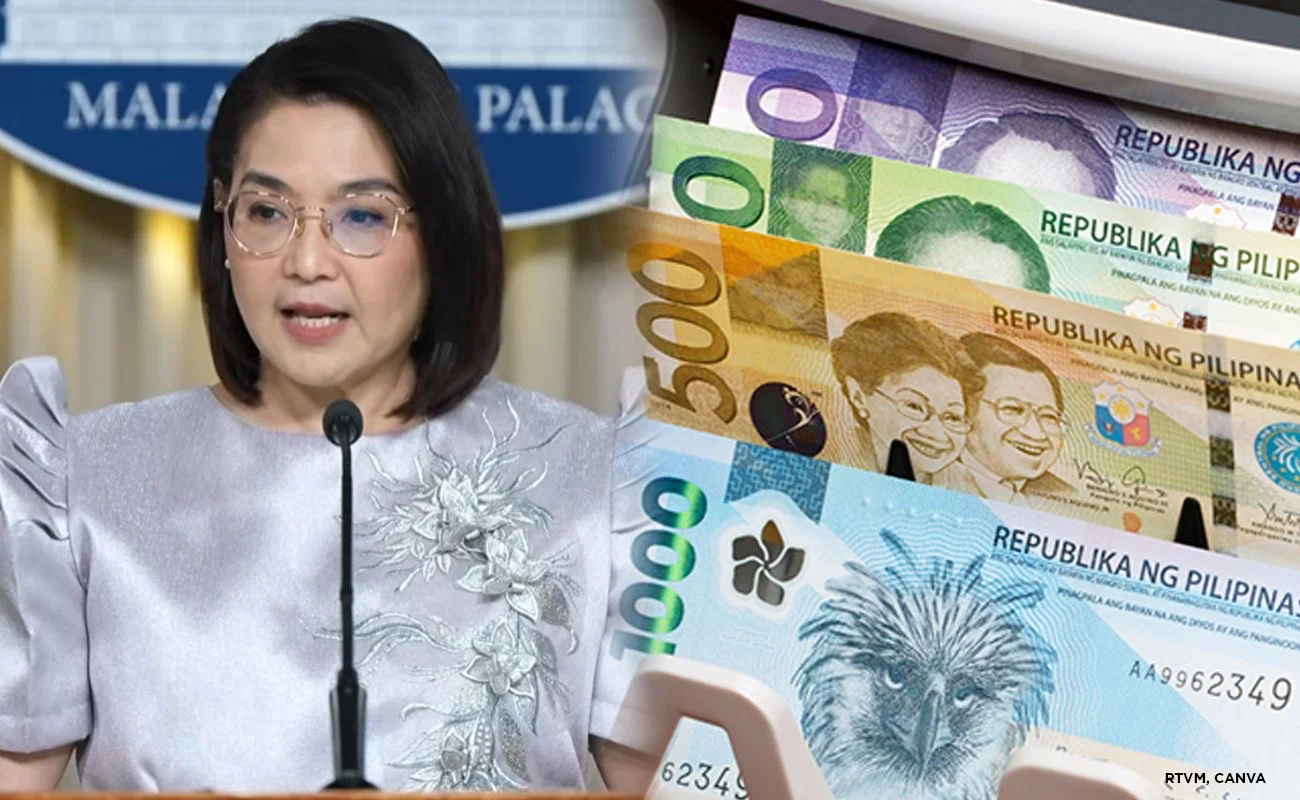


Metro Manila, Philippines – Malacañang said the Marcos administration has begun reprioritizing government spending and cutting non-essential expenditures as it seeks to contain the inflationary impact of the peso’s continued slide against the US dollar.
The local unit closed at ₱62.565 against the greenback on Wednesday, Sept. 2, its fourth consecutive record low, raising concerns over higher prices for imported goods, fuel, food and logistics.
“Managing inflation and foreign exchange is the primary mandate of the BSP (Bangko Sentral ng Pilipinas). On the national government’s part, the president has been working closely with the economic team to manage the inflationary effects of higher foreign exchange, including on food, business, logistics, and other prices,” Communications Undersecretary Claire Castro,
She said the administration began implementing mitigation measures as soon as the conflict in the Middle East escalated, citing its targeted UPLIFT (Unified Package for Livelihoods, Industry, Food, and Transport) program for the vulnerable sector as response to rising global oil prices and broader inflationary pressures.
“In fact, these efforts began immediately following the start of the Middle East conflict. Under UPLIFT, the government has already begun reprioritizing spending, reducing non-essential expenditures and directing resources toward sectors affected by rising prices,” Castro said.
She said the economic team is also increasing productive public spending to support economic growth despite external headwinds.
“At the same time, the main thrust of the economic team is to support economic growth, and one way we are doing this is by increasing productive public spending,” she said.
Castro said the administration’s strategy centers on fiscal discipline and ensuring government funds are directed toward programs with the highest economic and social returns.
Earlier in the briefing, the official read the economic team’s assessment about the peso’s weakness.
“The recent weakening of the peso was brought about by broad US dollar strength and rising global prices of oil. On the part of the BSP, while the rate hike last week was done to anchor inflation expectations, it also helps support our currency,” the economic managers said.
She added that the BSP is expected to intervene when necessary to reduce excessive exchange rate volatility.
Castro said the conflict in the Middle East continues to impact the economy.
“Nagkataon lamang po siguro na naapektuhan po talaga tayo ng krisis sa Middle East at hanggang sa ngayon po ay nandidiyan pa rin po ang isyu patungkol dito at alam din po natin na dependent tayo sa pagkuha ng suplay ng krudo mula sa Middle East at definitely isa ito sa nakakaapekto.”
[Translation: The Philippines has been affected by the crisis in the Middle East, which continues to put pressure on the economy because the country depends on oil supplies from the region.]