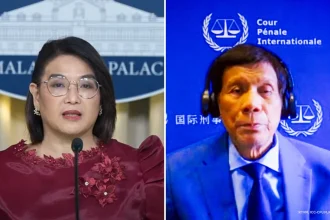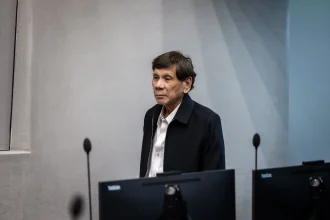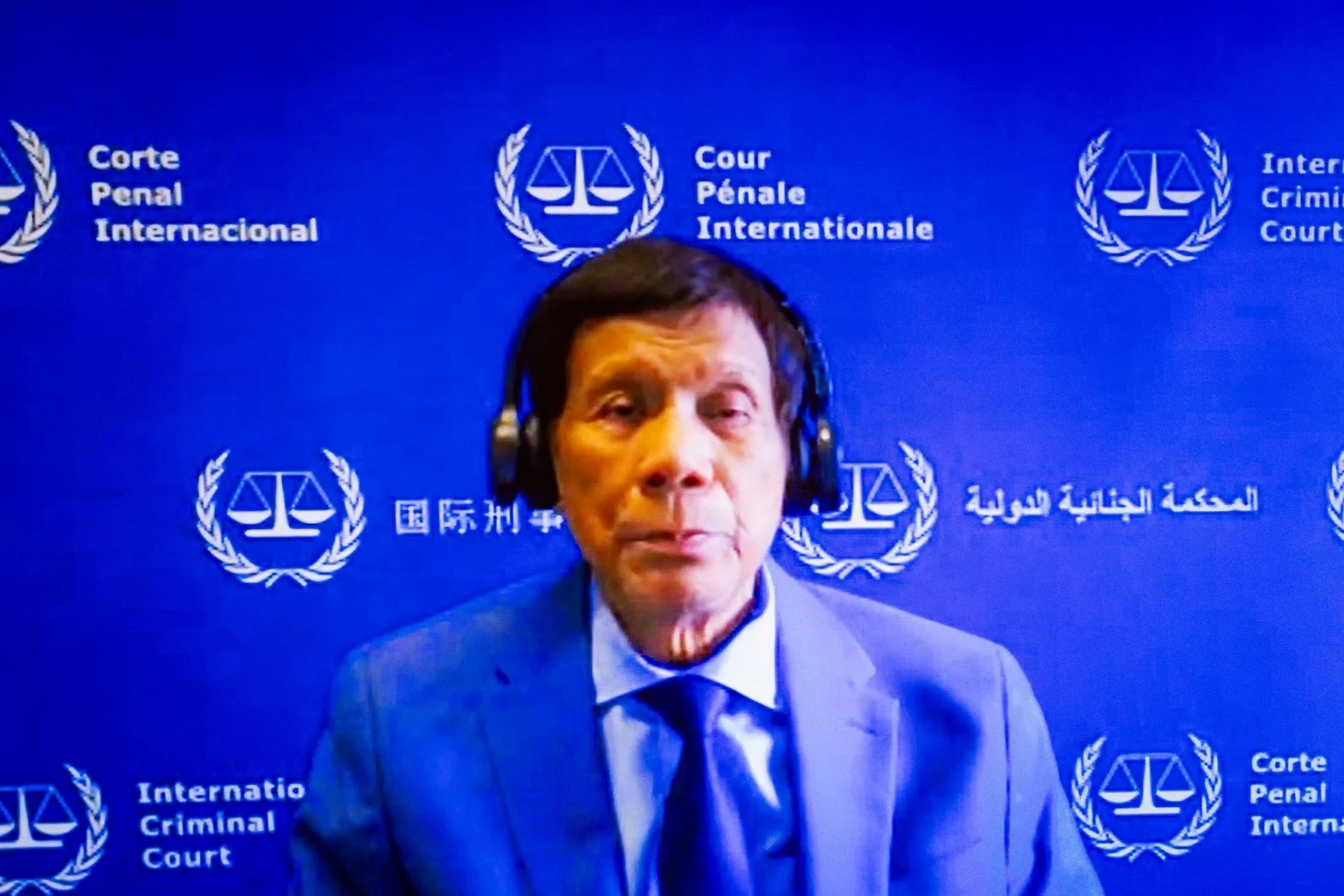

Metro Manila, Philippines – Former President Rodrigo Duterte has asked the International Criminal Court (ICC) to order prosecutors to refile the charges against him before his Nov. 30 trial, arguing that the current charging document is too broad and violates his right to know the exact allegations he must answer.
In a motion filed with ICC Trial Chamber III on Aug. 31, Duterte’s defense team said the prosecution’s Document Containing the Charges (DCC) was improperly framed around “illustrative” and “non-exhaustive” incidents instead of a clearly defined and exhaustive set of charges.
The defense said the only effective remedy is for prosecutors to submit a new charging document under Article 61(9) of the Rome Statute.
The filing is one of the final pretrial motions before Duterte’s crimes against humanity trial begins in The Hague, Netherlands. The Trial Chamber III is expected to resolve pending procedural issues before opening arguments.
Too broad
Duterte is facing three counts of murder and attempted murder as crimes against humanity in connection with alleged killings committed between Nov. 1, 2011 and March 16, 2019 during his time as Davao City mayor and later as president, in the context of the government’s war on drugs. The ICC confirmed all three counts in April and committed the case to trial.
In the latest motion, Duterte’s lawyers argued that prosecutors initially identified 49 incidents supporting the three counts, while maintaining that the list was merely illustrative and not exhaustive.
On the same day the motion was filed, prosecutors notified the defense of eight more incidents, bringing the proposed total to 57.
The defense said prosecutors also alleged that the charged conduct includes “at least hundreds of other murders” during Duterte’s mayoral years and “thousands of other murders” during his presidency, making it impossible for the accused to know the full scope of the case he must defend.
“The Defence submits that the charges, as currently framed, violate the accused’s right to be informed in detail of the nature, cause and content of the charges against him under Article 67(1)(a) of the Statute.”
‘Moving target’
The defense argued that the prosecution’s approach leaves unanswered whether prosecutors must prove all listed incidents, only some of them, or even a single incident to secure a conviction under each count.
It also said prosecutors could still rely on evidence involving killings outside the listed incidents because the charges describe the incidents as illustrative examples rather than the complete basis of the case.
“The Duterte charges are a literal moving target; a non-exhaustive, illustrative list of events whose proof beyond reasonable doubt may or may not trigger liability for thousands of others,” it said.
According to the defense, that violates Duterte’s right to adequately prepare for trial because he cannot determine the exact allegations prosecutors will ultimately seek to prove.
Duterte’s legal team asked Trial Chamber III to order prosecutors to submit a new charging document that defines each count with a fixed scope and includes an exhaustive list of underlying acts that represent the entirety of the allegations against him.
The defense said such a document is necessary for both the accused and the trial chamber to determine what prosecutors must prove beyond reasonable doubt.
In a separate filing also dated Aug. 31, ICC prosecutors submitted their list of witnesses and list of evidence to Trial Chamber III. The court said both annexes remain confidential because they contain sensitive witness information.