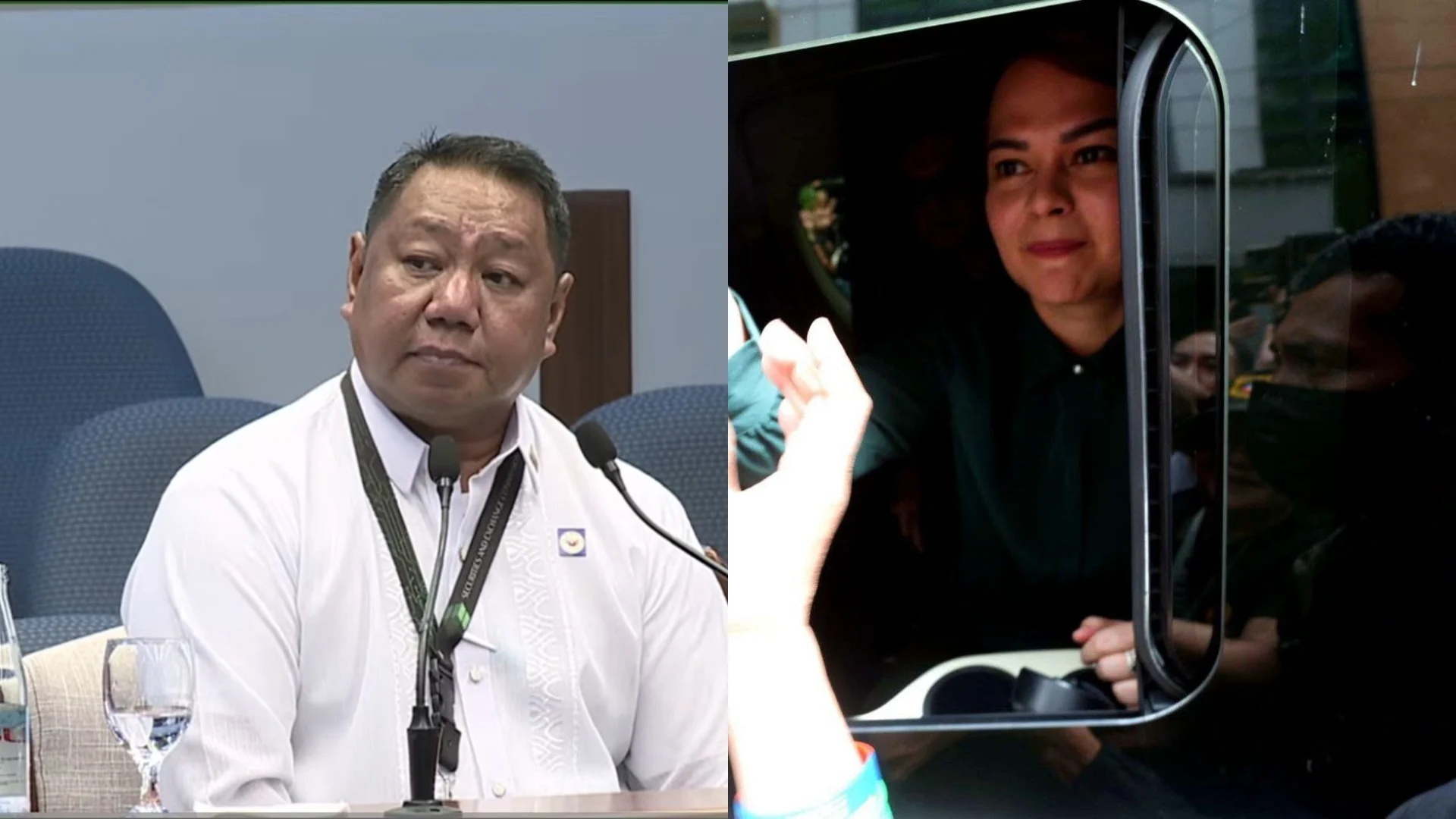


Metro Manila, Philippines – Corporate records showing Sara Duterte as a director and compensation committee member of a private company while sitting as vice president have raised questions on the constitutional ban on the highest officials participating in business activities.
Gerardo del Rosario, SEC Company Registration and Monitoring Department director, testified at the Impeachment Court on Monday, Sept. 21, that general information sheets (GIS) filed by Metro City Chow Foods Corp. listed Duterte as a member of its board of directors from 2022 to 2025.
“Ayon po sa GIS from 2022 hanggang 2024, si VP Sara Duterte po ay member pa rin po ng board of directors,” Del Rosario said.
[Translation: According to the GIS from 2022 to 2024, Vice President Sara Duterte remained a member of the board of directors.]
Records also listed her as a member of the company’s compensation committee, effectively making her part of the management, until 2025, he said.
Duterte assumed office as vice president on June 30, 2022.
SEC records showed that Duterte held a 20 percent stake in the company, with a subscribed investment of ₱50,000.
Her paid-up investment also increased to the full ₱50,000 between 2022 and 2024, from an initial payment of ₱12,500, Del Rosario said.
Board roles, management powers
Del Rosario told the court that a company’s board exercises corporate powers, conducts its business and controls its properties.
The board is also responsible for setting the company’s long-term direction and ensuring compliance with government requirements, he said.
“Hindi po siya makakapag-conduct ng business kung wala po siyang board of directors,” Del Rosario said.
[Translation: “A company cannot conduct business without a board of directors.”]
He described an executive committee as a smaller group of directors tasked with making immediate decisions on corporate matters.
A compensation committee, meanwhile, reviews compensation packages for company employees.
The SEC filings showed that Duterte was not listed as a passive shareholder. She was identified as holding positions associated with the company’s management and decision-making structure.
When asked whether membership in a compensation committee could constitute participation in the management of a company, Del Rosario said it could, based on the nature of the position.
“Kung titingnan po natin ang definition ng ganitong uri ng position, executive committee, maaari pong sabihin natin na mayroon siyang participation,” he said.
[Translation: If we look at the definition of this type of position, an executive committee, it may be said that she had participation.]
He said the SEC relied on information submitted by the company’s corporate secretary.
The agency did not have records showing whether Duterte attended board meetings or personally participated in corporate decisions.
Constitutional prohibition
Article VII, Section 13 of the 1987 Constitution states that the president, vice president, Cabinet members and their deputies or assistants may not hold another office or employment during their tenure unless the Constitution provides otherwise.
It also bars them from directly or indirectly practicing another profession, participating in any business or holding a financial interest in a government contract, franchise or special privilege.
The provision further requires the officials to “strictly avoid conflict of interest in the conduct of their office.”
The prosecution argued that the corporate positions indicated continued business participation after Duterte became vice president.
“Makikita rin kung sa mga panahong vice president na si Sara Duterte, nakalista pa rin ang kanyang pangalan at interest sa ilang korporasyon,” the prosecution said in presenting the SEC witness.
[Translation: The records will also show that during the period Sara Duterte was vice president, her name and interests remained listed in several corporations.]
Defense objects to legal conclusions
Duterte’s lawyers objected to attempts to have Del Rosario determine whether the records proved a constitutional violation.
The defense argued that the SEC official had not been presented or qualified as an expert on constitutional law.
It also objected to statements by prosecutors characterizing Duterte’s corporate interests as a clear violation, saying these were legal conclusions that must be decided by the impeachment court.
Del Rosario said the SEC had no policy directing it to flag or report government officials who appeared in corporate filings despite constitutional or statutory restrictions.
He also said the SEC had not investigated Duterte’s reported corporate roles as a possible constitutional violation.
“Hindi po namin naimbestigahan iyong mga bagay na ganito,” Del Rosario said.
[Translation: “We have not investigated matters like this.”]
He explained that the SEC investigates violations of securities and corporate laws, but determining whether an official violated the Constitution was outside the type of issue he had encountered at the agency.
The prosecution’s presentation formed part of its evidence under Article 2 of the impeachment case against Duterte.