

Metro Manila, Philippines – Two Filipino seafarers were killed after a Saudi-flagged oil tanker was attacked while crossing the Strait of Hormuz, while 14 other crew members were safe and will be repatriated, the Department of Migrant Workers (DMW) said Wednesday, Sept. 2.
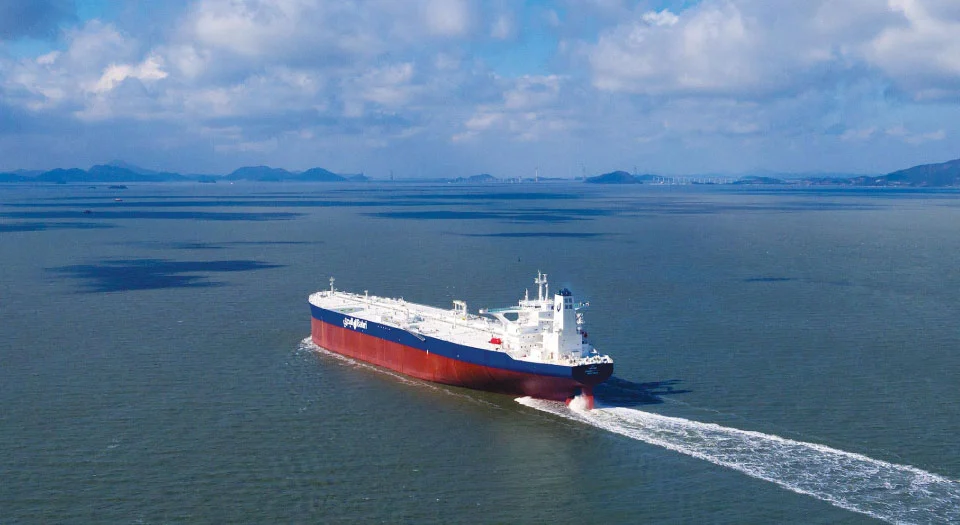
Migrant Workers Secretary Hans Cacdac said the crude oil tanker SIDR was struck by unidentified projectiles late Aug. 31 as it was about to cross the vital waterway that serves as the sole sea passage connecting the oil-rich Persian Gulf to the open ocean, carrying roughly 20 percent of the world’s daily fuel and liquefied natural gas .
“Halos tatawid na ng September 1 ay nagkaroon ng pag-atake ng isang barko. Ang pangalan niya ay SIDR. Isa siyang crude oil tanker at siya ay in-attack ng still unknown projectiles that hit the ship as it was about to cross the Strait of Hormuz,” Cacdac said in an online briefing.
[Translation: Just before September 1, a vessel named SIDR, a crude oil tanker, was attacked by still unidentified projectiles as it was about to cross the Strait of Hormuz.]
He said 16 Filipino seafarers were on board the vessel, including the two casualties. The DMW is still determining the circumstances surrounding the deaths of the two Filipinos.
“Hindi pa malinaw how exactly that happened. Usually, when we are still 24 to 48 hours removed from the event, we will find out the details as we go along,” Cacdac said
Ship operator Bahri separately confirmed that the SIDR, with IMO number 9854715, was involved in a security incident at around 11:40 p.m. local time on Aug. 31, while transiting the Strait of Hormuz.
“It is with profound sadness that Bahri confirms the loss of two of its Filipino seafarers as a result of the incident,” the company said.
Bahri said it was providing support to the families, loved ones, and colleagues of the two fatalities.
Cacdac said President Ferdinand Marcos Jr. ordered the government to immediately assist the affected crew members and their families.
“Ayon sa pinag-utos ng ating mahal na pangulo ay agarang bigyan ng action iyong pagpapauwi, and iyong pamilya ay aalalayan, tutulungan nang ganap iyong pamilya, lalo na iyong pamilya ng dalawang nasawi,” Cacdac said.
[Translation: Following the president’s directive, immediate action should be taken for their repatriation, while the families, especially those of the two fatalities, will be fully assisted and supported.]
The 14 survivors are safe, Cacdac said.
“I will not disclose where they are, but soon they will be flying out and they’re off the coast of Oman and the Omani authorities are helping,” he said.
“So we are thankful to the Omani authorities once again,” he added.
The Philippine Embassy and Migrant Workers Office in Oman are coordinating with Omani authorities for their immediate repatriation.
Cacdac said Oman would serve as the flyout point for the Filipino crew members.
“They are arranging for their immediate repatriation. I’m confident that they can be immediately repatriated. That includes welfare assistance on the ground together with Administrator PY Caunan’s team at the OWWA in Oman,” Cacdac said.
“Oman is the closest embassy and migrant workers office that we have off the coast of the Strait of Hormuz,” he added.
Cacdac said he would personally visit the families of the two fatalities within 48 hours following Marcos’ directive.
The attack raised concerns again for Filipino seafarers passing through the Strait of Hormuz amid heightened security risks in the region.
Risk of escalation
Cacdac said the government has been urging shipowners to avoid sending Filipino crew members through high-risk areas when vessels can be rerouted.
“Again, the rerouting when it is avoidable, the Persian Gulf and Strait of Hormuz, not to bring Filipino seafarers in harm’s way, and provide risk assessments before proceeding with any voyage in these high-risk and warlike areas,” Cacdac said.
He said ships should also comply with reportorial requirements and put security measures in place, including possible escorts.
“Right to refuse sailing, that must be honored,” Cacdac said.
The DMW has not imposed a blanket ban on Filipino seafarers aboard vessels that could pass through the Strait of Hormuz.
Cacdac said the situation in the strategic waterway has broader implications for freedom of navigation, the global economy and seafarers’ jobs.
The department instead requires shipowners to conduct risk assessments before voyages and implement security measures for vessels entering dangerous waters.
“We continue to remind our ship owners to be mindful of the DMW requirements, such as risk assessment prior to assuming the voyage, making sure that there are enough security protocols, escorts ng ships as they cross the dangerous waters, such as the Strait of Hormuz, armed guards on board, reporting mechanisms, and of course, iyong [the] right to refuse sailing,” Cacdac said.
He said Filipino seafarers must have the option to refuse to sail aboard ships crossing the Strait of Hormuz.
“So, all of these things are set in order, and actually, we will also look into this matter as we investigate this incident,” Cacdac said.
Around 3,000 Filipino seafarers remain on board ships in the wider Persian Gulf, according to the DMW.
Cacdac said 31 ships carrying 421 Filipino seafarers have been attacked in incidents involving vessels entering or leaving the Strait of Hormuz.
Of the 421 seafarers, 406 were unharmed, while 10 were injured but are now in stable condition.
Three were killed in attacks, including the two from the SIDR, while one remains missing.
The DMW said 268 of the 421 affected Filipino seafarers are back in the country.