

Lviv, Ukraine – Thousands of Ukrainians who lost limbs and suffered other serious injuries from the war are facing a long road to recovery, creating a growing demand for prosthetics and rehabilitation.
In the western city of Lviv, the Superhumans Center is among the facilities responding to the need, providing prosthetics, reconstructive surgery, rehabilitation and psychological support to soldiers and civilians.
The center says it has served more than 3,500 patients and manufactured more than 3,600 prostheses since it opened in 2023.
NewsWatch Plus visited the facility and met patients who are learning to use new limbs and rebuild their lives after suffering serious injuries on and near the frontlines.
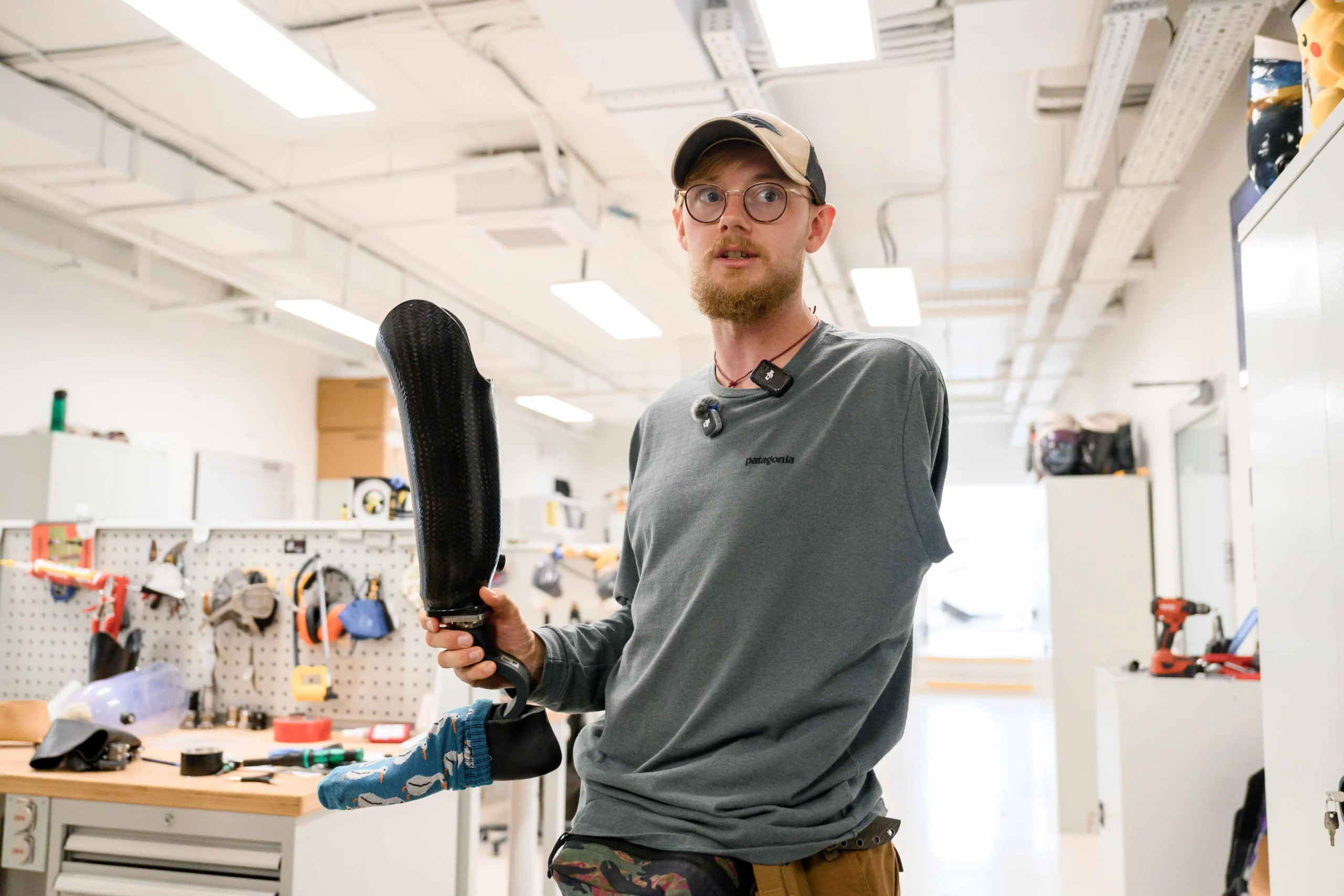
Among them is British humanitarian volunteer Eddy Scott.
Scott came to Ukraine in 2022 and took part in humanitarian missions, including repairing roads and evacuation routes, restoring water supplies and providing medical assistance to civilians.
In January 2025, he said he was traveling in a clearly marked armored humanitarian vehicle after helping evacuate civilians when it was hit by a first-person view drone.
The attack took his left arm and severely injured his left leg.
“I was straight away dying if no one had helped me,” Scott said.
He now uses a prosthetic leg and works with so-called superhumans, where he also helps explain the rehabilitation process to visitors.
“We are a center for victims of the war,” Scott said. “We are not a military rehab center. It’s not just soldiers.”
The World Health Organization has cited estimates that more than 100,000 amputations have been performed in Ukraine since Russia launched its full-scale invasion in February 2022.
Starting again
Among the Ukrainians going through rehabilitation at the center is Yuri Khramov, a former seafarer who spent nearly four decades traveling around the world before joining the war effort.
His years at sea brought him to the Philippines, a country he still remembers.
“They have good everything, very good English there,” Khramov said.
His life changed after he was wounded during an encounter with Russian forces.
Khramov said a bullet broke his leg and he lost about two liters of blood. His kidneys also stopped functioning.
He eventually lost both legs.
More than a year later, Khramov continues to undergo rehabilitation at Superhumans and is learning to use two prosthetic legs.Despite his injuries, he said he remains open to returning to service once he has fully adjusted to his prostheses.
“My work is my brain, not my leg,” Khramov said.
The cost of a new limb
Prosthetics are manufactured and fitted inside the Superhumans facility, with the type of device depending on the location and severity of a patient’s amputation.
Scott showed NewsWatch Plus some of the different prostheses available to patients.
A basic mechanical leg can cost around 7,000 euros (nearly half a million pesos), while an advanced electronic leg can cost about 60,000 euros (around ₱4.26 million).
Scott uses an electronic prosthetic leg equipped with technology that can respond to his movement and changes in the surface he is walking on.
“If I slip, it will catch me,” he said, adding that the technology helps reduce strain on his body and hips.
But receiving a prosthesis is only part of the recovery process.
“Just taking steps is tiring. Just existing with it is exhausting, but it’s something you have to deal with,” Scott said.
Superhumans says patients are not charged for its services. The center relies on donations and fundraising to finance its operations.
“All the money comes from charities, so we don’t want to take money from the state because all the money goes to the military,” Superhumans media manager Andrii Ischyk said. “We do a lot of fundraising weekly.”
Rehabilitation
Patients undergo medical evaluation and rehabilitation before and after receiving their prostheses.
Inside the rehabilitation area, patients are exercising, working on their balance and practicing how to use new limbs.
Scott said strengthening the body is an important part of preparing a patient for a prosthesis.
“This is where you start when you get your amputation. You need to get your strength back,” he said.
The rehabilitation process can take time and varies depending on the patient’s injuries, physical condition and type of prosthesis.
Life after the frontline
Scott understands that process not only through his work at Superhumans but also through his own recovery.
NewsWatch Plus met him on his 30th birthday.
He said his experience working near the frontlines and surviving the drone attack changed his perspective on how he approaches his life after his injuries.
“You’ve got to accept what you’ve lost, but you’ve got to work with what you have,” Scott said.
The name “Superhumans” can sound larger than life but inside the center, what earns that name can look remarkably ordinary.
Standing, swimming, climbing a staircase, taking another step.
And, after war has taken something that cannot be returned, learning how to begin again.