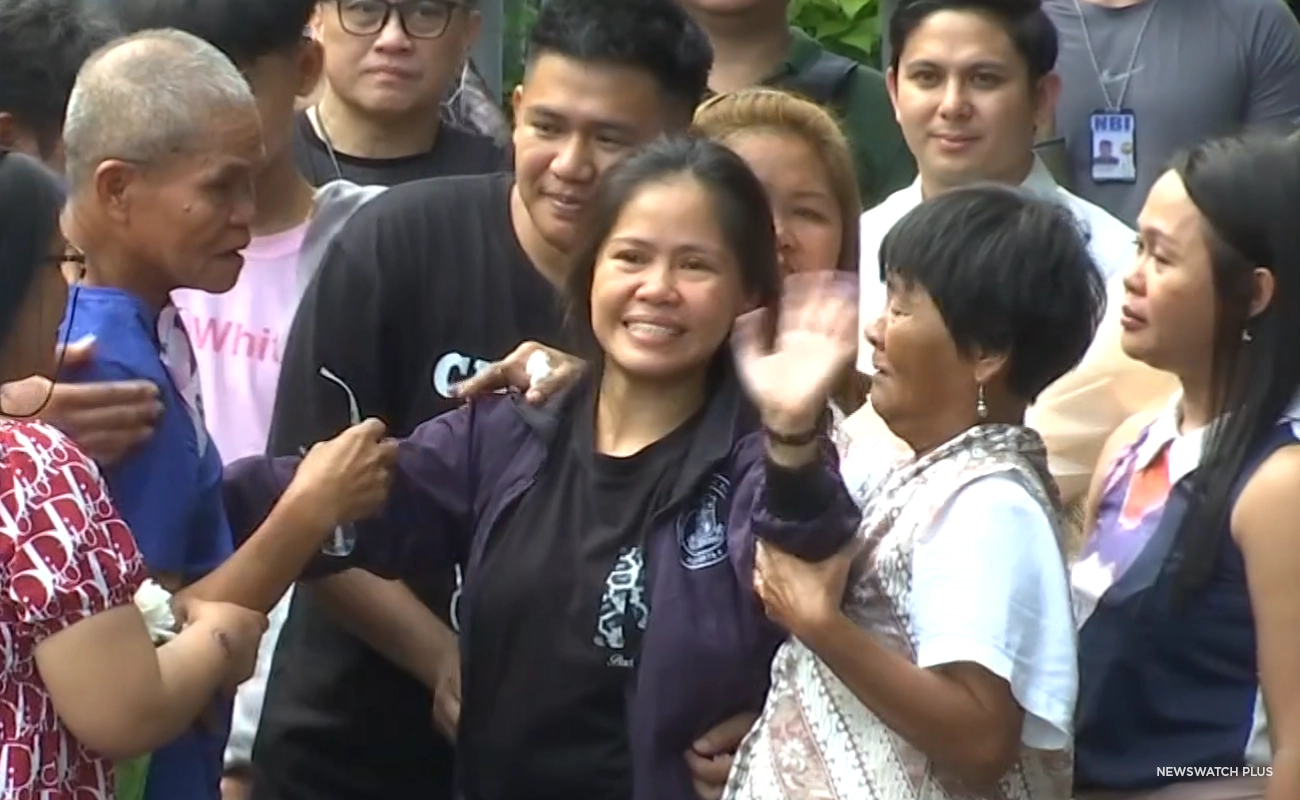


Metro Manila, Philippines — The Department of Migrant Workers is sending a team to Nueva Ecija to prepare comprehensive reintegration assistance for Mary Jane Veloso following her absolute pardon from President Ferdinand Marcos Jr.
The assistance will include psychosocial counseling, livelihood support, enterprise capital and skills training as Veloso prepares to reunite with her family after more than 15 years in detention.
Migrant Workers Secretary Hans Leo Cacdac ordered the DMW team to coordinate directly with Veloso’s children, parents and local stakeholders in developing a reintegration program suited to the family’s needs.
“Our instructions are clear: the DMW must stand shoulder-to-shoulder with Mary Jane, her children, and her parents as they rebuild their lives,” Cacdac said.
“Our team heading to Nueva Ecija will work directly with the family and local stakeholders to develop a tailored reintegration program,” he added.
The DMW and the Overseas Workers Welfare Administration will provide livelihood starter kits and possible capital for a small enterprise.
Veloso will also be linked to skills training programs, local cooperatives and economic opportunities in Nueva Ecija.
“Reintegration is not merely about coming home. It is about restoring dignity, ensuring financial self-sufficiency, and enabling Mary Jane to contribute to her local community and economy,” Cacdac said.
The DMW is coordinating with the Department of Justice and the Bureau of Corrections on the standard procedures for Veloso’s release from the Correctional Institution for Women in Mandaluyong City.
From death row to pardon
Veloso was arrested in Indonesia in 2010 after more than 2.6 kilograms of heroin were found hidden inside her luggage.
She was convicted of drug trafficking and sentenced to death.
Veloso maintained that she did not know the drugs were inside the suitcase and said she had been deceived by her recruiters after being promised work abroad.
Her execution was stayed at the last minute in April 2015 after Philippine authorities informed Indonesia that one of her alleged recruiters had surrendered and that Veloso was needed as a witness in a human trafficking case.
She was transferred to the Philippines in December 2024 under an agreement between Manila and Jakarta and continued serving her sentence at the Correctional Institution for Women.
The DMW said the presidential pardon brought a definitive end to Veloso’s long effort to regain her freedom.
The agency also described her case as an example of the non-punishment principle for trafficking victims.
Under the principle, trafficking victims should not be punished for unlawful acts they were compelled or deceived into committing as a direct consequence of their exploitation.
“The exercise of absolute pardon by President Marcos further demonstrated the non-punishment principle that a person identified as a victim of trafficking should not continue to bear punitive consequences arising from acts committed as a result of her being trafficked,” the DMW said.
The agency said support for trafficking victims must continue beyond their identification and rescue and include rehabilitation and post-conviction remedies.
This is a news release from DMW