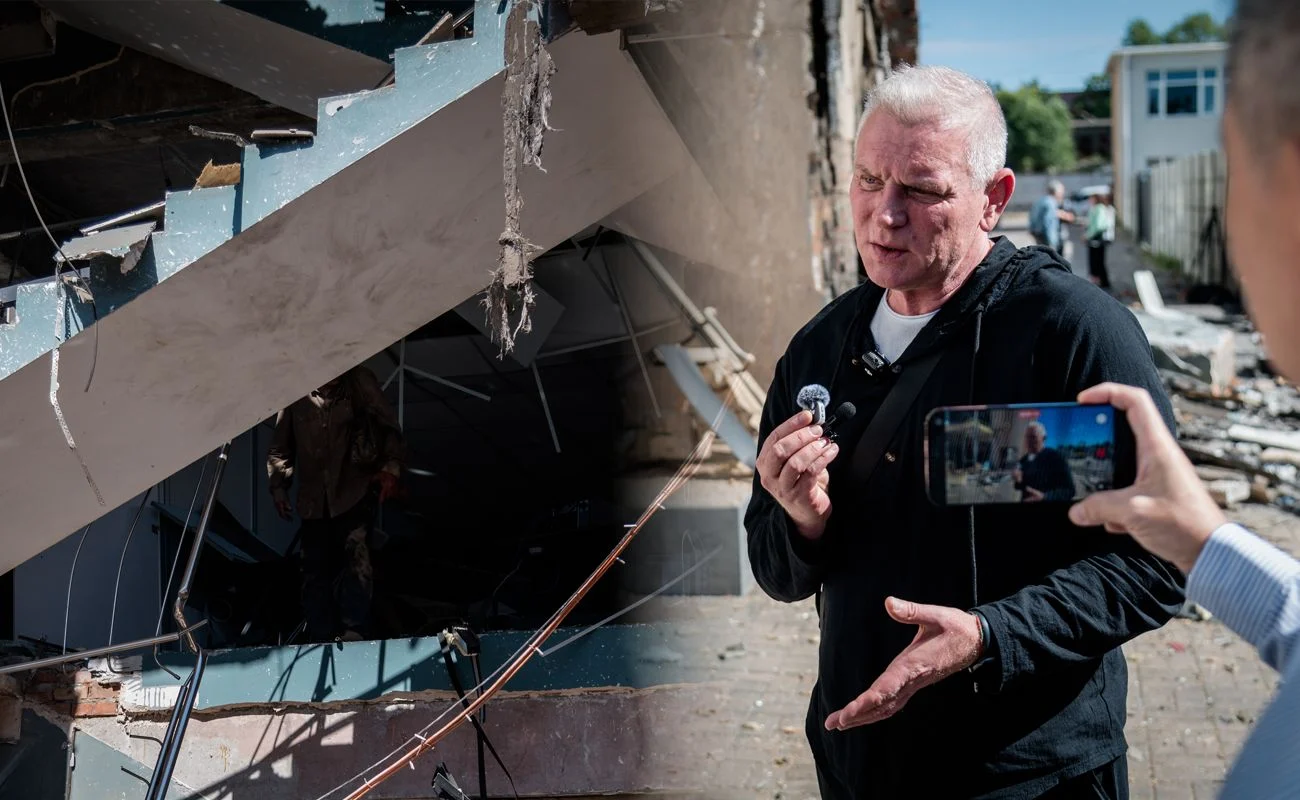


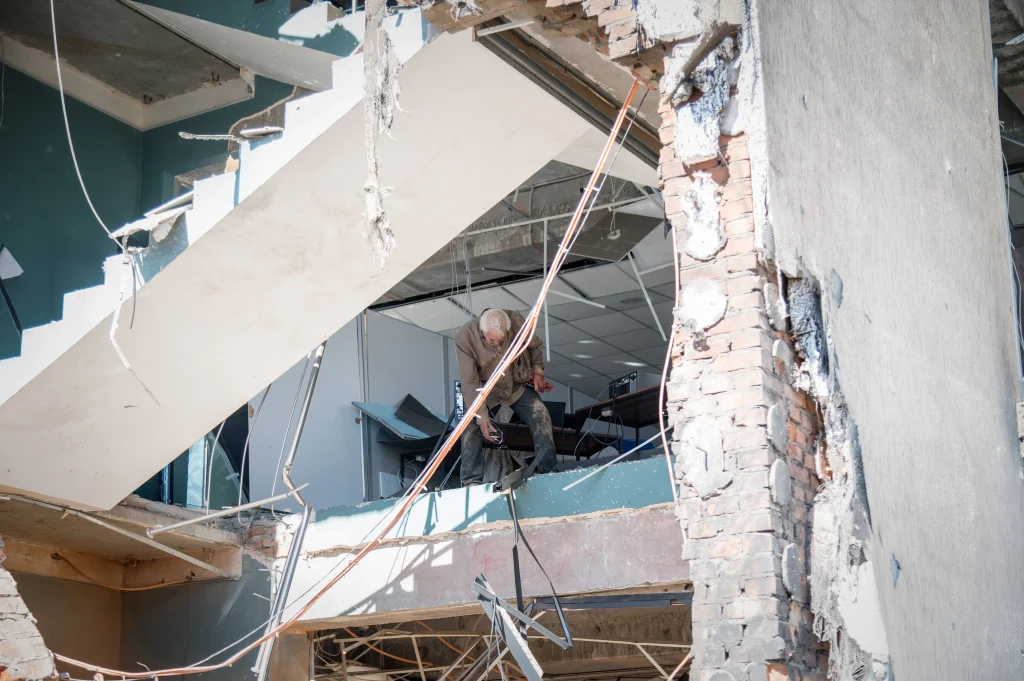
Kyiv, Ukraine – Broken windows, collapsed ceilings, and damaged broadcast equipment surrounded the journalists of We Are Ukraine TV after a Russian drone struck their headquarters in Kyiv.
NewsWatch Plus visited the television station hours after the Sept. 8 attack, with debris across the newsroom, studios, and offices.
The station was at the time broadcasting live as part of Ukraine’s national United News telethon.
Six employees were injured. Three were taken to a hospital, while others suffered cuts and other minor injuries. No one died in the attack.
Attack while on air
It was the second time the building was hit within weeks. Repairs from an earlier strike on Aug. 20 were still underway when the drone struck again.
We Are Ukraine general producer Yuriy Sugak said the station would continue reporting despite losing its newsroom.
The extent of the damage and the continuing security threat, however, made it unlikely that the station could return to the building.
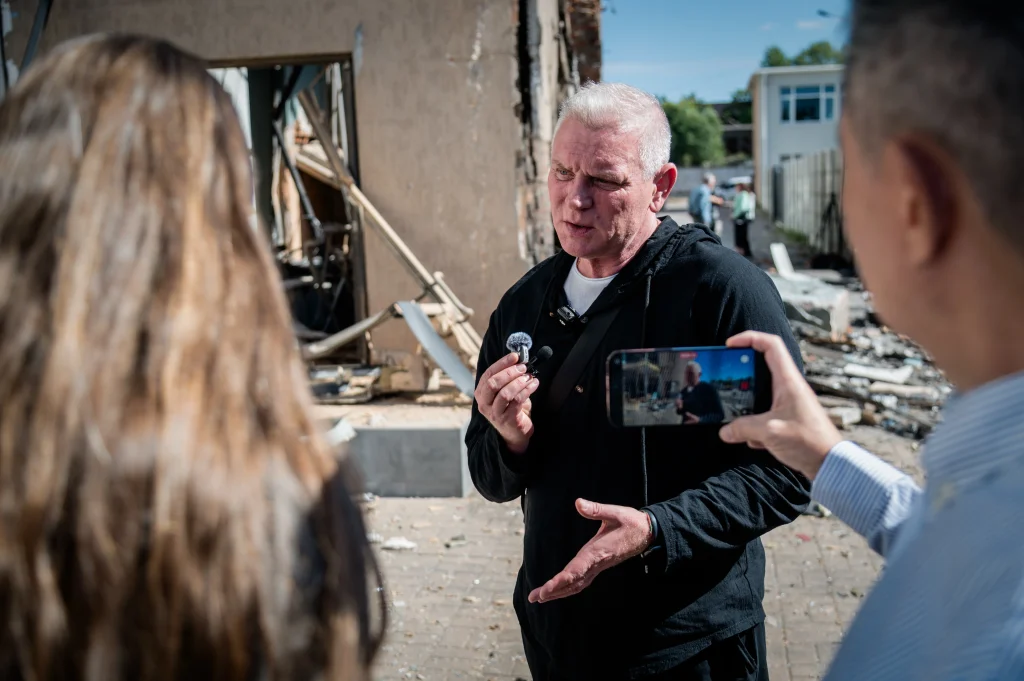
“We were looking for a way to get back on air quickly,” Sugak said.
The station did not disclose the location of its temporary newsroom.
“Russia has already targeted our office twice, so right now we don’t want to make our location public,” he said.
For the journalists of We Are Ukraine, returning to air is an act of defiance – the damaged newsroom will not deter broadcasting.
Newsrooms under attack
The strike on We Are Ukraine was not isolated.
Television stations, radio studios, newspaper offices, and the homes of journalists have been damaged or destroyed across Ukraine since Russia launched its full-scale invasion on Feb. 24, 2022.
Mariya Frey, a member of the managing board of Ukraine’s public broadcaster Suspilne, said its regional office in Dnipro was completely destroyed in a Russian attack.
“It was 14 drones that hit our office in Dnipro,” Frey told NewsWatch Plus.
The attack also destroyed much of the station’s archive.
“Only two hard drives were left,” she said.
The threat extends beyond areas close to the front line. Media facilities have been damaged in Kyiv, Dnipro, Kharkiv, Zaporizhzhia, Kherson, and other parts of the country.
News organizations have been forced to establish backup studios, move equipment, and store copies of their archives in different locations.

Fighting disinformation
Ukrainian journalists are also confronting a continuing flow of Russian disinformation.
Frey said false and misleading narratives often focus on sensitive issues such as military mobilization.
But directly repeating false claims can unintentionally amplify them and make them more familiar to audiences.
“When you repeat something, it becomes a little bit easier to remember,” she said.
Instead of focusing its coverage on the false message, Suspilne monitors emerging narratives and produces factual reports explaining the issue being manipulated.
Trauma behind the coverage
The physical danger is only one part of the burden carried by journalists in Ukraine.
For nearly five years, they have documented death, destruction and displacement while living through the same war as the people they cover. Some have lost relatives, friends or colleagues. Others have been displaced from their homes or continued reporting while members of their families served in the military.
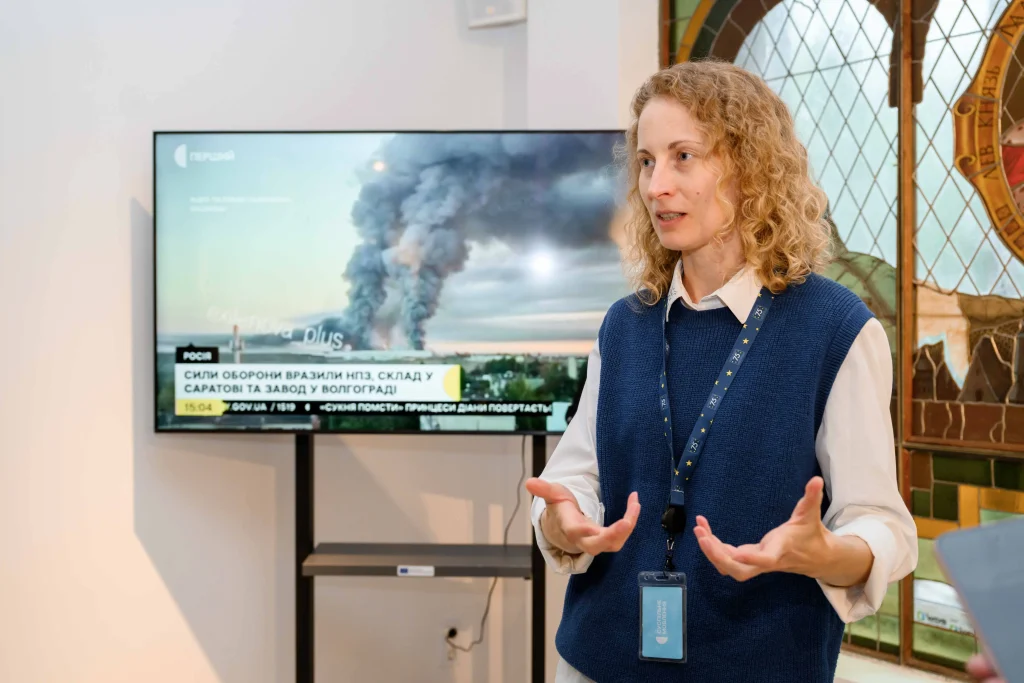
Diana Deliurman, a Ukrainian journalist and global communications manager at the Lviv Media Forum, said media workers need opportunities to step away from daily coverage and process what they have experienced.
The organization has helped create spaces where journalists can rest, speak about trauma and receive psychological support.
Deliurman said the work recognizes that journalists are not merely observers of the war. They are also Ukrainians living through it.

Toll on journalism
The scale of the attacks extended far beyond individual newsrooms.
As of Aug. 24, 2026, the Kyiv-based Institute of Mass Information had documented 971 crimes committed by Russia against journalists and media organizations since the full-scale invasion.
The violations included killings, injuries, abductions, threats, cyberattacks, the seizure of media offices, and the destruction of equipment.
A broader count by the National Union of Journalists of Ukraine placed the number of media workers killed since February 2022 at more than 150. That figure also includes journalists and former media workers who died while serving in Ukraine’s armed forces, not only those killed while reporting.