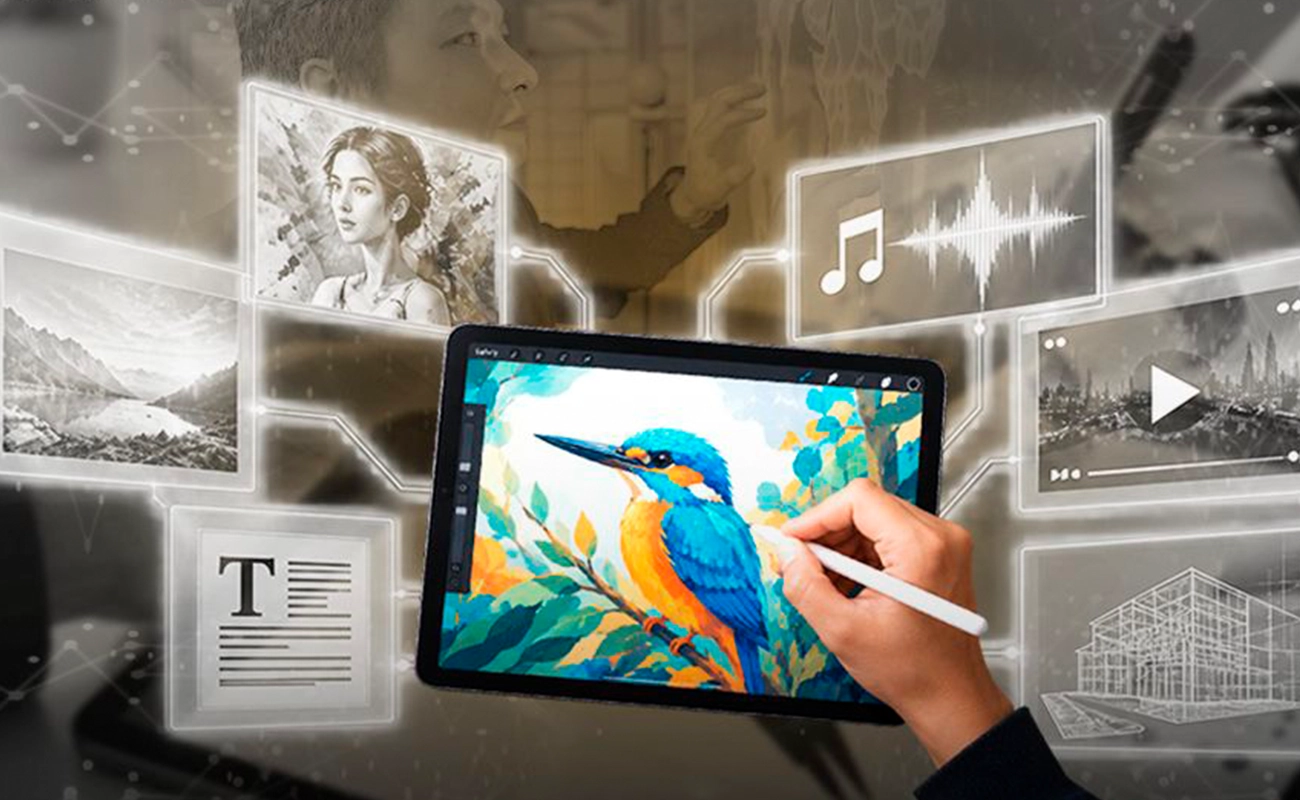


Metro Manila, Philippines – The Intellectual Property Office of the Philippines (IPOPHL) is proposing guidelines to navigate how works created with the use of artificial intelligence (AI) may qualify for copyright registration, with human creative contribution at the center of the assessment.
In a statement on Friday, Sept. 18, it said the proposed Guidelines on the Registrability of AI Systems and AI-Related Works were presented during an initial public consultation last week by the Bureau of Copyright and Related Rights (BCRR), giving creators, technology developers, legal practitioners, and other stakeholders a clearer view of how IPOPHL proposes to treat AI-related works.
The draft makes clear that using an AI System in creating a work does not, by itself, prevent the work from being registered. Copyright protection may extend to the work to the extent that it contains original expression attributable to human creative contribution that meets the originality requirement under prevailing jurisprudence.
The guidelines define human creative contribution as an original expressive contribution by a natural person that meets the minimum degree of creativity required for copyright protection. Under Philippine copyright law, originality is based on independent creation and the requisite degree of intellectual creativity and judgment, rather than on a fixed threshold.
How AI use affects registration
The proposed guidelines identify four types of AI-related works and illustrate how each may be treated for copyright registration:
- For an AI-Assisted Work, AI may be used as a tool during the creative process, but the human author must contribute original expression to the resulting work. For example, a writer may ask AI to suggest alternative wording or help organize a manuscript, then select the suggestions, rewrite portions, and arrange the final text. In this case, the copyrightable part would be the original expression contributed by the writer.
- An AI-Enhanced Work starts with a work created by a human and is later modified or enhanced using AI. A photographer, for example, may use AI to remove unwanted objects, restore damaged portions, or enhance a photograph they took. The copyright protection may cover the original photograph and any human-created additions or modifications that contain original expression.
- A Hybrid Work combines human-authored and AI-generated elements. For example, a songwriter may write the lyrics while using AI to generate the melody. If the human contribution meets the requirements for copyright protection, the resulting work may be registered as a musical composition. However, registration would not give copyright protection to AI-generated elements that do not qualify for protection.
- By contrast, an AI-Generated Output without sufficient human creative contribution would not qualify for copyright registration to the extent that it lacks original human expression. For example, if a person gives AI a general prompt and submits the resulting image without making further creative contributions to its expressive elements, simply registering or recording the image would not give the person copyright protection over the AI-generated output.
In evaluating applications, IPOPHL said it may consider the nature and extent of the human creative contribution, the role played by the AI system, how AI-generated elements were selected, modified, arranged or incorporated, and the information submitted by the applicant.
The draft does not establish a single fixed test for registrability. Instead, these factors would be considered together based on the circumstances of each application. IPOPHL may also request additional information when necessary to evaluate registrability.
AI systems and training data
The proposed guidelines also tackled AI systems. In such a case, the agency said registration would cover only the copyrightable expression in the computer program submitted to IPOPHL and not the system’s AI Training Data, works or materials used as AI Training Data, AI Outputs, or other material that is not part of the copyrightable computer program.
The guidelines also note that registration would not determine whether the training data or training practices used constitute fair use or are lawful.
Dialogue still open on AI, copyright
IPOPHL Director General Teodoro Pascua said “the proposed guidelines do not regulate AI generally or make a definitive determination on the copyrightability of AI-related works, but aim to provide greater clarity on their treatment for registration with IPOPHL.”
Through the initiative, IPOPHL Deputy Director General Ann Claire Credo-Cabochan added that the agency “seeks to ensure that the legal framework remains responsive to evolving technologies and market realities while remaining faithful to the principles of existing laws, such as the IP Code.”
IPOPHL said the proposed guidelines are being refined through consultations with stakeholders from government, the legal and academic communities, the creative and technology industries and the general public. Their comments and recommendations will inform further revisions to ensure that the framework is clear, practical and responsive to stakeholder needs.
“We want a framework that provides clarity without getting ahead of the technology. We want to give stakeholders a practical basis for navigating AI-assisted works while allowing us to refine the approach as dialogues deepen and experience accumulates,” BCRR Director Emerson Cuyo said.