

Metro Manila, Philippines – The European Union and Spain have joined the Luzon Economic Corridor partnership, expanding to 13 the international coalition backing infrastructure and investment projects in the island group.
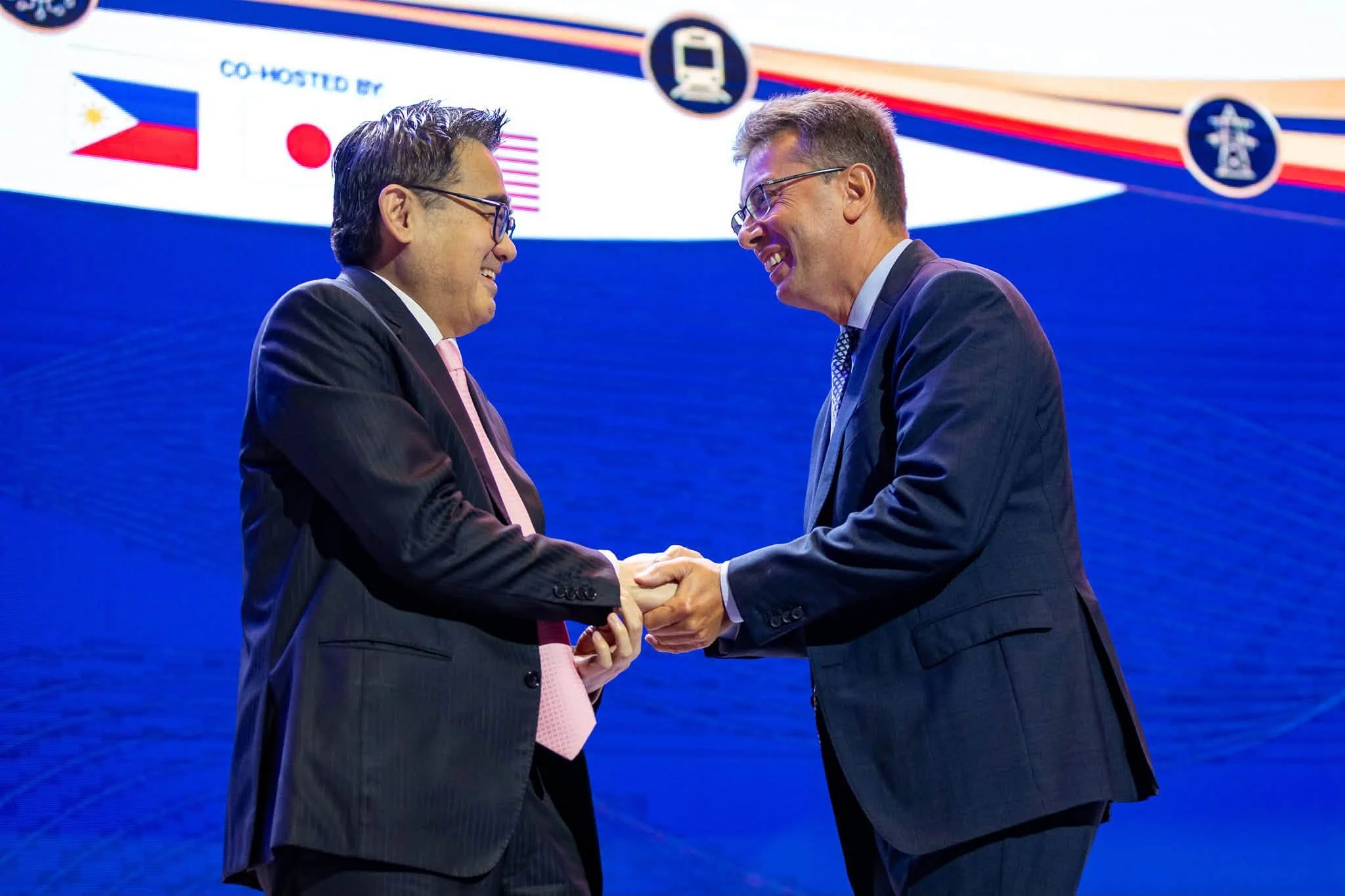
Finance Secretary Frederick Go, co-chairperson of the LEC, announced the two new partners during the inaugural Luzon Economic Corridor Investment Forum on Thursday, Sept. 10.
The EU will align its Global Gateway investments with the corridor’s priorities, including a €60-million (roughly ₱4.36 billion) Green Economy Programme and a €20-million (roughly ₱1.45 billion) Digital Economy Package.
The programs will support green and circular development, renewable energy, energy efficiency, secure digital connectivity, innovation and skills development.
EU Ambassador to the Philippines Massimo Santoro said its participation will also focus on improving the investment environment through governance, justice and public procurement reforms.
“EU Global Gateway investments advance the LEC on the green and digital economy, while supporting good governance, accountable justice and transparent public procurement to unlock more investment and deliver better services,” the EU said in a statement shared by its ambassador to the Philippines.
“Together, we’re building a greener, more connected and competitive Luzon,” it said.
Spain, meanwhile, will bring public and private sector expertise to potential LEC projects involving railways, modular infrastructure, aviation, shipbuilding, air-navigation management and renewable energy connectivity.
“We are very pleased to welcome the European Union and Spain to the partnership,” Go said.
“Their participation brings additional expertise, technology, capital, and global business networks that can help accelerate investments and develop the infrastructure to support the Philippines’ growth. This is a strong vote of confidence in the Philippines and in the opportunities that our economy offers,” he added.
The Luzon Economic Corridor was launched by the Philippines, United States and Japan to accelerate strategic infrastructure investments, strengthen connectivity and supply chains, and improve the Philippines’ competitiveness as an investment and production hub.
The corridor links the major economic hubs of Subic Bay, Clark, Manila and Batangas, with investments envisioned in transport and logistics, clean energy and other strategic sectors.
Other partners include Australia, Canada, Denmark, France, Italy, South Korea, Sweden and the United Kingdom.
With the addition of the EU and Spain, the partnership now has 13 members.