

Metro Manila, Philippines – President Ferdinand Marcos Jr. has summoned Chinese Ambassador Jing Quan to Malacañang on Tuesday, July 21, following the latest confrontation between Philippine and Chinese forces near Ayungin Shoal.
The meeting came two days after the Armed Forces of the Philippines (AFP) said China Coast Guard personnel struck a Philippine Navy sailor in the head with a wooden baton and damaged a Navy rigid-hull inflatable boat during a routine resupply mission to BRP Sierra Madre.
The Department of Foreign Affairs (DFA) condemned the incident, calling any act of violence against Filipino personnel “unacceptable” and saying it would take “appropriate diplomatic action.”
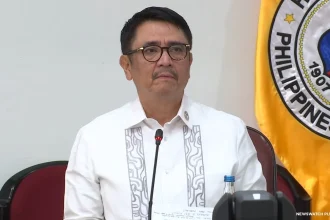
Communications Undersecretary Claire Castro said the discussion involved issues of national security and details are limited at the moment.
Before confirming the meeting, Castro said the president supported the statements issued by the Department of National Defense, the AFP and the DFA condemning the incident.
“Kinukondena po niya, kinukondena po ng pangulo ang mga ganitong klaseng pangyayari,” Castro said when asked about the president’s reaction.
[Translation: The president condemns these kinds of incidents.]
She said Marcos continues to favor resolving disputes through diplomatic channels despite the latest confrontation.
“Hindi po rin ninanais ng pangulo ang ganitong mga klaseng insidente na siyang nagbibigay ng polisiya na dapat tayo ay tumugon sa mga ganitong klaseng mga insidente through a diplomatic manner,” Castro said.
[Translation: The president does not want incidents like these. Our policy is to respond to such incidents through diplomatic means.]
“Hindi po talaga katanggap-tanggap itong nangyayari sa pagitan po ng bansa natin at ng China,” she said.
[Translation: What is happening between our country and China is simply unacceptable.]
Asked whether Manila should change its strategy toward Beijing given the repeated confrontations in the West Philippine Sea, Castro said the government would continue to pursue its rights through diplomacy.
“Sa panahon po ngayon ay kailangan pong aralin din ng Pangulo pero hindi po nadadaan sa dahas ang anumang pakikipaglaban sa karapatan,” she said.
[Translation: At this point, the president will study the situation, but the fight for our rights should not be pursued through violence.]
“Kung ano po ang mandato ng ating mga opisyal, ng ating mga Filipino personnel, iyon naman po ay naaayon sa ating karapatan at naaayon sa ating batas,” she added, saying the government stands by the actions of Philippine personnel despite China’s competing narrative.
[Translation: The actions of our officials and Filipino personnel are in accordance with our rights and our laws.]
China rejected the Philippine account and accused Filipino personnel of provoking the encounter.
In a statement, Chinese Embassy spokesperson Ji Lingpeng claimed two Philippine rubber boats “ignored repeated clear warnings” and deliberately approached and rammed a China Coast Guard patrol boat near what Beijing calls Ren’ai Jiao.
The embassy alleged Philippine personnel “initiated malicious attacks” against Chinese law enforcement officers using oars, sticks and other tools, prompting what it described as “proportional countermeasures” while exercising “maximum rationality and restraint.”
Beijing also rejected criticism from the United States, accusing Washington of inflaming tensions in the South China Sea and insisting China would continue to safeguard what it described as its territorial sovereignty and maritime rights.