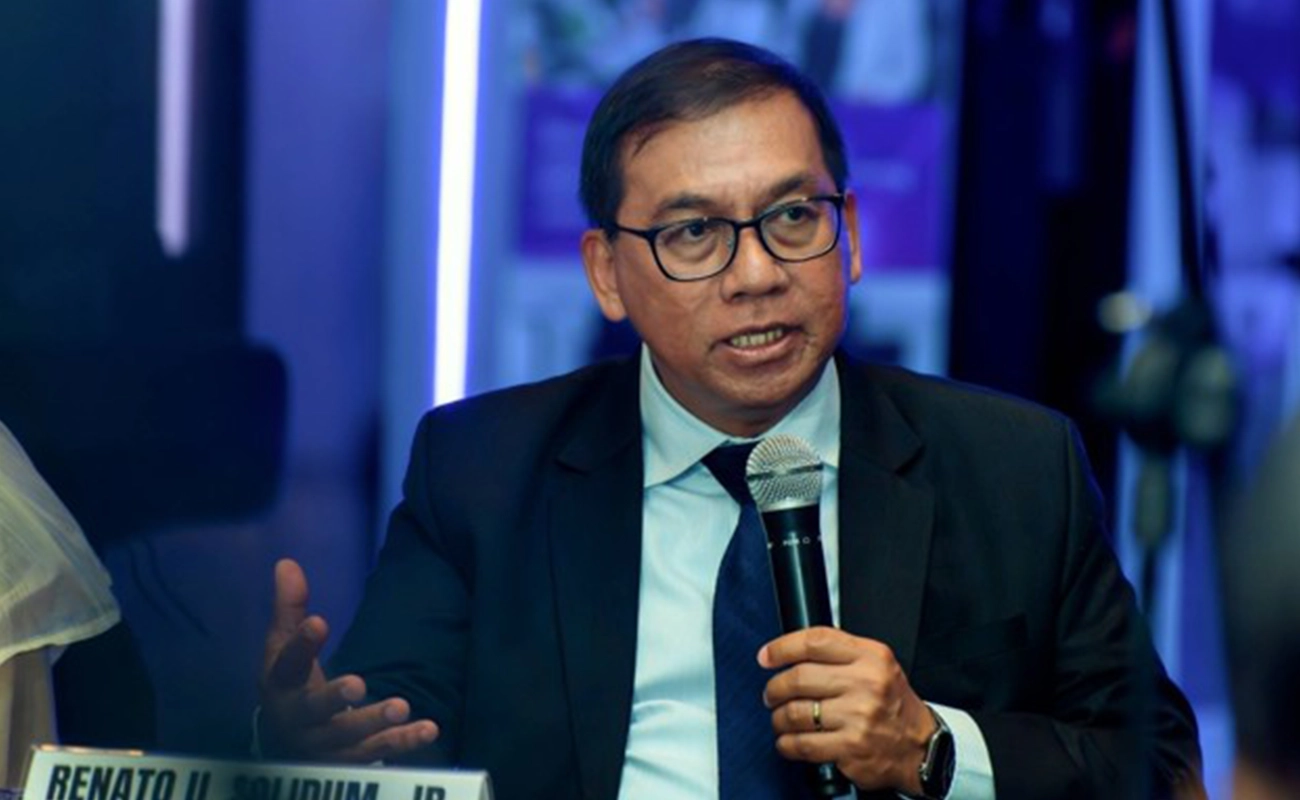


Metro Manila, Philippines – As the southernmost part of Mindanao was shaken by a magnitude 7.8 earthquake, which occurred offshore with its epicenter located 32 kilometers west of Maasim, Sarangani, Science and Technology Secretary Renato Solidum, Jr. reiterated that Metro Manila could potentially experience, meanwhile, a magnitude 7.2 earthquake from what is known as “The Big One.”
In a radio interview, Solidum said that a magnitude 7.8 earthquake is not expected to originate from the West Valley Fault. Instead, a magnitude 7.2 earthquake is seen by experts as the highest potential tremor, often dubbed as “The Big One” in Metro Manila.
Solidum further explained that the difference is that the epicenter [of the Mindanao earthquake] was offshore, which is why only a few areas experienced strong shaking.
“But if that had happened on land, more buildings would have collapsed or been destroyed, making it far more dangerous. Metro Manila is heavily populated compared to the SOCCSKSARGEN area, and that is where we would see the severity of the impact,” he said.
He added that even at magnitude 7.2, over 30,000 people could die in Metro Manila, and that estimate could increase by another 20,000 when accounting for the impact on the surrounding provinces in Metro Manila.
Instead of the West Valley Fault, Solidum cited the Manila Trench as a potential source of the earthquake in a scenario with similar or even higher magnitude to the one that hit Sarangani, which may occur near Metro Manila.
The General Santos Seismic Station in General Santos City, South Cotabato, and the Don Marcelino Seismic Station in Davao Occidental recorded a total of 6,233 aftershocks as of 3 p.m. of June 15, with magnitude ranging from 1.2- 6.4; 1,496 of them plotted, and 78 felt.
The earthquake in Sarangani, which had a depth of 33 kilometers, is attributed to subduction along the Cotabato Trench. It caused destructive ground shaking at the Phivolcs Earthquake Intensity Scale or PEIS VII (destructive) in General Santos City, and quakes were felt as far as Abuyog and Dulag in Leyte.
Preparation is key
While this may cause fear or panic, Solidum reminds the public that the best defense when it comes to earthquakes is preparation – ensuring that houses being built comply with the building code and existing buildings and houses are inspected and evaluated to see if they need to be retrofitted, strengthened, or condemned entirely.
“If it is determined that it won’t collapse and actually complies with the building code, the most dangerous elements then are the parts or fixtures of the building, or furniture, that could topple over or shatter and cause injury or death. That is why we advise people to ‘duck’ or ‘drop, cover, and hold’ – to take shelter in a safe place under a table or in a corner where nothing can fall on them,” he said.
He added that this is the safest thing to do because if someone is inside a building or house during the shaking, especially on a higher floor, he or she won’t even be able to move during a strong shaking.
“When you run outside, there are buildings or houses that might collapse right as you exit your own home, or trees that might fall, which is also dangerous,” Solidum explained. “Therefore, the very first thing you need to secure is your body and your head to prevent them from being hit by falling debris,” he continued.
Understanding the ‘Big One’
Meanwhile, in the first episode of Sci.Sáy, the newest program of DOSTv, Phivolcs seismologist Bhenz Rodriguez clarified a major misconception regarding “The Big One.”
While many associate it exclusively with Metro Manila, Rodriguez emphasized that “every municipality and province has its own ‘Big One.’”
He explained that if the maximum credible earthquake scenario happens on that local fault, that is their “Big One.” During such an event, the area could experience destructive Intensity VIII shaking.
Rodriguez warned of the severe physical impact: “During an Intensity VIII earthquake, you literally cannot stand up. You’ll struggle heavily to stand. You will lose your balance completely.”
To learn more about the “Big One,” watch the episode on DOSTv’s official Spotify account and YouTube channel.