

Manila, Philippines – A Supreme Court ruling that paved the way for the return of some P60-billion funds pilfered from the Philippine Health Insurance Corp. (PhilHealth) sets the precedent for the banking industry to demand a similar restoration of a bigger sum due the Philippine Deposit Insurance Corp. (PDIC), a retired magistrate said on Friday, Dec. 12.
Not explicitly mentioned in the high tribunal’s decision was the PDIC’s P107.23-billion fund that the health insurer declared as in “excess” of its insurance safety net for depositors, and remitted to the national treasury to instead bankroll the government’s cash dole-out program and a few big-ticket infrastructure projects.
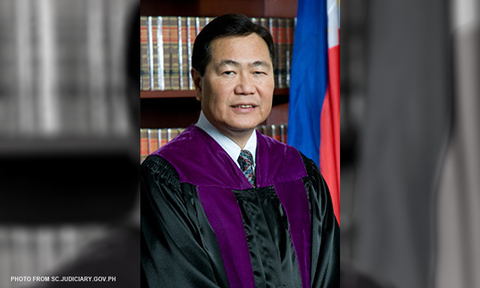
But former Supreme Court Associate Justice Antonio Carpio said the high tribunal’s ruling, while silent on the PDIC case, was a blanket directive that should cover PDIC too.
That decision declared as unconstitutional the arbitrary designation of government-owned-and-controlled corporation (GOCC) funds as “excess” and redirect them elsewhere, effectively taking the shape of a pork barrel. The high court also voided a circular issued by the Department of Finance that enabled those fund transfers to the Bureau of the Treasury.
“That should apply to PDIC also… So the PDIC should ask for a refund. The problem is that the bankers are not moving. They should demand the return of the fund – the bankers or the depositors. The Bankers Association [of the Philippines] should demand the return of the fund,” Carpio said in a NewsWatch Plus interview.
The influential Bankers Association of the Philippines (BAP) groups the country’s largest lenders – universal banks. Under its charter, the PDIC builds a deposit insurance fund from contributions from banks in case the insurer needs to bail out lenders that failed. That fund also serves as protection for depositors covering up to P1 million per account.
The BAP has to initiate the retrieval of the P107-billion PDIC funds from the Department of Finance, which has jurisdiction over the Bureau of the Treasury, Carpio said.
“There must be a request from them because they were not petitioners so they should file their own petition. I’ve been telling them, file your own petition… The work is done for them already. All they have to do is ask the money back,” the former magistrate said.
The PDIC multibillion-peso fund could be restored using the frozen assets of senators, congressmen and public officials, instead of sourcing the money from the 2026 national budget, Carpio said.
PDIC should not go the way of PhilHealth whose P60-billion is being reinstituted via an allocation in the 2026 national budget that the bicameral conference committee has yet to finetune.
“Putting it for PhilHealth, putting it in the 2026 budget to return the fund is not exactly ideal for me because the money of Philhealth was transferred to the national treasury and put in the flood control projects. And these flood control projects are scams. So who will return the money to Philhealth? We, the taxpayers. So we’re being hit twice. It’s a double whammy,” Carpio said.
A supplemental budget should only be a last resort, he added.
“Ideally, what we want is that the principal source of restitution, the primary source of reimbursement would be the recovery from flood control scammers. Whatever recovered money from them should be money used to reimburse and the shortfall that would come from the budget,” Carpio said.
“But for PDIC, they should demand that there should be a law that the primary source of repayment would be recoveries from flood control scammers,” the former magistrate said.