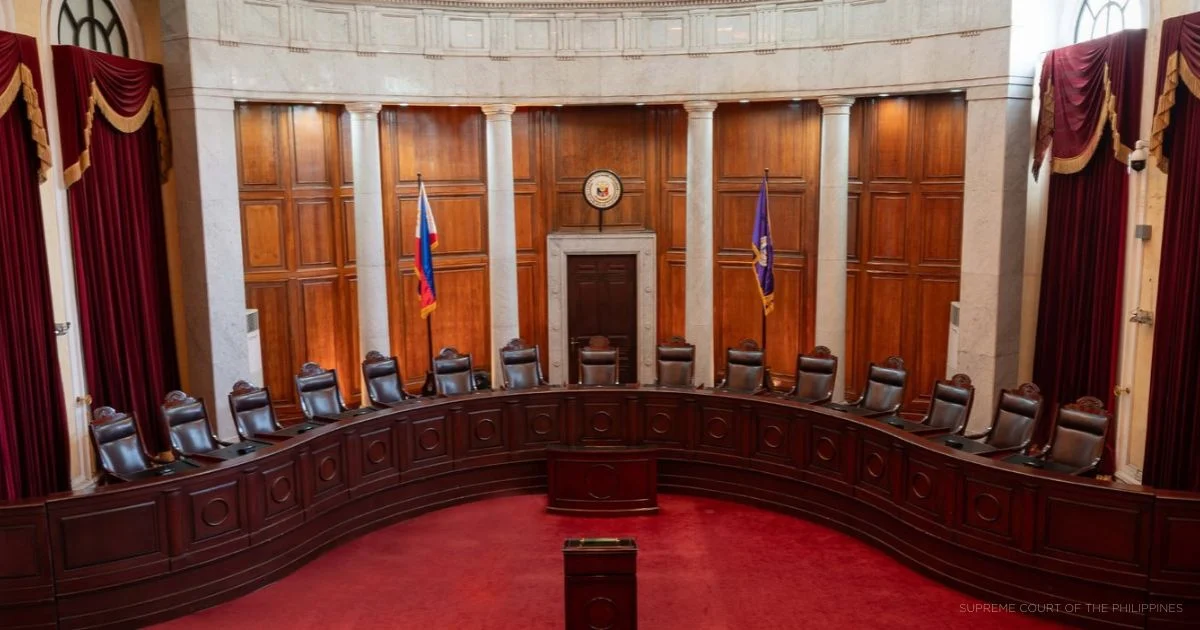


Metro Manila, Philippines – The Supreme Court (SC) has declared unconstitutional and voided provisions of unprogrammed funds in budget laws spanning two years, and an infrastructure fund under the Department of Public Works and Highways (DPWH).
A statement from the SC Office of the Spokesperson said the increase passed by Congress of ₱449.5 billion in unprogrammed appropriations in the 2024 General Appropriations Act (GAA), as well as a ₱17.99-billion increase in the Department of Public Works and Highways’ (DPWH) Special Road Fund in the 2025 budget were against the Constitution.
The high court also voided certain provisions on unprogrammed appropriations in the 2026 budget for exceeding the recommendation of the president. The Constitution prohibits Congress from increasing the annual budget submitted by the president.
The case against unprogrammed appropriations in the 2024 budget was filed by then Albay Rep. Edcel Lagman and former Sen. Aquilino Pimentel III. Lagman died in January 2025. The challenge to the increase in road fund was filed by civil society and advocacy group Filipinos for Peace, Justice and Progress Movement.
In a decision written by Senior Associate Justice Marvic Leonen and announced on Tuesday, Oct. 20, the SC partly granted the petition of Caloocan Rep. Edgar Erice and Mamayang Liberal Rep. Leila de Lima that challenged a provision in the current budget law that authorized unprogrammed appropriations unchecked spending authority without sufficient standards.
The court clarified that unprogrammed appropriations are not unconstitutional on their own but must comply with constitutional limits and safeguards “to ensure fiscal discipline.”
The court identified the Strengthening Assistance for Government Infrastructure and Social Programs (SAGIP), included in the 2024 and 2025 budgets but removed from the 2026 budget, as a prohibited lump-sum allocation where funding for DPWH projects was taken.
Additionally, according to the SC, the ₱449.5-billion increase approved by the bicameral conference committee created “artificial fiscal space” that allowed additional funding for a number of government programs, including the DPWH basic infrastructure projects, the Department of Health medical assistance for indigent patients, and social assistance programs under the Department of Social Welfare and Development and the Department of Labor and Employment.
The court also noted the need for transparency in budget deliberations, citing the committee’s failure to submit supporting documents for changes made to the proposed appropriations.
With reports from the Supreme Court of the Philippines