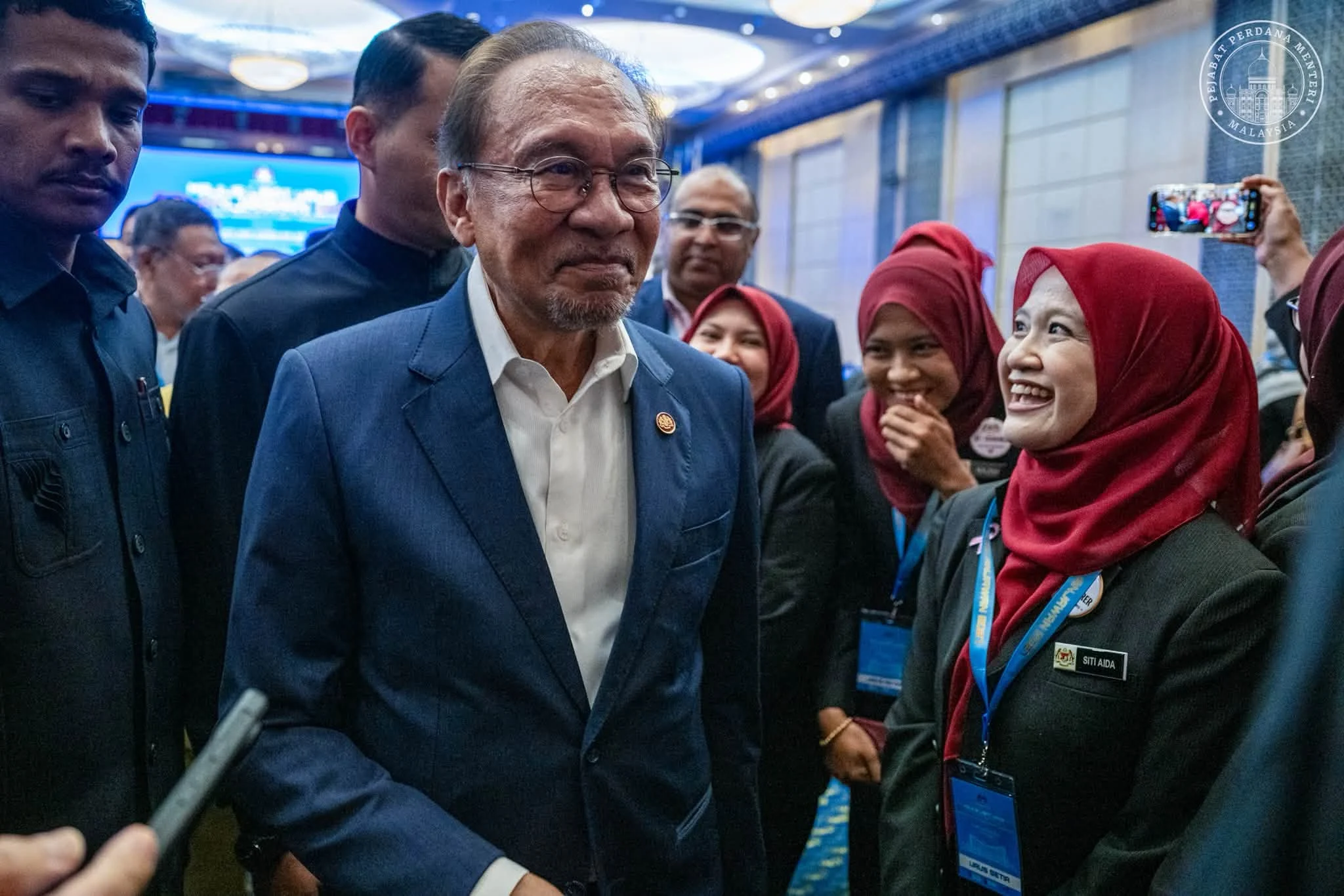


Taipei, Taiwan – Taiwan is reconsidering the risks of investing in Malaysia after Prime Minister Anwar Ibrahim backed Beijing’s claim over Taiwan and indicated he would not condemn China for using force to pursue unification—remarks that drew swift praise from Beijing.
Taiwan Foreign Minister Lin Chia-lung stated that Taipei will be more cautious when reviewing investment applications from Taiwanese companies seeking to expand into Malaysia, warning that Anwar’s stance has unsettled the business community.
“We, as a government, will also be more cautious in reviewing Taiwanese businesses’ applications for investment in Malaysia because there will be increasing risks,” Lin told visiting journalists in Taipei.
The warning attaches real economic stakes to the emerging diplomatic dispute between Malaysia, China, and Taiwan, coming at a time when Kuala Lumpur is actively soliciting foreign investment in semiconductors and other strategic industries.
In an Al Jazeera interview, Anwar stated that he viewed “Taiwan as part of China, period,” reiterating Malaysia’s One-China policy. He also indicated he would not condemn Beijing should it resort to force to achieve cross-strait unification.
Beijing welcomed Anwar’s statement on Wednesday.
“China appreciates the remarks by Prime Minister Anwar,” Chinese Foreign Ministry spokesperson Lin Jian said. “There’s only one China in the world. Taiwan is an inalienable part of China’s territory, and China must and will be reunited.”
Foreign Minister Lin noted that Anwar’s remarks triggered deep concern among Taiwanese investors regarding the safety of their operations and supply chains in Malaysia should a military conflict erupt across the Taiwan Strait.
“That means that Taiwan’s investment in Malaysia will not be fully secured or it will become one part of China,” Lin said through an interpreter.
While Taipei does not oppose Malaysia strengthening ties with Beijing, Lin emphasized that it should not come “at the expense of Taiwan.”
Lin acknowledged that bilateral trade and investment between Taiwan and Malaysia have grown significantly in recent years—particularly in semiconductor manufacturing—but stressed that geopolitical considerations are increasingly dictating corporate decisions.
“Economics and security are intertwined,” Lin added.
Malaysia maintains no formal diplomatic relations with Taiwan, recognizing the People’s Republic of China under its long-standing One-China policy. Meanwhile, Taiwan rejects Beijing’s sovereignty claims, while China continues to view the self-governing island as a renegade province and has refused to rule out the use of force to bring it under its control.