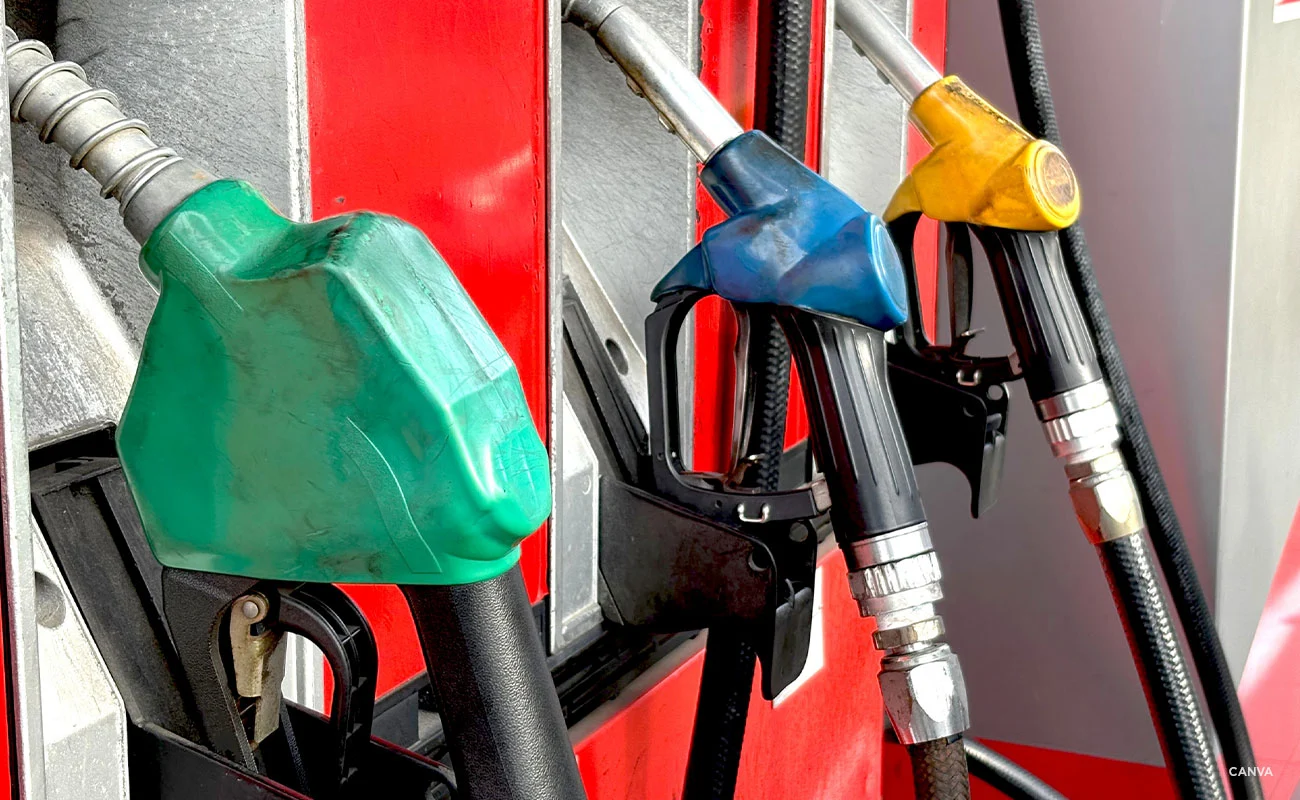


Metro Manila, Philippines – Malacañang said the Philippines is not facing an oil supply crisis despite rising pump prices linked to the conflict in the Middle East.
It said the country still has enough fuel stock while the government rolls out subsidies and other relief measures to soften the blow on workers, commuters, and consumers.
Communications Undersecretary Claire Castro said in a Monday press briefing that the government is focused on preventing any disruption in fuel supply as global markets react to the worsening crisis overseas.
“Sa ngayon ay hindi pa kinukonsidera na mayroon tayong oil crisis dahil kumpleto po tayo at enough po ang supply ng langis,” Castro told reporters at Villamor Air Base in Pasay City.
[Translation: As of now, we do not consider that we have an oil crisis because our oil supply is complete and sufficient.]
Castro said the Department of Energy has been negotiating a more fuel imports, including 440,000 barrels and a possible 600,000 barrels more to stabilize supply. She said the government’s concern for now is the surge in prices, not a shortage of oil.
“Ang sinasabi po natin na wala pa po at hindi pa po dinideklara na mayroon tayong oil crisis dahil nga po sapat ang suplay sa ngayon,” Castro said.
[Translation: What we are saying is that there is still no declared oil crisis because supply remains sufficient for now.]
She added that what the public is feeling is largely a pricing shock caused by the crisis in the Middle East.
The distinction is politically significant as the Marcos administration tries to calm public concern while acknowledging the burden of rising fuel prices.
President Ferdinand Marcos Jr. earlier referred to an “oil crisis” in discussing the impact of the war in the Middle East, but Castro said he was referring to the regional crisis abroad rather than a domestic supply emergency.
The latest turmoil has revived memories of past global oil shocks that rattled economies worldwide.
The 1973 oil crisis erupted after Arab oil producers imposed an embargo during the Arab-Israeli war, sending prices soaring and exposing the vulnerability of oil-importing countries such as the Philippines. Another major shock followed in 1979 after the Iranian Revolution disrupted production, while the 1990 Gulf War again jolted global crude markets.
The current crisis has drawn comparisons to those earlier shocks because of the importance of the Middle East to world energy flows, especially through the Strait of Hormuz, a vital route for oil and gas shipments.
The International Energy Agency has warned that the current disruption in the Middle East has become the largest supply shock in the history of the global oil market, with traffic through the Strait of Hormuz heavily affected and energy infrastructure in the region under pressure. IEA Executive Director Fatih Birol has said the world has already lost more oil supply than in the two major oil crises of the 1970s combined.
Castro said more assistance may be on the way.
She said Social Welfare Secretary Rex Gatchalian told her the Department of Social Welfare and Development would continue releasing cash aid to affected public utility drivers in tranches and that the timing of additional assistance is now being studied.
Still, labor groups said the government’s response remains inadequate.
In a statement, the Trade Union Congress of the Philippines challenged the palace’s attempt to frame the problem mainly as one of price disruption rather than crisis.
“Anong silbi ng suplay kung hindi na ito kayang bilhin ng mamamayan? At anong seguridad ng suplay kung ito’y nakatali sa takbo ng digmaan?” Mendoza said.
[Translation: What is the use of supply if people can no longer afford to buy it? And what security does supply have if it is tied to the course of war?]
He said the issue is no longer just about physical availability of fuel but whether ordinary Filipinos can still access it.
“This is not merely a crisis of supply but the survival crisis of access and affordability,” he said.
Castro, however, insisted the government is not downplaying the situation.
“Wala naman tayong dina-downplay ito po kasi iyong totoong sitwasyon,” she said. “[Translation: We are not downplaying anything, this is simply the real situation.]
She said the administration is working across agencies to ensure adequate supplies of oil, food and other basic goods while cushioning the impact of global price spikes on households.