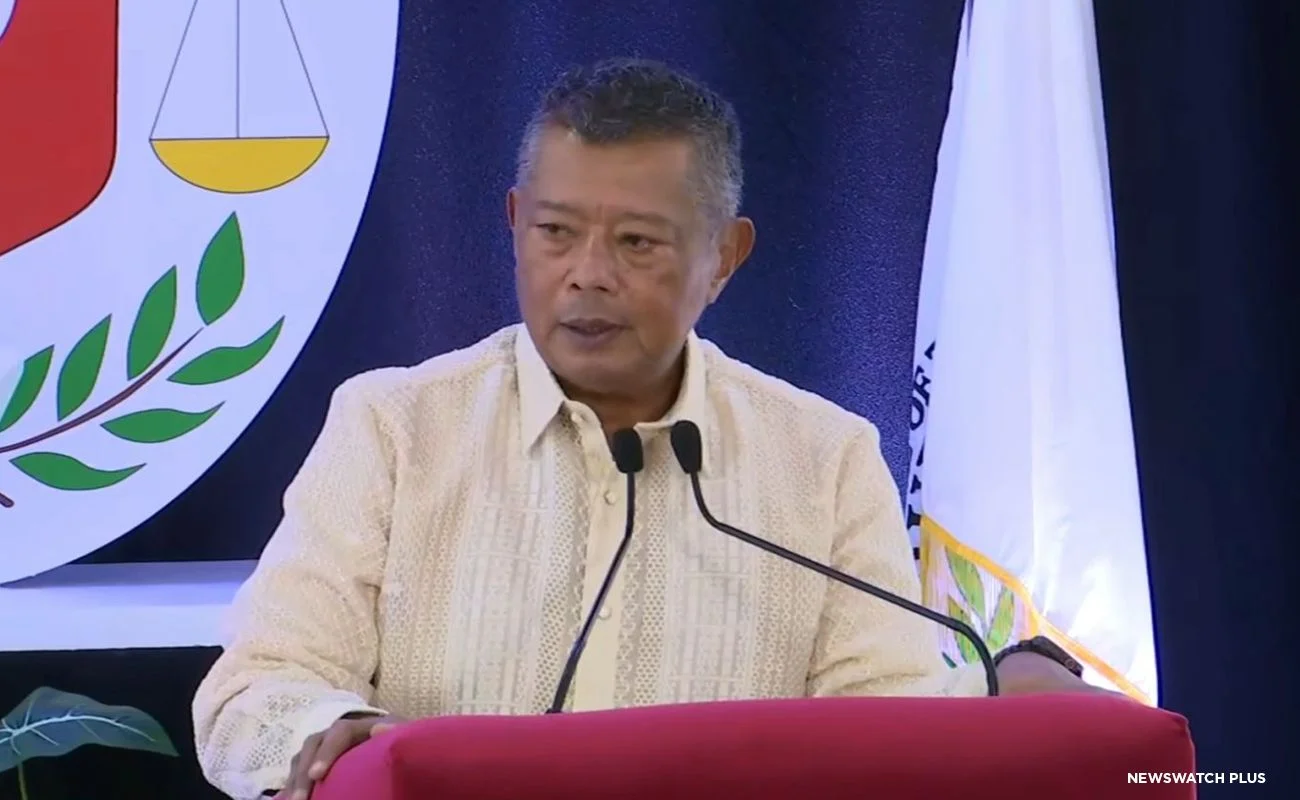


Metro Manila, Philippines – Ombudsman Jesus Crispin Remulla called on the Supreme Court to revisit a 2016 ruling on plunder, in particular the requirements that make it harder to prosecute complex corruption such as the multibillion-peso flood control scandal.
In his first year address on Monday, Oct. 12, Remulla questioned the doctrine established in the 2016 decision in Macapagal-Arroyo v. People, which he said imposed two requirements on plunder prosecutions: identifying a “main plunderer” and proving that the accused personally benefited from the stolen money.
He said these were not in the law passed by Congress and could allow suspects behind complex schemes to evade accountability by moving money through intermediaries and shell companies.
“Kaya sinasabi ko ito nang may buong paggalang sa Kataas-taasang Hukuman: Panahon na para balikan ang doktrinang ito,” Remulla said. “It is time to revisit it.”
[Translation: That is why I say this with the utmost respect to the Supreme Court: It is time to revisit this doctrine.]
The ombudsman said 39 flood control-related cases are now under litigation, including 35 with the Sandiganbayan and four in regional trial courts. He said 52 people are facing cases, including a sitting senator, a former senator, four members of the House of Representatives, a former Cabinet secretary, 33 Department of Public Works and Highways personnel, contractors, and other private individuals.
Remulla said the scandal involves more than ₱100 billion in settled flood control projects that were never constructed. He said the ombudsman gathers evidence, examines contracts and audit reports, inspects project sites, traces the movement of funds, and hears the respondents’ side before filing cases.
“Our cases are not decided by trending topics, hashtags, or the loudest comment section,” he said, urging the public to examine court filings and documentary evidence rather than rely on social media narratives.Remulla also reported that his office had granted 1,770 requests for Statements of Assets, Liabilities and Net Worth (SALNs) since he took office, with sensitive personal information redacted in accordance with the Data Privacy Act. He said transparency should be a right of the public, not a privilege granted by government officials.
For his second year, Remulla said the focus would shift from accountability to recovery, including addressing corruption that discourages investment and raises costs for ordinary Filipinos.
He announced plans to establish an investment ombudsman to receive complaints from businesses and investors about bribery, delayed permits and abuses of regulatory authority.
He also said the office would convene a Philippine Regulatory Summit in 2027 to identify gaps and overlaps in government regulation.
Remulla said the ombudsman would continue strengthening its investigative capacity, noting that 60 investigators had completed a specialized training course and that the office had hired 60 new lawyers.
“Accountability was the focus of our first year. Recovery will be the focus of the next,” he said.