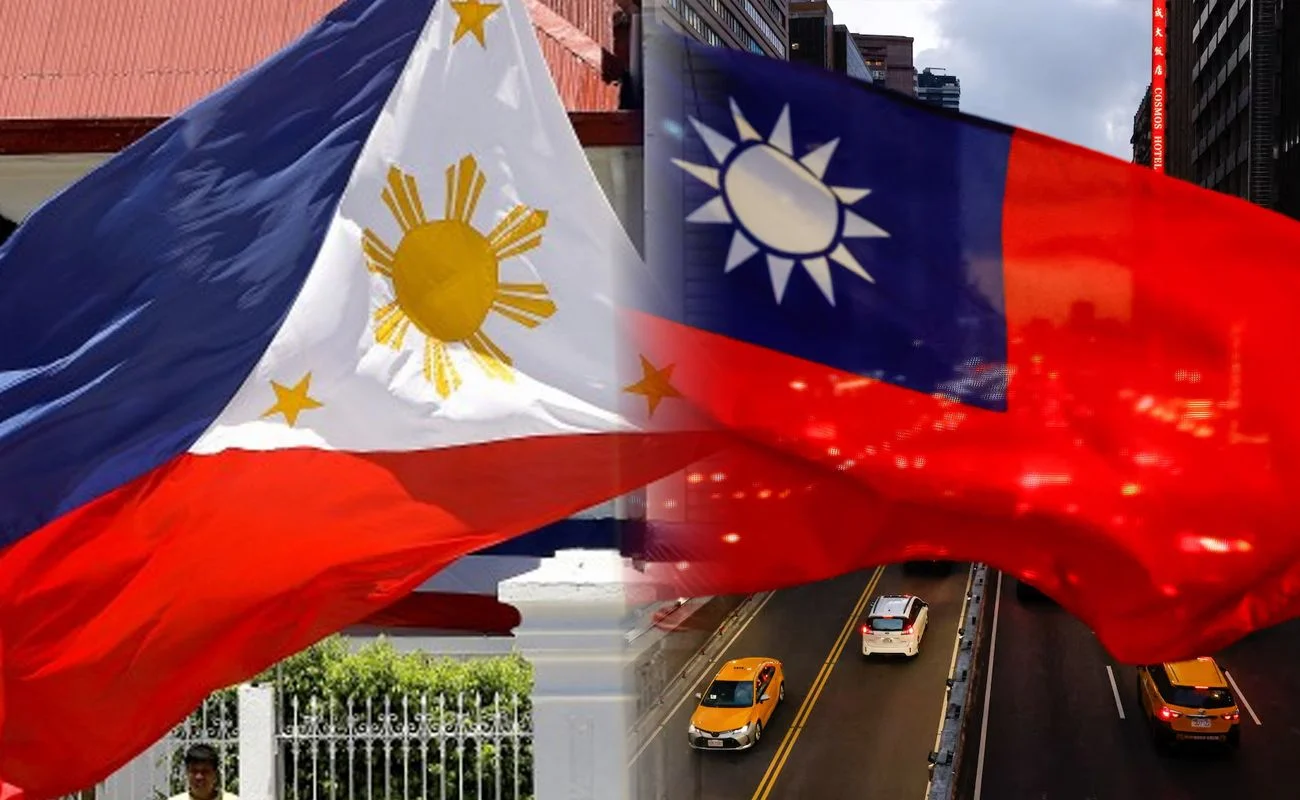


Metro Manila, Philippines – The government has been preparing for a potential crisis in the Taiwan Strait for the past three years, with contingency manuals and transportation plans already in place for nearly 200,000 Filipinos who could be caught in a conflict, the Department of Migrant Workers said.
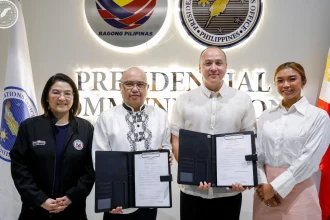
Migrant Workers Secretary Hans Leo Cacdac shared the preparations during the department’s budget deliberations as lawmakers questioned whether the government has sufficient funds to respond to conflicts and other emergencies involving overseas Filipinos.
Cacdac said the preparations began in response to an early directive from President Ferdinand Marcos Jr., which involved the DMW and other government agencies.
“With respect to Taiwan, for these last three years, we have been meeting, not just DMW and other relevant agencies, with respect to crisis management manuals and processes in the event that a crisis emerges,” Cacdac said.
“I cannot disclose the details at this stage. I hope you understand for security and confidentiality reasons,” he told the appropriations committee.
Cacdac said the government has identified transportation options but declined to publicly discuss the specific roles assigned to agencies.
“It has been three years already because this is one of the president’s early instructions that we sit down as a whole-of-government… so that we are ready when a crisis occurs in Taiwan,” he said.
Funding questioned
Lawmakers questioned the adequacy of funds available for emergency repatriations amid geopolitical tensions in the Middle East and the Taiwan Strait.
During the hearing, it was pointed out that a potential conflict involving Taiwan could affect nearly 200,000 Filipinos and disrupt normal commercial air and sea routes.
The department urged Congress to determine whether the contingency plan is fully funded and funded, including the standby money to immediately evacuate Filipinos after a crisis erupts without waiting for supplemental funding.
Cacdac said the DMW wants its Action Fund increased to ₱3 billion, from the ₱2 billion provided under the proposed National Expenditure Program.
He pointed to the ₱3-billion supplemental funding previously provided by Marcos as an indication of the resources necessary for crisis response.
“Ang gusto rin naman ho namin level sa action fund namin is 3 billion as set by the president himself. Kasi 2 billion lang ho kami sa NEP,” Cacdac said.
[Translation: What we also want is for our Action Fund to be at ₱3 billion, as set by the President himself, because we only have ₱2 billion in the NEP.]
Cacdac said geopolitical developments cannot be predicted solely on the basis of how much emergency money was spent in previous years.
“When it comes to crisis responses, precisely, there is no crystal ball that will tell us when a crisis will occur,” he said.
Swift response
Cacdac maintained that the government would be able to respond quickly should a conflict erupt in Taiwan because contingency measures have already been prepared.
“I think that because of our preparation in the last three years, it will be early. Again, this is an inter-agency effort,” he said.
“Of course, geographically, Taiwan is close, so the logistics will not be as difficult, say, as a repatriation effort from the Middle East,” he added.
Cacdac said specific agency assignments could only be disclosed confidentially.
“Our response time will be swift because there are already crisis manuals in place,” he said.
When asked whether the government could still act quickly if funds are depleted, Cacdac said the Department of Budget and Management and Office of the Executive Secretary are already part of the contingency discussions.
He said funding requirements corresponding to different stages and severity of a crisis have been identified and could be submitted for release when necessary.
“As the crisis unfolds, deepens, or worsens, there are corresponding resources that are already waiting to be submitted and requested,” Cacdac said.
“So those things are already itemized. So our turnaround time will be swift,” he added.
The Philippines maintains a One China policy and has no formal diplomatic relations with Taiwan, but Manila has repeatedly acknowledged the potential impact of a cross-strait conflict on the Philippines because of its proximity and the large Filipino community on the island.
Marcos has said the Philippines does not intend to become a launching pad for attacks against another country and has stressed that Manila’s concern is the defense of Philippine territory and regional peace and stability.