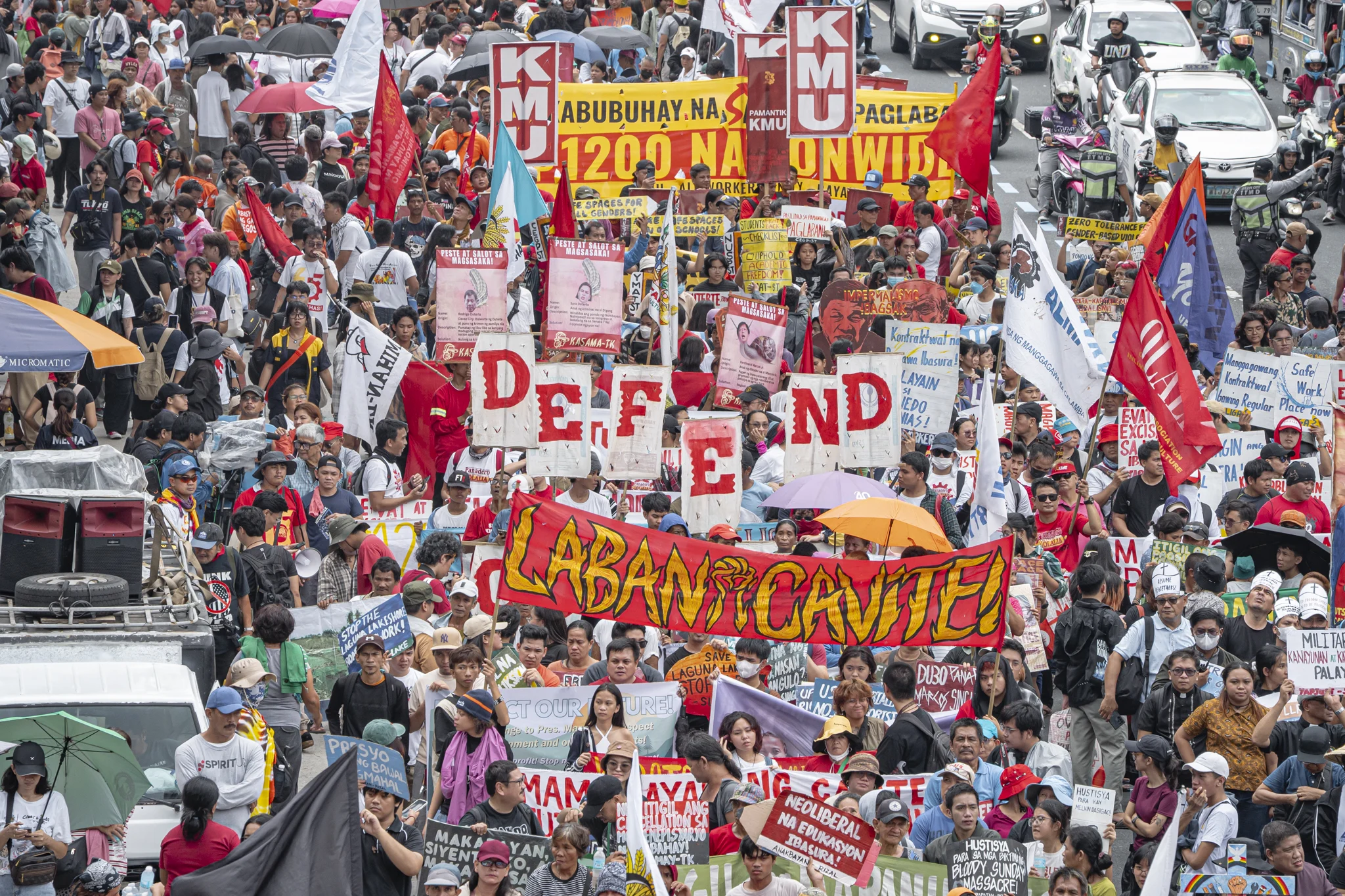


Metro Manila, Philippines – Progressive group Bagong Alyansang Makabayan (Bayan) challenged President Ferdinand Marcos Jr.’s economic record ahead of his fifth State of the Nation Address, arguing that rising fuel prices, electricity rates and worsening poverty contradict the administration’s claim that the country has achieved meaningful economic progress.
In a statement on Friday, July 25, Bayan said the administration is expected to highlight the country’s reclassification by the World Bank as an upper-middle-income economy, but argued that the designation does not reflect the daily experience of many Filipinos.
“The grinding hunger and poverty, skyrocketing prices, and worsening permanent jobs crisis all paint a dire picture of the true state of the economy and the people under the Marcos regime,” the group said.
Bayan pointed to increases in fuel prices over the past year, saying diesel prices rose by 55 percent, gasoline by 66 percent , kerosene by 97 percent, and liquefied petroleum gas by 40 percent to 50 percent.
The group also cited higher electricity costs, claiming Meralco rates increased by about 22% while nationwide electricity inflation reached 12% year-on-year in June.
Bayan attributed the increases to longstanding deregulation and privatization policies under the Oil Deregulation Law and the Electric Power Industry Reform Act, but argued that the Marcos administration bears responsibility for maintaining those policies despite their impact on consumers.
The group also criticized the government for not imposing price controls on petroleum products during the recent oil price surge triggered by tensions in the Middle East, saying renewed geopolitical conflicts could again push fuel prices toward ₱100 per liter.
Bayan further alleged that the administration has continued to rely on value-added tax collections from higher fuel and electricity prices, noting that the Bureau of Internal Revenue expects to collect about ₱750 billion in value-added tax revenues this year.
According to Bayan, minimum wage earners in Metro Manila can cover only about half of the estimated daily cost of living, while workers in the Bangsamoro Autonomous Region can afford less than a third.
The group argued that these indicators undermine the administration’s narrative of economic progress despite the country’s upgraded income classification.
“Clearly, one of the legacies of the Marcos presidency is not making the Philippines more developed as an economy… but rather causing greater destitution and more suffering among the Filipino people,” Bayan said.