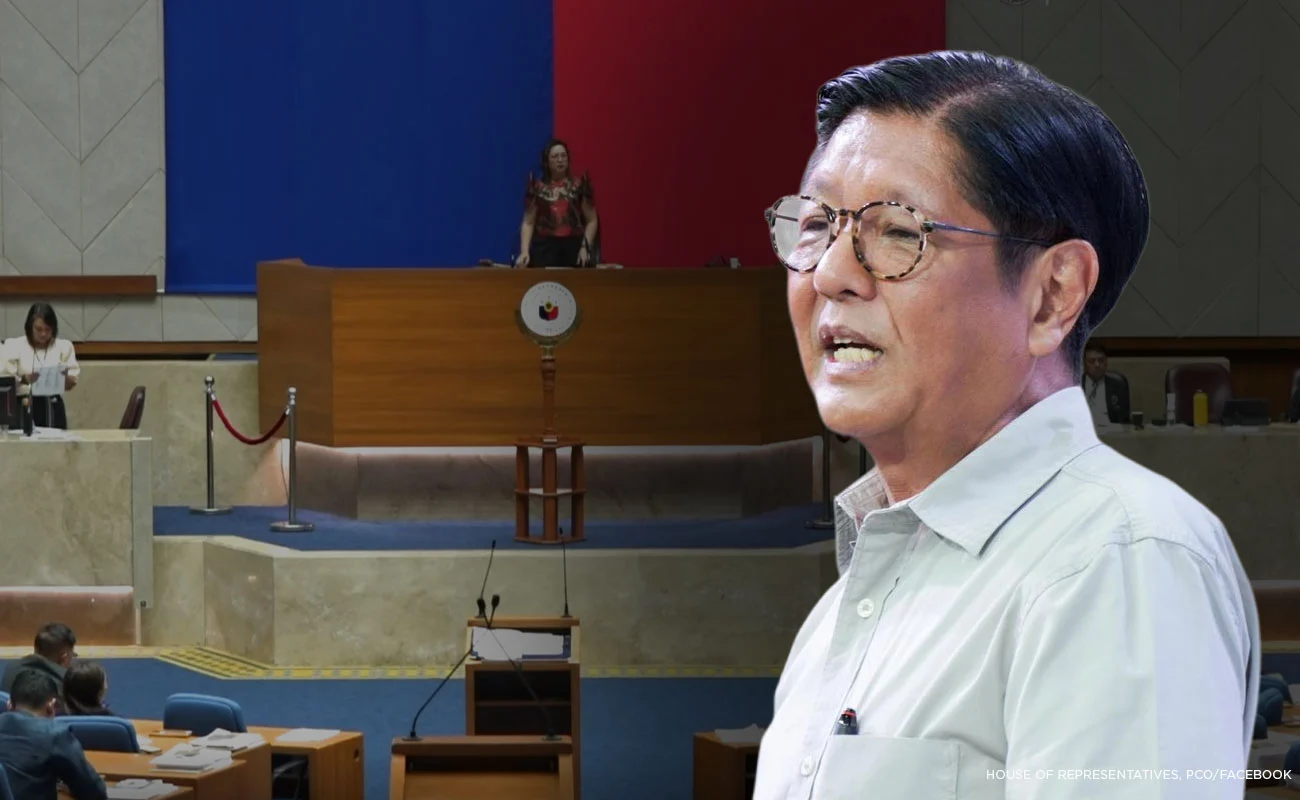


Metro Manila, Philippines – President Ferdinand Marcos Jr. will deliver his fifth State of the Nation Address (SONA) on Monday, July 27, after a year dominated by conflict abroad, tensions at sea and political battles at home that have tested his administration on multiple fronts.
The annual address comes as Marcos enters the final two years of his six-year term seeking to convince the people that his government has managed overlapping economic, security and governance challenges while laying the groundwork for longer-term reforms.
“I always regard the SONA as a report of the president to the public as to what has happened since the last SONA,” Marcos said Friday, July 24.
He added that the speech would explain how the government navigated “this very difficult period in our history.”
Middle East conflict shook the economy
The biggest external challenge was from the conflict in the Middle East, which threatened global oil supplies and drove up fuel prices.
Concern over possible disruptions in the Strait of Hormuz prompted the government to activate its response framework, expand fuel subsidies and release billions of pesos in assistance to transport workers, farmers and vulnerable sectors.
The crisis also forced the government to monitor thousands of overseas Filipino workers across Israel, Iran and neighboring countries while preparing repatriation plans.
The conflict complicated Marcos’ efforts to keep inflation under control.
Although inflation eased to 6.4% in June, it remained above the Bangko Sentral ng Pilipinas 2% to 4% target. Economic growth also slowed to 2.8% in the first quarter, while labor groups continued pressing for higher wages despite a recent minimum wage increase in Metro Manila.
Malacañang said the Department of Budget and Management has reported savings amounting to ₱22.7 billion that will be used to fund programs for vulnerable sectors affected by the war in the Middle East.
In an exclusive interview with NewsWatch Plus, Iranian Deputy Foreign Minister Saeed Khatibzadeh said prospects for reviving Tehran’s understanding with Washington remain bleak.
“The agreement is on life support,” the Iranian diplomat said.
Khatibzadeh also urged ASEAN to take a stronger stand in defending the United Nations Charter amid growing geopolitical tensions, arguing that regional organizations should place greater emphasis on international law.
In a joint press conference in June during the state visit of German President Frank-Walter Steinmeier, the president expressed cautious optimism over the ceasefire agreement between the United States and Iran, describing it as an important step toward ending the conflict and restoring stability in a region critical to the global economy.
“Any step towards peace is a good step and that is hopefully what we are observing here,” the president said.
West Philippine Sea remained flashpoint
The administration also confronted escalating tensions with China in the West Philippine Sea.
In recent weeks, Manila protested another confrontation near Ayungin Shoal in which Philippine authorities accused the Chinese Coast Guard of using force against Filipino personnel.
The latest incident prompted Marcos to summon Chinese Ambassador Jing Quan to Malacañang.
Despite this, the president maintains that there should be a reset of Philippine-Chinsa ties.
“Hindi ko mabibigay iyong detalye pero iyan ang gustong ipahiwatig ng Pangulo. So, kung anumang isyu mayroon ang China at ang Pilipinas, gusto niya magkaroon ng reset sa pag-uusap na iyon. Nadinig siya ng ambassador ng China, nadinig din siya—nadinig din ang Pangulo ng ambassador ng China, so with that, sana magkaroon ng mas magandang resulta,: Communications Undersecretary Claire Castro said.
[Translation: But that’s what the president wanted to convey. Whatever issues exist between China and the Philippines, he wants to reset those discussions. The Chinese ambassador heard him, and the President also heard the ambassador. With that, we hope it will result in a better outcome.]
In a recent phone conversation with the U.S. President Donald Trump, Marcos said that Trump would raise South China Sea concerns with Chinese President Xi Jinping.
“They spoke, and President Trump asked how President Marcos was doing. President Marcos replied that things were okay and that they were holding the fort despite many challenges. He mentioned the recent incident in the West Philippine Sea because it had just happened. President Trump then said, ‘Let me mention that too.’ So, describing it as ‘telling on someone’ is not the right way to characterize the conversation,” Philippine Ambassador to the US Jose Manuel Romualdez told NewsWatch Plus in an interview.
New trade challenge from Washington
Even as security ties with Washington deepened, the Marcos administration faced a new trade dispute after the United States imposed additional tariffs on Philippine exports over alleged failures to prevent products made through forced labor from entering supply chains.
The Philippines has begun negotiations with the Office of the U.S. Trade Representative while maintaining that the country complies with international labor standards and has strengthened enforcement mechanisms.
Romualdez said Trade Undersecretary Allan Gepty will head Manila’s negotiating panel in discussions with the Office of the U.S. Trade Representative (USTR).
“In the negotiations, the U.S. has always been open to countries, especially the Philippines, to explain further on what they have found as a way to be able to impose these tariffs,” Romualdez said.
He added that Washington has also been receptive to granting exemptions for Philippine exports that are not produced in the United States.
Romualdez said the latest tariffs stem from a U.S. investigation into alleged forced labor rather than the reciprocal tariffs previously imposed by the Trump administration.
“We’re negotiating to still bring that down on the basis of what we think is not quite correct about the 301,” he said, referring to the U.S. government’s findings on forced labor in exported goods.
The U.S. government announced additional tariffs on imports from 60 economies, including the Philippines, after determining they had failed to adequately prohibit or enforce bans on the importation of goods made with forced labor. Philippine exports covered by the action will face
Corruption campaign faces scrutiny
Domestically, Marcos’ anti-corruption campaign is expected to be among the most closely watched issues during the SONA.
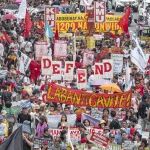
Last year’s address focused heavily on alleged anomalies in flood control projects.
Marcos has repeatedly defended the pace of the investigations.
“The more we look, the more we find,” he said earlier this month, arguing that the irregularities predated his administration and that his government was the first to aggressively pursue them.
In an interview in Canada early this month, the president was asked whether his administration had done enough since declaring in his 2025 State of the Nation Address that officials involved in corruption should be ashamed,
Marcos said, “Well, I cannot say that we have done enough because we are not done yet. Unfortunately, the more we look, the more we find.”
He said the alleged irregularities extend beyond his administration.
The president said the continuing investigation has revealed what he described as a deeply rooted system of corruption that cannot be solved solely through criminal cases.
“This is a deep-seated system of corruption that requires not only structural changes in the way the government is run, in the way the budget is written, but also a change in attitude,” he said.
He said changing the culture within the government is the biggest challenge because some officials have come to view kickbacks as acceptable.
“Akala nila karapatan nila yung ginagawa nila. Wala kaming ginagawang mali, ganyan talaga ang patakbo dito,” Marcos said.
[Translation: They think what they’re doing is their right. They believe they are doing nothing wrong because that’s simply how the government operates.]
Asked whether the investigations amount to selective justice, Marcos said the government’s former independent commission would continue to follow the evidence.
“From the time that we formed the independent commission, I said we’ll just follow the evidence, and we’ll continue to do that,” he said.
Critics, however, argue that accountability has yet to reach all those allegedly responsible and have questioned whether investigations are being pursued consistently across political lines.
Delivering on promises
Beyond crises, Marcos is expected to highlight several flagship programs, including expanded zero-balance billing in government hospitals, new specialty medical centers outside Metro Manila, continued infrastructure development, additional cash assistance for low-income households, education reforms and efforts to attract more foreign investment through initiatives such as the Luzon Economic Corridor and Pax Silica.
He is also likely to point to improvements in rice supply, digitalization of government services and stronger diplomatic engagement through the Philippines’ hosting of ASEAN meetings.
Whether those accomplishments resonate with the public may depend on whether Filipinos feel relief from rising prices, better public services and greater accountability in government.
When asked Friday whether this year’s SONA would again tackle corruption, Marcos declined to elaborate.
“Abangan ang susunod na kabanata.” [Translation: “Watch for the next chapter.”]