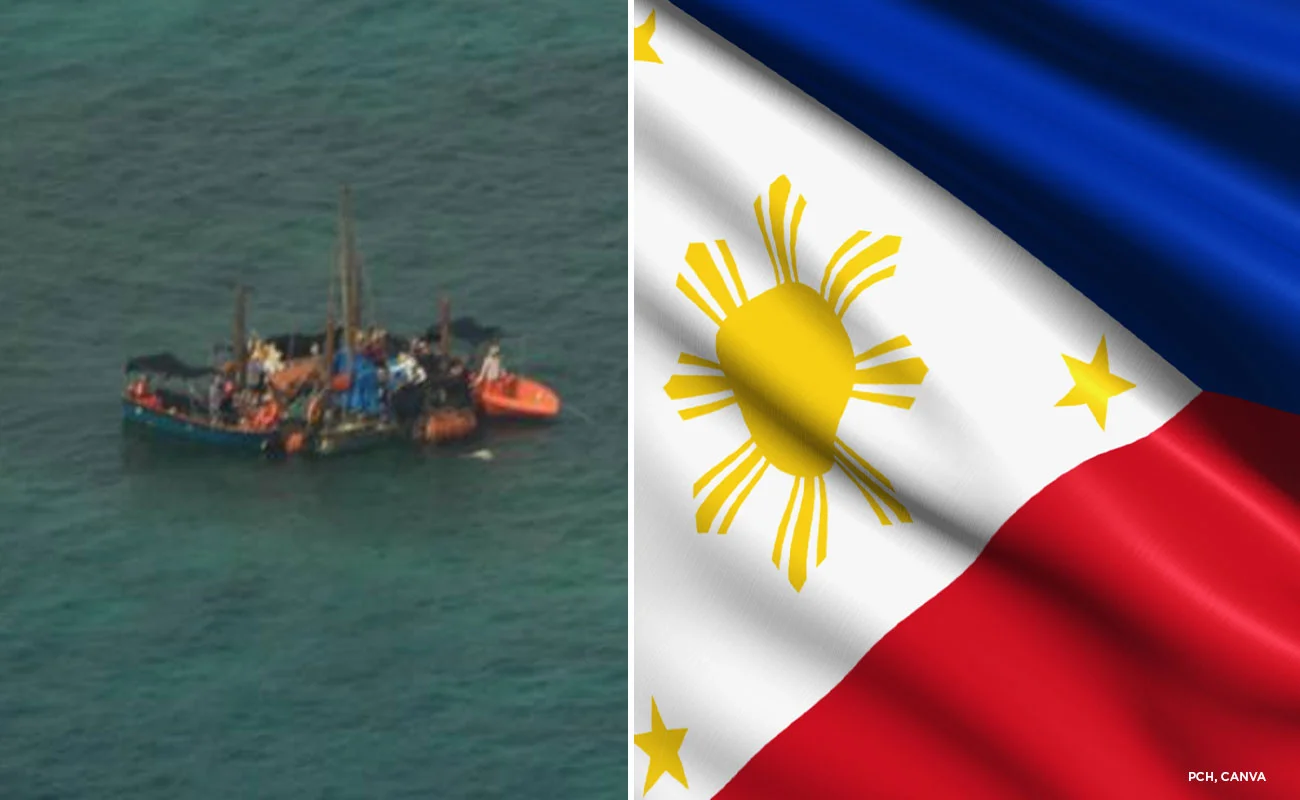


Metro Manila, Philippines – The Philippines has urged China to remove a newly monitored floating platform and other structures in Scarborough Shoal (Bajo de Masinloc), which violate Philippine sovereignty, international law, and Beijing’s commitments under the 2002 Declaration on the Conduct of Parties in the South China Sea.
The call was made by the Department of Foreign Affairs (DFA) after Philippine authorities confirmed the presence of what officials described as a movable floating platform inside the shoal, along with other objects and structures monitored in the area.
“The Department of Foreign Affairs expresses its concern over the presence of a certain floating platform and structures within and in the vicinity of Bajo de Masinloc,” Foreign Affairs deputy spokesperson Rogelio Villanueva Jr. said in a briefing on Wednesday, June 10.
Villanueva said the country has “indivisible, incontrovertible and longstanding sovereignty” over the shoal.
“The Philippines has exercised continuous, uninterrupted sovereignty and jurisdiction over Bajo de Masinloc as demonstrated by detailed surveys, official government correspondences and consistent acts of administration that have gone uninterrupted for centuries,” he said.
“Only the Philippines has the right to place or construct structures and conduct activities in Bajo de Masinloc,” he added.
Viullanueva said the structures were “inconsistent with international law, particularly the 1982 United Nations Convention on the Law of the Sea and the 2016 Award in the South China Sea Arbitration.”
He added that the structure runs counter to China’s commitments under the 2002 Declaration on the Conduct of Parties in the South China Sea.
“We therefore urge China to withdraw and remove the platform and structures from Bajo de Masinloc, cease similar actions that violate Philippine sovereignty and sovereign rights in and within the vicinity of Bajo de Masinloc, and comply with its obligations under international law, particularly UNCLOS and the 2016 Award in the South China Sea Arbitration,” Villanueva added.
The DFA said Manila has raised its concern with Beijing.
“To this end, the Philippines has undertaken the appropriate diplomatic action, including several demarches and a diplomatic protest to the People’s Republic of China,” Villanueva said.
The department said it would continue to assert the country’s sovereignty, sovereign rights and jurisdiction in the West Philippine Sea.
China rejected Manila’s position and insisted that it has sovereignty over the shoal, which it calls Huangyan Dao.
“Huangyan Dao is China’s inherent territory. China has indisputable sovereignty over it and its adjacent waters,” Chinese embassy spokesperson Ji Lingpeng said in a separate statement.
Ji said China’s activities in the area, including scientific research, fall within what Beijing considers its sovereign rights.
“It is fully within China’s sovereign rights to carry out activities including scientific research at Huangyan Dao,” Ji said.
Beijing also rejected Manila’s reliance on the 2016 arbitral ruling, which invalidated China’s sweeping claims in the South China Sea.
“The so-called South China Sea arbitration award is illegal, null and void. China does not accept or recognize it, and will never accept any claim or action based on the award,” Ji said.
The floating platform was first monitored after surveillance activities showed Chinese research vessels operating in the area. The Philippine Coast Guard said it later documented personnel on the platform and the installation of what appeared to be an antenna-like object in the shoal.