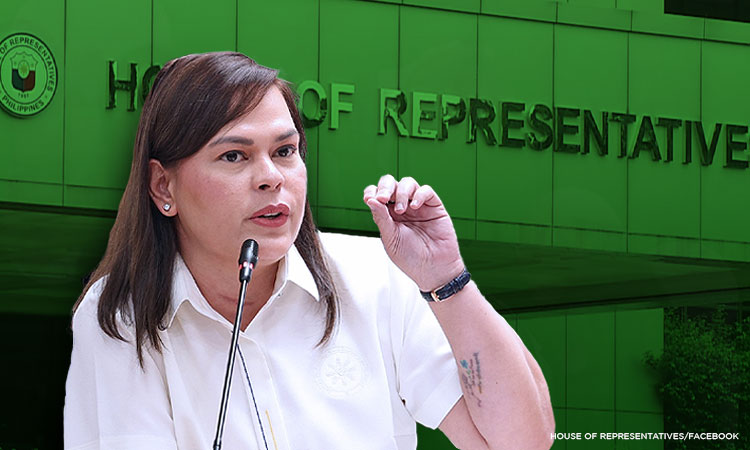


Metro Manila, Philippines – Vice President Sara Duterte faced another impeachment battle early 2026 after surviving a previous attempt to remove her from office.
NewsWatch Plus breaks down the timeline of the fresh impeachment efforts that may not just unseat her – but disqualify her from holding any public office.
Feb. 2 – Two impeachment suits were filed against the vice president amid conflicting interpretations on the one-year bar rule – the provision in the Constitution that prohibits more than one impeachment proceeding against one official in one year.
The first complaint was filed by the Makabayan coalition, citing betrayal of public trust for the alleged misuse of ₱612.5 million of confidential funds in the Office of the Vice President and Department of Education (DepEd).
The other was from civil society groups led by Tindig Pilipinas convenor Kiko Aquino Dee, grandson of democracy icons former President Corazon Aquino and former Sen. Ninoy Aquino. They cited five impeachment offenses: culpable violation of the Constitution, graft and corruption, bribery, betrayal of public trust, and other high crimes. It was endorsed by Mamamayang Liberal Rep. Leila de Lima and Akbayan Rep. Perci Cendaña.
Feb. 5 – The House Secretary General transmitted two complaints to the Office of the House Speaker.
Feb. 9 – A third ouster bid from religious and civil society groups was filed and endorsed as well by De Lima. While it carried similar grounds as the second impeachment complaint, De Lima described it as an “improved version.”
Feb. 18 – Nathaniel Cabrera, a private lawyer, filed the fourth impeachment suit, citing almost the same grounds from previous filings. Deputy Speaker Paolo Ortega and Manila Rep. Benny Abante endorsed the complaint.
On the same day, Duterte announced that she is running for president in 2028.
Feb. 23 – The House of Representatives transmitted the four complaints to the House justice committee, setting the one-year immunity rule against any other bid to remove Duterte from office.
March 2 – The justice panel kicked off its deliberations on the four complaints. Prior to the hearing, Tindig Pilipinas had withdrawn their bid, in support of the third ouster suit to speed up the process.
The third and fourth complaints were declared sufficient in form. The committee ‘set aside’ the Makabayan suit over interpretations that it violated the one-year bar rule.
March 4 – The remaining complaints were declared sufficient in substance, as supported by the overwhelming majority of the committee members.
March 5 – The justice panel served notice to Duterte to respond to the complaints within 10 days.
March 16 – Duterte filed her consolidated answer ad cautelam, her formal reply to the justice committee. She claimed double standards were used against her, in comparison to the junked impeachment bid against President Ferdinand Marcos Jr. The vice president also said there was no due process and the allegations did not bear ultimate facts.
March 17 – Complainants waived their response to Duterte, calling it a non-answer.
March 18 – The justice committee declared the two complaints sufficient on grounds, paving the way for a proper hearing. Panel chairperson and Batangas 2nd District Rep. Jinky Luistro dubbed the formal proceedings a “mini-trial.”
March 25 – The first formal hearing on the complaints began. The justice panel summoned a number of resource persons and documents, including Duterte’s self-confessed bagman Ramil Madriaga and her statement of assets, liabilities, and net worth. Duterte skipped the hearing and questioned the panel’s jurisdiction, flagging the “mini-trial” reference to the proceedings.
April 1 – Duterte turned to the Supreme Court to challenge the legality of the proceedings, citing supposed constitutional flaws, including the one-year bar rule. In a document shared by Bicol Saro Rep. Terry Ridon, the vice president sought a temporary restraining order and a writ of preliminary injunction against the House proceedings. Prior to her filing, known Duterte allies had also asked the SC to stop the impeachment raps.
April 13 – Ridon shared a copy of the petition of Second Gentleman Mans Carpio to prevent the subpoena of the House of Representatives on his tax records, as part of the impeachment proceedings against his wife.
April 14 – Madriaga faced the House justice committee. In his testimony, he claimed that the ₱125-million confidential funds of the OVP in 2022 were disposed of in less than one day – not eleven days, as earlier disclosed in congressional hearings.
The Commission on Audit also shared that it denied the appeal of Duterte on the notice of disallowance previously issued against the agency on at least ₱73.2 million in OVP confidential funds. It issued a disallowance as well for secret funds in the first three quarters of 2023 worth ₱375 million.
Forensic experts from the National Bureau of Investigation disclosed that some acknowledgment receipts from supposed beneficiaries of confidential funds were written by the same people.
April 22 – Duterte’s financial records were disclosed. The Anti-Money Laundering Council said she and her spouse registered at least ₱6.7 billion in covered and suspicious transactions from 2006 to 2025. Lawmakers flagged its supposed disparity with her 2024 declared net worth of ₱88.5 million, as presented by the Office of the Ombudsman.
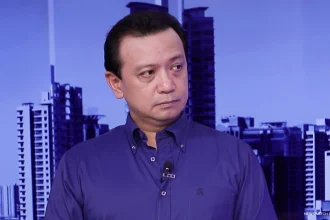
Former Sen. Sonny Trillanes also appeared before the panel, accusing the Duterte family of receiving money from businessman Sammy Uy, whom he described as a drug lord.
Lawmakers postponed the opening of the box containing the tax records of the Duterte couple, in light of the pronouncement of the Bureau of Internal Revenue that such documents should be examined in an executive session.
April 23 – Duterte maintained that she declared the correct information in her statement of assets, liabilities and net worth. She also said the billions in bank transactions as reported by the AMLC are false. Her defense team said the discrepancy in the vice president’s SALN and bank transactions is just a conclusion.
April 27 – Carpio sued members of the House justice committee and officials from the AMLC for disclosing their tax records.
April 29 – In a unanimous decision, the committee found probable cause on the complaints filed against Duterte.
Prior to the voting, lawmakers postponed the scrutiny of the BIR records, leaving the job to the Senate Impeachment Court.
The National Bureau of Investigation also appeared before the panel, saying the video showing Duterte’s threats against Marcos in 2024 was neither edited nor generated by artificial intelligence.
Duterte was absent at the hearing, effectively skipping all the House proceedings.
May 4 – The justice panel unanimously approved the committee report, containing a resolution setting forth the Articles of Impeachment against Duterte.
May 5 – The report and Articles of Impeachment reached plenary and were referred to the committee on rules.
May 6 – The plenary ordered the House-Secretary General to distribute electronic copies of the report and resolution setting forth the Articles of Impeachment against Duterte to House members.
READ: Breaking down the proposed Articles of Impeachment vs. Duterte
May 11 – Luistro is expected to sponsor the committee report before the plenary, and lawmakers will vote whether or not the House will send the case to the Senate for trial.
May 11 – The House of Representatives impeached Duterte — making her the first vice president in Philippine history to be impeached, and the first official to be impeached twice in two separate Congresses under the 1987 Constitution.
A total of 257 lawmakers voted yes, 25 were against, while nine abstained.
May 12 – The House of Representatives elected the prosecutors for the impeachment trial. The 11 members are: Jinky Luistro, Terry Ridon, Ramon Rodrigo Gutierrez, Ysabel Zamora, Lorenz Defensor, Chel Diokno, Leila de Lima, Kaka Bag-Ao, Jonathan Keith Flores, Lordan Suan, and Joel Chua.
May 13 – The House of Representatives transmitted to the Senate the Articles of Impeachment against Duterte. The Senate confirmed receiving 27 copies of the articles and the box containing her tax records.
May 14 – Then Senate President Alan Peter Cayetano said the Impeachment Court will be convened on May 18, 3 p.m., or at the soonest possible time after the receipt of the articles against Duterte were transmitted.
May 18 – Cayetano formally convened the impeachment court for Duterte’s trial. Meanwhile, the 11-member prosecution panel submitted a formal entry of appearance with the Senate Impeachment Court where Luistro was named as lead prosecutor.
May 19 – The House prosecution panel designated lead counsels in the presentation of the four Articles of Impeachment against Duterte in the Impeachment Court.
Confidential funds: Luistro
Unexplained wealth: Ridon
Bribery: Chua
Threats to the president: Defensor
Chua later on replaced Luistro on confidential funds, while Flores was assigned to lead the presentation of evidence on allegations of bribery.
May 20 – The Office of the Vice President received the summons of the Impeachment Court.
May 21 – Senators Erwin Tulfo and Vicente Sotto III said the formal impeachment trial will begin on July 6.
June 1 – Duterte’s defense submitted their response to the Articles of Impeachment. The reply dated May 25 asked the court to dismiss the case over lack of evidence and supposed failure to meet constitutional requirements.
June 9 – Acting Senate President Win Gatchalian issued the notice for the pre-trial conference for Duterte’s case. He signed the order as the court’s presiding officer.
June 11 – Luistro named the first batch of private prosecutors who will help in the impeachment trial. They are:
-Lorna Kapunan
-Lino Kapunan
-Sonya Castillo
-Deanna Lorenzo-Singian
-Bettina Zamora
-Amando Ligutan
-Marforth Fua
-James Bryan Ibrahim Alih
-Erwin Matib
-Justine Lamarca
June 15 – Luistro announced that the number of witnesses to be submitted by the House prosecution panel in its pre-trial brief has increased to more than 30 from the initial 25.
Meanwhile, House Secretary General Cheloy Garafil said she submitted 29 copies of the prosecution panel’s 57-page pre-trial brief ahead of the June 18 pre-trial conference for the impeachment proceedings against Duterte.
June 17 – Gatchalian was formally elected as Senate President in a special session of Congress. However, on the same day, Sen. Ping Lacson said Sen. Chiz Escudero may be elected as the presiding officer of the Impeachment Court.
June 18 – The Impeachment Court began the pre-trial conference.
June 22 – Luistro named Benjamin Tolosa Jr. as the prosecution team’s legal spokesperson and private prosecutor for the impeachment trial.
On the same day, the prosecution, through its spokesperson Lanao del Sur 1st district Rep. Zia Adiong, shared its preferred sequence for the proceeding.
The proposed order of presentation of the Articles of Impeachment is:
Article IV – Assassination threats vs President Ferdinand Marcos Jr.
Article I – Misuse of confidential funds
Article III – Bribery
Article II – Unexplained wealth
Meanwhile, Senate Secretary Rey Bantug, clerk of the Impeachment Court, said the pre-trial proceedings in the impeachment case cannot be completed on the 22nd due to the sheer volume of documents involved.
June 24 – The prosecution has formally asked the Impeachment Court to allow the opening of the box containing Duterte’s tax records so the documents can be marked as evidence during the pre-trial proceedings.
June 25 – Chua said the alias “Mary Grace Piattos” will stand as a witness in the impeachment case.
Meanwhile, the pre-marking of evidence for the impeachment trial of Duterte was completed, after five days of pre-trial proceedings. The BIR box was not marked as evidence due to supposed opposition from the defense team.
June 29 – Additional private prosecutors for the impeachment trial were named. They are:
– Former Supreme Court spokesperson Theodore Te
– Reynaldo Robles
– Arnold Labay
– Mae Divinagracia
Meanwhile, former Surigao del Norte Rep. Ace Barbers was named as the impeachment adviser and spokesperson for the prosecution team.
On the same day, the court released its pre-trial order, upholding the July 6 schedule. It said the prosecution and defense panels agreed on the schedule for the trial:
- July 6 to 27: Mondays, Tuesdays, and Wednesdays, 2 p.m.
- July 28 onwards: Tuesdays, Wednesdays, and Thursdays, 3 p.m.
The order also stated that the prosecution and defense team share 17 common witnesses, including Madriaga, Trillanes, and Remulla. Prosecution listed 57 witnesses, while defense has 96.
July 2 – The defense team filed its comment on the pre-trial order of the Impeachment Court. The prosecution, meanwhile, waived its right to comment to avoid delays.
July 3 – The Impeachment Court directed Duterte to appear either in person or through her counsel in a formal notice issued for the impeachment trial.