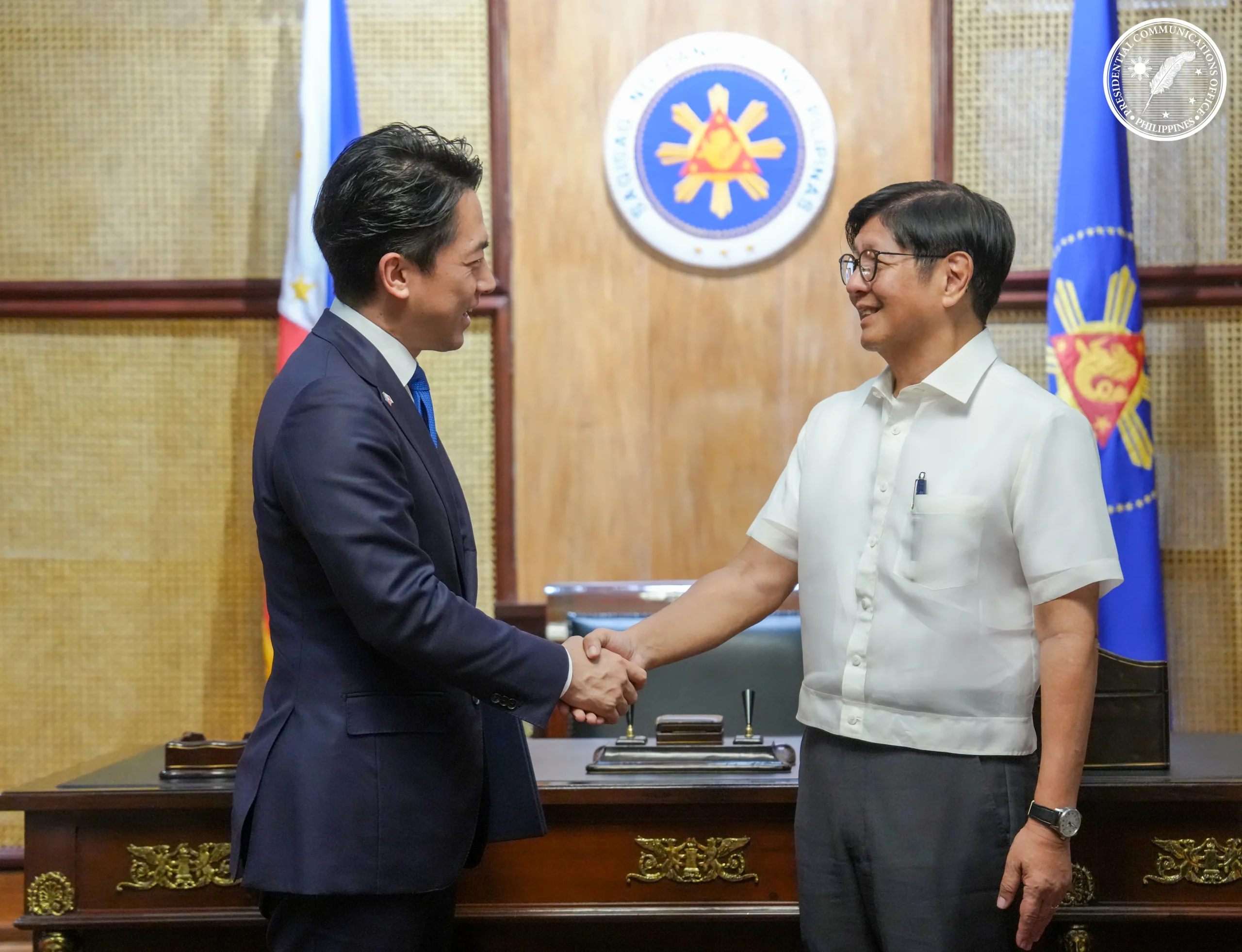


Metro Manila, Philippines – President Ferdinand Marcos Jr. is urging Japan to sustain its trilateral cooperation with the Philippines and the United States, even as Washington’s priorities appear to be shifting.
During a courtesy visit by Japanese Defense Minister Shinjiro Koizumi in Malacañang on Tuesday, May 5, Marcos said Manila and Tokyo can continue to strengthen the three-way partnership despite evolving geopolitical dynamics.
“We are trying to continue to build on the trilateral agreement that we signed between Japan, the United States and the Philippines,” Marcos said.
He acknowledged that the US is dealing with other concerns but noted that this should not hinder progress between the Philippines and Japan.
“I think between Japan and the Philippines, we can continue to strengthen that relationship,” he added.
Marcos also clarified that the trilateral arrangement goes beyond defense and security, noting that cooperation in other areas remains a priority.
“There are many aspects aside from security and defense that we would also like to develop,” he said.
The president noted that momentum on the trilateral pact slowed after political changes in the US.
“The administration in the United States changed quite soon after we signed the trilateral agreement, so we have not been able to really pursue it properly,” Marcos said. “So I think it is a good time to do that.”
The trilateral partnership was formalized during the inaugural Trilateral Leaders’ Summit held at the White House in Washington, D.C. on April 11, 2024, where US President Joe Biden hosted Marcos and Japanese Prime Minister Fumio Kishida.
The summit focused on strengthening cooperation in the Indo-Pacific, particularly in maritime security amid tensions in the South China Sea, as well as economic and infrastructure initiatives such as the Luzon Economic Corridor.