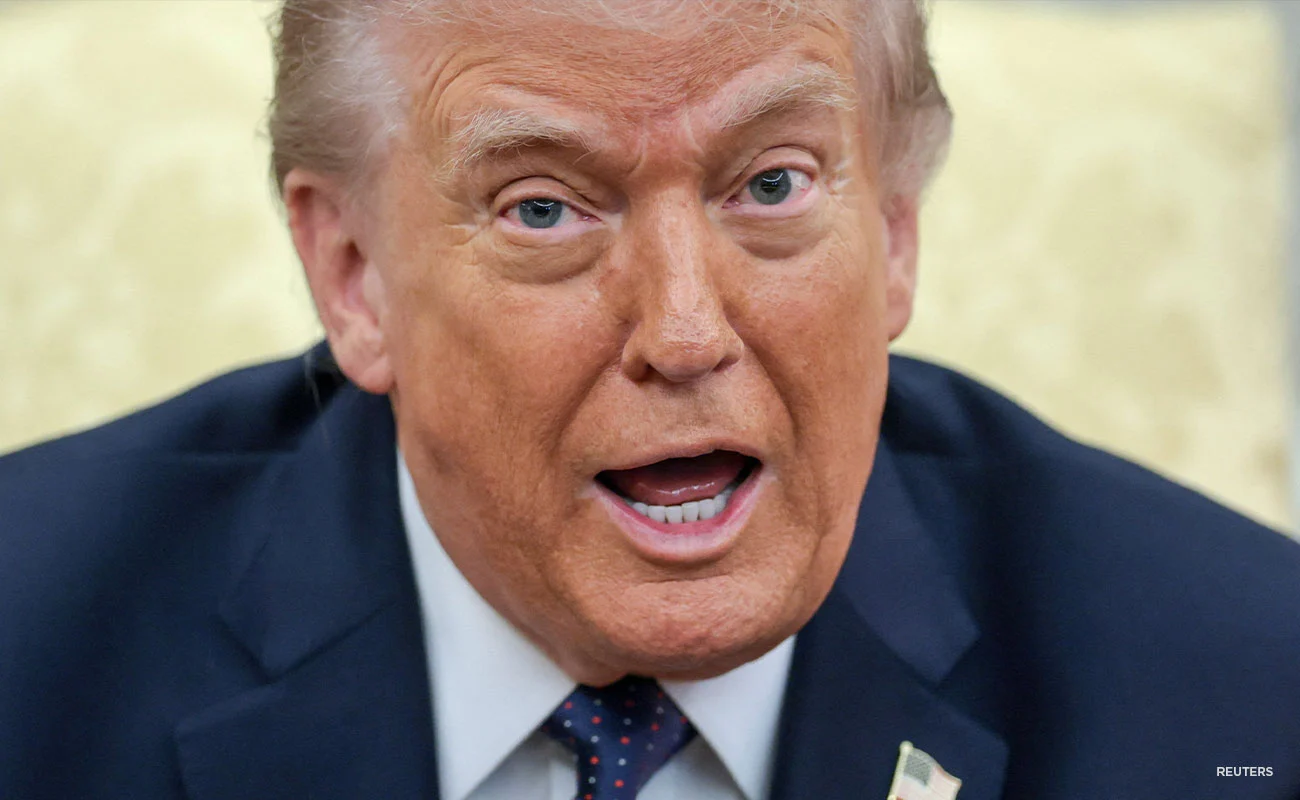


Washington, U.S./Islamabad, Pakistan/Nabatieh, Lebanon – U.S. President Donald Trump expressed confidence that an agreement could soon be reached to end the Iran war and said Tehran-backed Hezbollah should support a 10-day U.S.-backed truce agreed between Lebanon and Israel.
Trump said an extension of a two-week ceasefire with Iran was possible, but may not be needed.
“We’re going to see what happens. But I think we’re very close to making a deal with Iran,” he told reporters, adding if an agreement was reached and signed in the Pakistani capital Islamabad, he may go there for the occasion.
The U.S.-Israeli attack on Iran that started on February 28 has killed thousands of people and has been unpopular in the United States, leaving Trump with a political headache just months before crucial midterm elections at home.
The war triggered the worst oil price shock in history, with the International Monetary Fund downgrading its outlook for the global economy and warning prolonged conflict could push it to the brink of recession.
Group of Seven finance chiefs on Thursday said there was a pressing need for lasting peace to limit the economic costs.
Backdoor diplomacy progress
A Pakistani source involved in mediating between the U.S. and Iran said on Friday there was progress in backdoor diplomacy and that an upcoming meeting between the two sides could result in the signing of a memorandum of understanding followed by a comprehensive deal within 60 days.
“Both sides are agreeing in principle. And technical bits come later,” the source said on condition of anonymity.
A diplomatic source said the key Pakistani mediator, army chief Field Marshal Asim Munir, had been holding talks in Tehran since Wednesday and had made a breakthrough on “sticky issues”.
Those had included Tehran’s nuclear ambitions, with the U.S. proposing at last weekend’s talks a 20-year suspension of all Iranian nuclear activity. Tehran suggested a halt of three to five years, according to people familiar with the proposals.
Iran has demanded international sanctions be lifted and Washington has pressed for any highly enriched uranium to be removed from Iran. Two Iranian sources have said there were signs of a compromise on the HEU stockpile, with Tehran considering shipping part of it out of the country.
Oil price falls on deal hopes
Oil prices fell on Friday and Asian stocks headed for a second week of strong gains on optimism the Middle East conflict could be nearing an end, even though the critical Strait of Hormuz, an artery for a fifth of the world’s oil and gas supply, remains effectively closed.
The MSCI’s broadest index of Asia-Pacific shares outside Japan .MIAPJ0000PUS was down 0.8% as investors locked in profits after a blistering rally this month, with the index close to its highest since the Iran war broke out and almost all stock markets back to pre-war levels.
Brent crude futures LCOc1declined to $98.53 a barrel at 0728 GMT while U.S. West Texas Intermediate crude futures CLc1 fell to $93.59 a barrel, trimming gains from the previous session.
France and Britain will chair a meeting on Friday of around 40 countries aimed at signalling to the United States that some of its closest allies, many chided by Trump for failing to act, are ready to help restore freedom of navigation in the Strait of Hormuz once conditions allow.
Iran has largely closed the strait to ships other than its own and Washington this week imposed a blockade on ships entering or leaving Iranian ports. Analysts said the blockade could prevent roughly 2 million barrels per day of Iranian crude from reaching China, its primary buyer.
Only a trickle of vessels have passed through the strait since the war started, compared to an average 130-plus each day before the conflict.
Displaced return to destroyed homes in Lebanon
Celebratory gunfire rang out across parts of Beirut as the clock struck midnight on Thursday to mark the start of the truce.
Trump said he had spoken to Israeli Prime Minister Benjamin Netanyahu and Lebanese counterpart Joseph Aoun and planned to invite them to the White House for “meaningful talks” that could happen over the next week or two.
Conflict between Israel and the Iran-backed Hezbollah in Lebanon was reignited by the U.S.-Israeli war with Iran. Hezbollah opened fire in support of Tehran on March 2, prompting an Israeli offensive in Lebanon that authorities say has killed 2,000 people, 15 months after their last major conflict.
Trump urged Hezbollah to respect the ceasefire.
People uprooted by war in Lebanon began returning home on Friday, checking whether their homes were still standing though some kept families away for now for fear the ceasefire could prove fragile.
Hills of rubble marked the spot where buildings once stood on a road into a Hezbollah-controlled area pummelled by Israel.
In the largely destroyed southern city of Nabatieh, some returning residents defiantly said they would stay. Others said there was nothing to come back to.
“There’s destruction and it’s unliveable. Unliveable. We’re taking our things and leaving again,” said Fadel Badreddine, who came with his young son and wife. “May God grant us relief and end this whole thing permanently.”
(Reporting by Reuters bureaus; Writing by Martin Petty; Editing by Raju Gopalakrishnan)