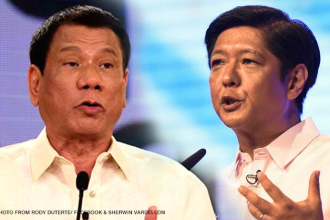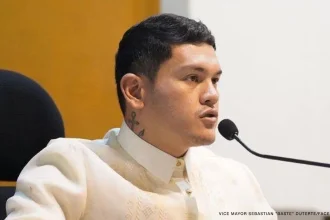
Metro Manila (CNN Philippines, August 23) — Justice Secretary Jesus Crispin Remulla expressed belief the Commission on Human Rights (CHR) should have consulted first with the executive department when it declared willingness to cooperate with the International Criminal Court’s (ICC) probe into the bloody drug war of former President Rodrigo Duterte.
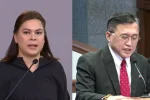
SAGIP Party-list Rep. Rodante Marcoleta raised the matter during the budget briefing of the Department of Justice (DOJ) in the House of Representatives on Wednesday.
Citing news reports, Marcoleta said the CHR stated that it is willing to cooperate with the ICC if its office is tapped by Prosecutor Karim Khan.
On July 18, the ICC appeals chamber decided by majority to continue to investigate the Duterte administration’s war on drugs, rejecting the plea of the Philippine government through the Office of the Solicitor General (OSG) against the resumption of the probe.
READ: ICC to continue probe into Duterte’s drug war; court chamber junks PH appeal
With this ruling, President Ferdinand Marcos Jr. agreed to stop the country’s engagement with the tribunal, Solicitor General Menardo Guevarra said.
READ: PH gov’t ends engagement with ICC following rejected plea vs. drug war probe
\”How is that possible for our own Human Rights Commission to express cooperation with the ICC when the President already said we are done with the ICC? How do you think they will proceed?\” he asked Remulla.
The Justice secretary said that while the CHR is an independent constitutional commission, it has to \”respect the other branches of government that are there.\”
\”When the Executive has already given its own commitment, I believe that it is their duty to consult first with the Executive regarding this matter because we have to speak with one voice as a country,\” he added.
Remulla also said the DOJ may have to communicate with the CHR about the matter, to which Marcoleta added that the commission must talk with the OSG.
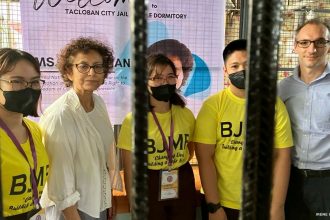
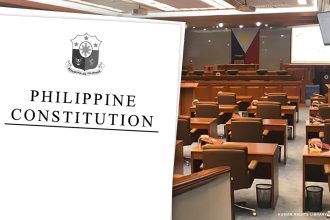
The CHR is an independent national human rights institution created under the 1987 Philippine Constitution, established in May 1987 by virtue of Executive Order No. 163, in response to the atrocities committed during Martial Law.
Among its powers and functions are to \”investigate, on its own or on complaint by any party, all forms of human rights violations involving civil and political rights\” and to \”monitor the Philippine Government’s compliance with international treaty obligations on human rights.\”