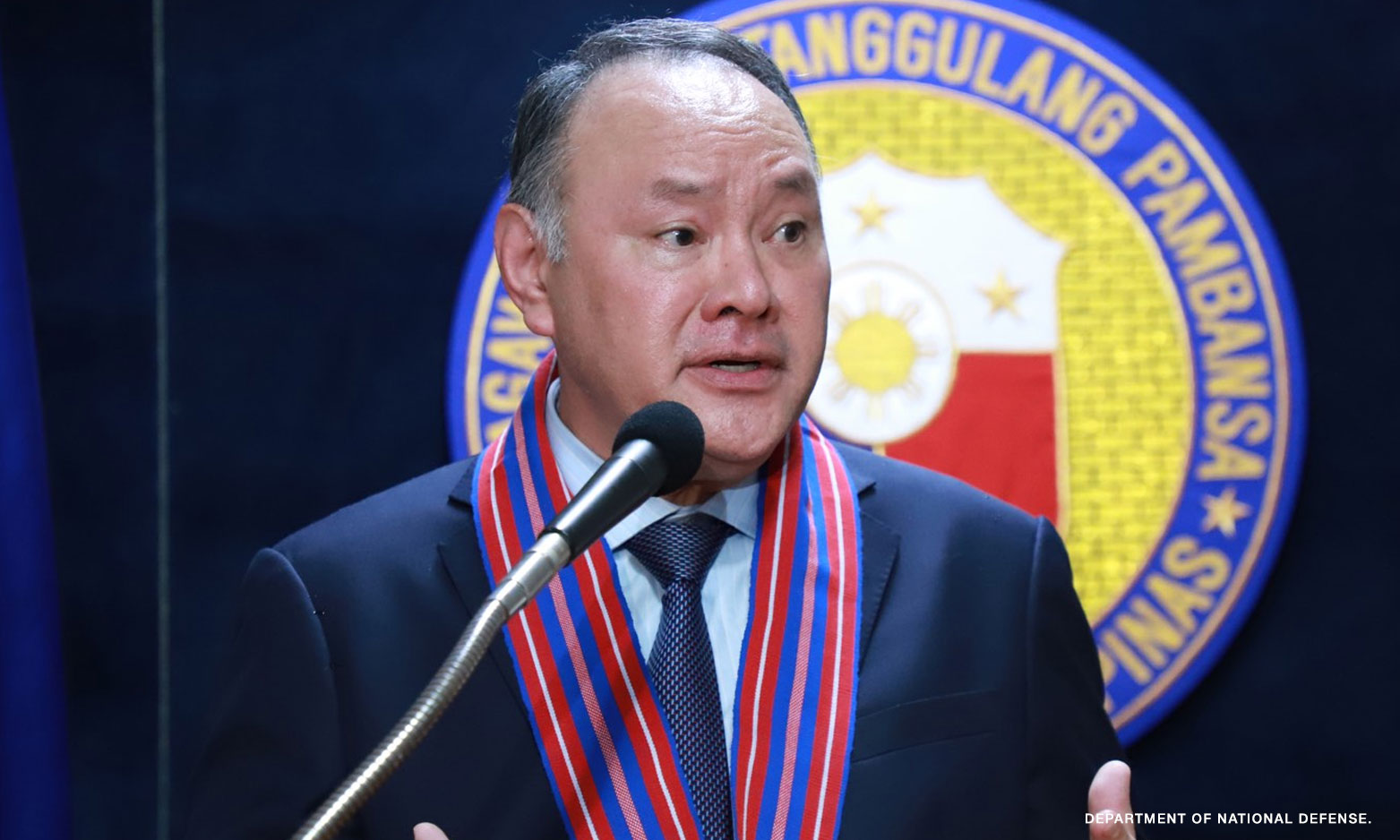


Metro Manila (CNN Philippines, August 17) — Defense Secretary Gilbert Teodoro isn’t satisfied with some provisions – particularly those pertaining to the Armed Forces of the Philippines (AFP) – included in the revised military and uniformed personnel pension (MUP) bill which was approved at the committee level of the House of Representatives.
Under the proposed measure which has yet to be tackled in the plenary, two separate pension systems will be created to manage the benefits of the AFP and civilian uniformed personnel.
READ: House OKs revised pension reform bill
“First, I do not subscribe to the proposed blanket mandatory contributions for military personnel, especially for those who have already completed at least twenty (20) years of active service,” Teodoro said Thursday, two days after the consolidated measure hurdled the Ad Hoc Committee on Military and Uniformed Personnel Pension System.
He said the mandatory imposition of monthly contributions without a transition phase would impact soldiers, adding that President Ferdinand Marcos Jr. also envisioned a \”carefully transitioned introduction of any reform plan.\”
Second, Teodoro took a swipe at the 50% indexation of the MUP pension proposed in the measure.
\”It has been my position that their pensions and entitlements, including 100% automatic indexation, shall remain unchanged. Ensuring the non-diminution of their retirement benefits is the least we can do in recognition of their sacrifices to the country,\” he continued.
Non-diminution refers to keeping MUPs’ retirement benefits intact; not reducing them in any way.
For Teodoro, the AFP is distinct from other MUPs due to its \”sui generis\” or unique constitutional mandate to secure the country’s sovereignty, and that adding to the AFP’s burdens would distract from this directive.
\”Despite wearing uniforms and ranks similar to that of other uniformed personnel, there is no uniformity in terms of the nature of their duties and responsibilities,\” he said.
He added: “[T]hey [AFP] receive no additional financial support from local government units, unlike some of the other services. They are governed by strict rules of military law from the moment they first train until the last day of their service.”