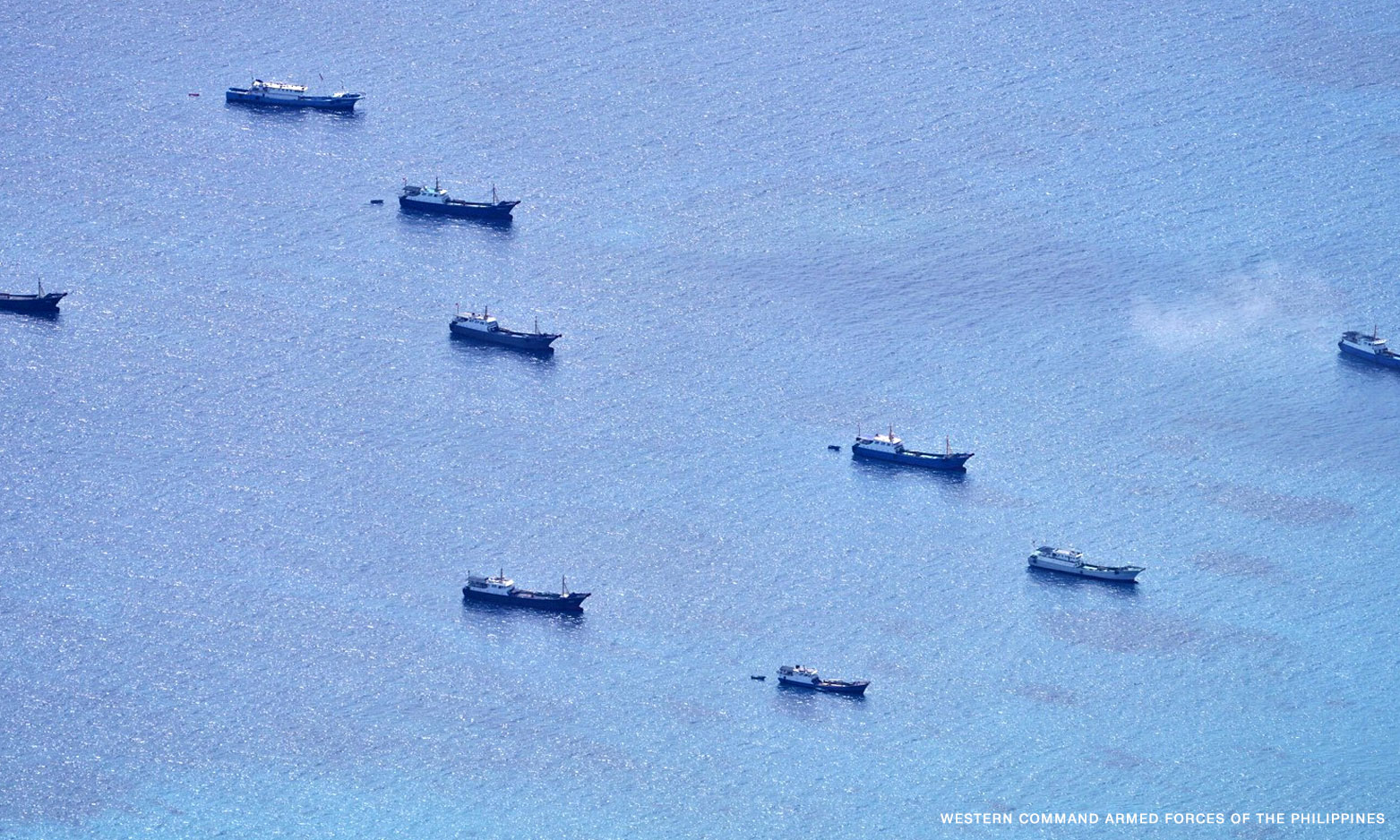


Metro Manila, (CNN Philippines, July 27) — The government will carefully study the proposed United Nations General Assembly (UNGA) resolution on China’s actions in the West Philippine Sea, according to officials from the Department of Foreign Affairs (DFA) and National Security Council (NSC).
READ: Hontiveros wants DFA to seek UNGA resolution to stop China’s harassment in WPS
On the sidelines of a post-State of the Nation Address conference on Wednesday, Foreign Affairs Undersecretary Antonio Morales said filing a resolution before the UNGA would have to go through a specific process.
“One, it’s not yet in the agenda. If it’s not in the agenda, we have to draft a resolution with an explanatory note submitted to the Secretary General of the United Nations, it will be circulated to all the member states and goes to the general committee,” he explained.
Morales insisted that “advance preparations” are necessary if the Philippines is keen on filing a resolution. He said this is not like a candidature, wherein a country could run for an international position and will face no consequences if it’s not elected.
\”We are not discounting it, but there are implications that we have to take into account and that there has to be advance preparations that we have to approach the member states, find out how they will suit, how they will vote, because we only have around 22% of the UN member states who either have expressed full support and ask the parties to comply or have formally said that,\” Morales said.
\”22% is not a is not a big number,\” the DFA official added. UNGA resolutions passed through voting need a simple majority – 50% of all votes plus one – to pass.
Morales said the Philippines may risk the legal weight of the 2016 Arbitral Award.
\”The decision of the tribunal is final and unappealable, it is the legal basis for everything in the West Philippine Sea at this point…It’s [UNGA] a political forum. It’s a different forum. And if we stand the risk of more states not supporting that position, the legal weight of that decision might somehow be put to question,\” Morales noted.
Senate foreign relations committee chairperson Imee Marcos also pointed out the possible risk of weakening the landmark ruling.
\”We already have in hand the arbitral judgment which is far more powerful and important. Furthermore, I also worry that we may not generate the votes necessary,\” the president’s sister said.
\”Ang laking kahihiyan pag natalo pa tayo sa GA, sigurado ba tayong mananalo tayo diyan? Baka sa ASEAN [Association of Southeast Asian Nations] lang e kulang na yung boto e mas lalong malulusaw ang ating claim,\” she added.
[Translation: It’ll be embarrassing if we lose at the GA, are we even sure we can win? We might be lacking votes even in the ASEAN and our claim will only weaken.]
In the same event, National Security Adviser Eduardo Año said the Philippines has other options if it wants to \”internationalize\” the 2016 Arbitral Award.
“Ang Arbitral Ruling ay enough na pero dapat pag usapan mabuti kung idudulog natin sa UN General Assembly dapat masigurado ang suporta ng mga bansa ng UN. So isang paraan bago natin idulog, unti-unti nating kausapin para matiyak na tayo ay susuportahan kaya ito ay pinag uusapan pa at hindi pa pinal,” Ano said.
[Translation: The Arbitral Ruling is enough and we need to discuss it further if bringing it before the UN General Assembly is the best course of action. We need to make sure we have the support of member states. If we will do this, we need to start talking to countries. This is still under discussion and nothing is final.]