

Metro Manila, Philippines — The Association of Southeast Asian Nations (ASEAN) and China failed to finalize negotiations on the long-awaited South China Sea Code of Conduct (COC) this year due to time constraints and sensitive issues among negotiating countries, Foreign Affairs Secretary Maria Theresa Lazaro said Sunday, Nov. 15, despite reaching provisional agreement on more than 80 percent of the draft.
The development means the Philippines will end its 2026 ASEAN chairship without securing a finalized agreement, one of its major diplomatic priorities, leaving the remaining negotiations to Singapore, which will chair the regional bloc in 2027.
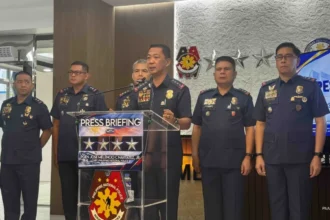
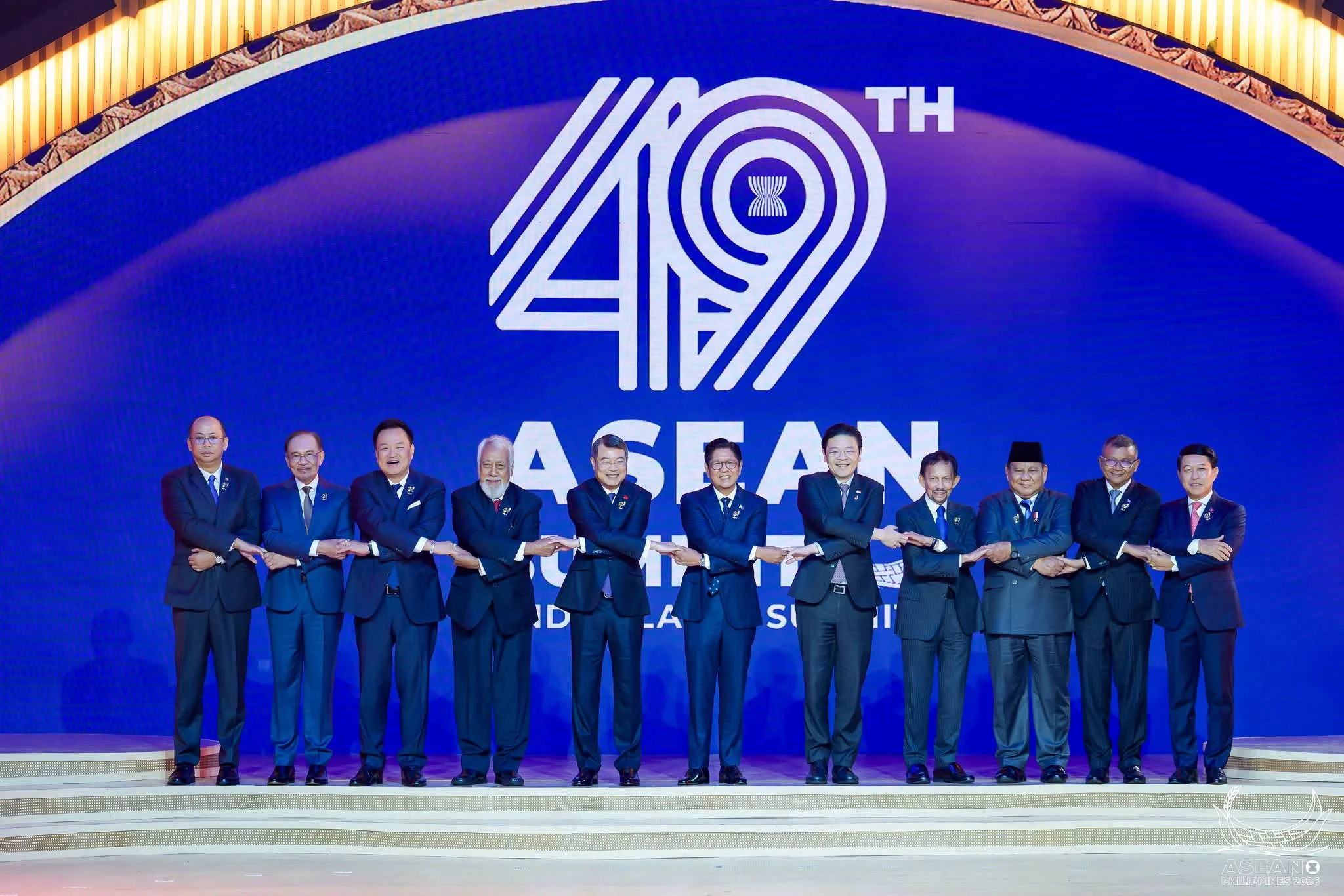
Speaking at a press briefing during the 49th ASEAN Summit in Manila, Lazaro acknowledged that differences among ASEAN member states and China prevented negotiators from completing the document within the targeted three-year period.
“Negotiations are negotiations. In other words, the 10 ASEAN countries plus China have, of course, different views on how things are,” Lazaro said.
“I think there was not enough time. If we were given probably another five to six months, you can finish that,” she added.
The foreign affairs chief did not elaborate on whether external factors were among the challenges in finalizing the code.
Lazaro also cited sensitivities surrounding unresolved provisions, including whether the agreement would be legally binding.
“Some have their sensitivities. Like if you say that the document is legally binding, there is also a ratification process on the part of certain ASEAN member states,” she said.
The legally binding nature of the COC remains unresolved, along with two other milestone issues that Lazaro did not identify.
Of the four major milestone issues in the negotiations, only one has been provisionally settled: the relationship between the 2002 Declaration on the Conduct of Parties in the South China Sea (DOC) and the proposed COC.
Under the provisional agreement, the DOC will serve as the foundation of the COC, which is expected to establish more effective and substantive provisions governing the conduct of parties in the disputed waters.
The Philippines had sought to conclude negotiations this year, consistent with the 2023 ASEAN-China guidelines committing the parties to complete the agreement within three years or earlier.
Despite missing that target, Lazaro described the progress as a major achievement of the Philippine chairship.
“Definitely, there is no conclusion yet. Eighty percent. Actually, it’s even increasing as discussions continue,” she said.
“But I have to emphasize that it is already one of the achievements of the Philippines as chair.”
Lazaro said the draft had been roughly 50 percent complete before the Philippines took over the chairship, with negotiations advancing to more than 80 percent under Manila’s leadership.
The Philippines initiated nine rounds of negotiations and two senior officials’ meetings in 2026 to accelerate the process.
In a detailed briefing issued by the ASEAN chair, the parties announced the “substantial completion” of negotiations, with provisional agreement reached on more than 80 percent of the draft COC’s paragraphs.
However, substantial completion does not mean the agreement has been finalized or adopted.
The chair’s briefing said the proposed COC would serve as a mechanism for managing differences at sea rather than settling territorial and maritime disputes.
It also emphasized that the agreement must be consistent with international law, including the 1982 United Nations Convention on the Law of the Sea (UNCLOS), without diminishing the rights and obligations of states, including countries that are not parties to the COC.
The proposed agreement is also expected to promote maritime safety, freedom of navigation and overflight and cooperation in preventing and managing incidents at sea.
Negotiations on the COC have continued for years amid tensions in the South China Sea, where the Philippines and China have repeatedly confronted each other over competing maritime claims.
China claims sovereignty over much of the South China Sea, overlapping with the maritime entitlements of several Southeast Asian countries, including the Philippines.
A 2016 arbitral tribunal ruling invalidated the legal basis of China’s expansive nine-dash-line claim under UNCLOS, but Beijing has rejected the decision.
Lazaro expressed confidence that Singapore could complete the remaining negotiations when it assumes the ASEAN chairship next year.
“I trust that Singapore will be able to finish the discussions,” she said.
The ASEAN chair’s briefing did not set a new deadline, saying the parties would continue working toward concluding an effective and substantive COC at the earliest possible time.