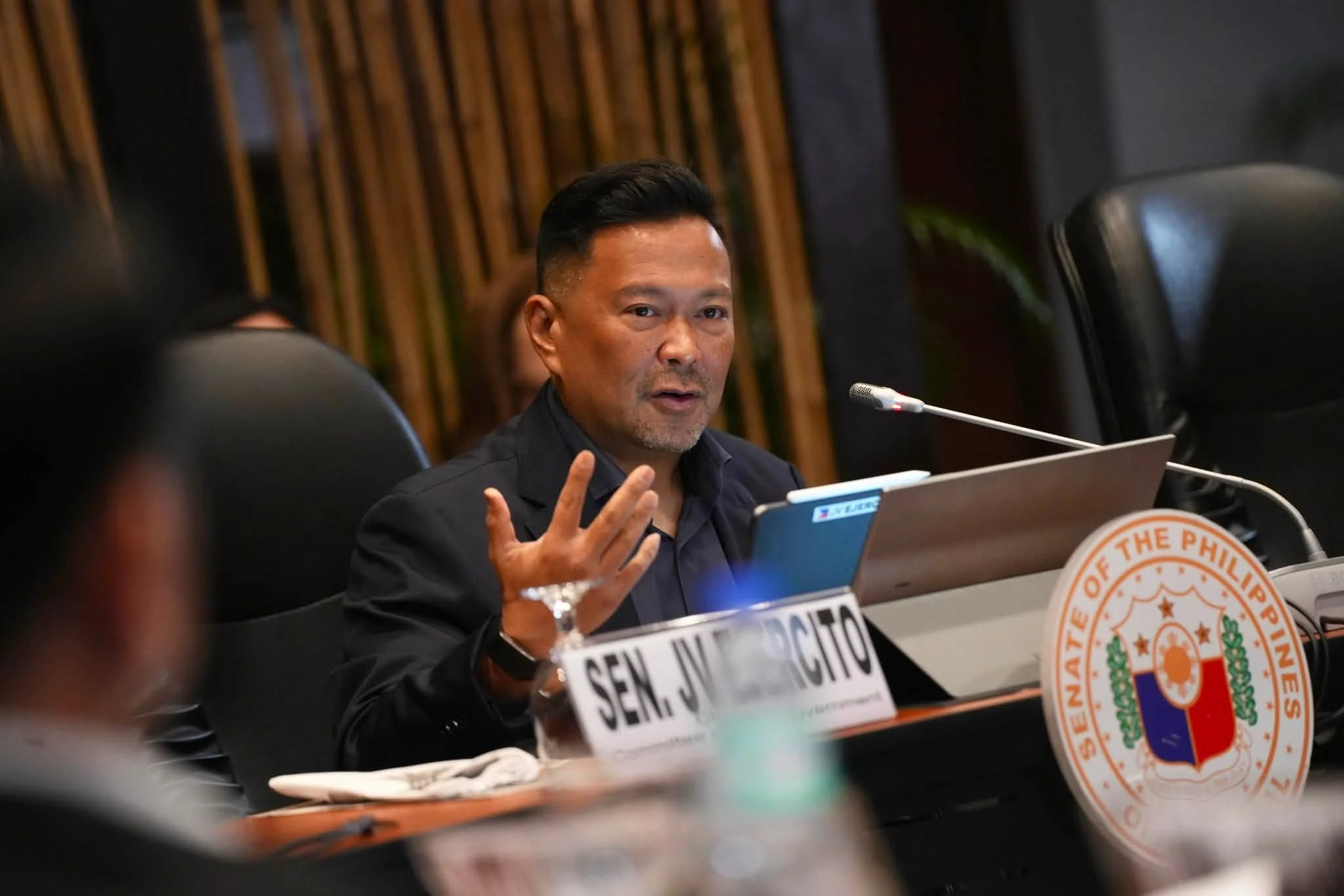


Metro Manila, Philippines – Senate Finance Committee Chairperson JV Ejercito vowed to closely review major changes in the House version of the proposed 2027 national budget, citing cuts to infrastructure and preventive healthcare programs despite increased funding for direct medical assistance and farmer aid.
In a press conference on Wednesday, Oct. 14, Ejercito said his initial review found nearly ₱206 billion in funding changes between the government’s original budget proposal and the House approved General Appropriations Bill (GAB).
About ₱130 billion was cut from foreign-assisted projects, while the Department of Transportation’s budget was reduced by ₱40.4 billion. The cuts affected major railway projects, including the Metro Manila Subway and the North-South Commuter Railway.
Ejercito warned that delays could make these projects more expensive because of inflation and loan commitment fees.
He also raised concern over a ₱9.5-billion cut to the Calamity Fund as the country prepares for a possible Super El Niño from late this year to early 2027.
In healthcare, the House version cut about ₱4 billion from immunization, ₱2 billion from health promotion and ₱4.45 billion from the Health Facilities Enhancement Program, which funds hospital improvements and medical equipment.
At the same time, funding for the Medical Assistance Program increased by nearly ₱24 billion. Ejercito questioned why preventive healthcare was being reduced while direct medical assistance was increasing, saying prevention could keep people from getting sick and needing more expensive treatment.
“Para sa’kin puzzle ‘to” [For me, this is a puzzle], he said.
The House version also added ₱10 billion for Presidential Assistance to Farmers and Fisherfolk. Ejercito said the Senate would study the allocation before deciding whether to approve it.
For flood control, funding for flood-mitigation structures increased by ₱8.04 billion, while allocations for projects within major river basins fell by ₱4.6 billion.
Ejercito said the Senate would ask the Department of Public Works and Highways to explain the new projects. He also called for unfinished flood-control structures to be completed and for projects to focus on the country’s 18 major river basins and 10 most flood-prone areas.
“We will not take this at face value,” he said, adding that agencies would be asked to explain the changes and where the money would go.
The Senate received 34 hard copies of the House GAB at 5:30 p.m. on Tuesday and distributed them to senators and concerned offices on Wednesday.
Budget briefings are underway, with the last hearing scheduled for October 22 and finance subcommittee reports due on October 23.
Ejercito said the Senate would meet with civil society groups, the academe and budget watchdogs on October 26 to hear their concerns before preparing the committee report.
He added that the bicameral conference committee proceedings would remain open for public viewing. The Senate has also hired additional staff members to help examine the budget’s individual items.
The Senate aims to begin plenary budget debates on November 23 and finish deliberations by the second week of December, giving the President time to sign the budget before Christmas.