

Metro Manila, Philippines — Infrastructure projects will be cut to half a year before the general election as the government clamps down on corruption in the aftermath of the flood control scandal, a Cabinet official said on Wednesday, Aug. 26.
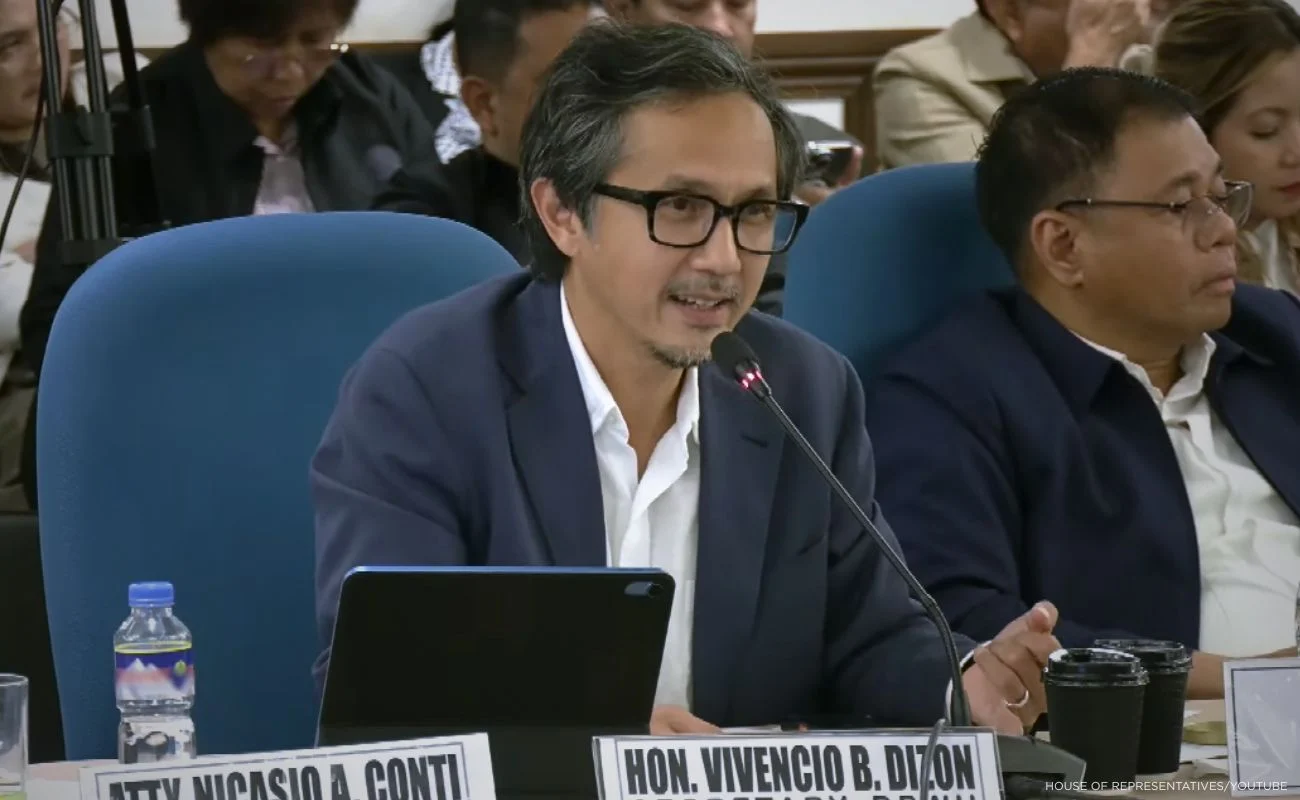
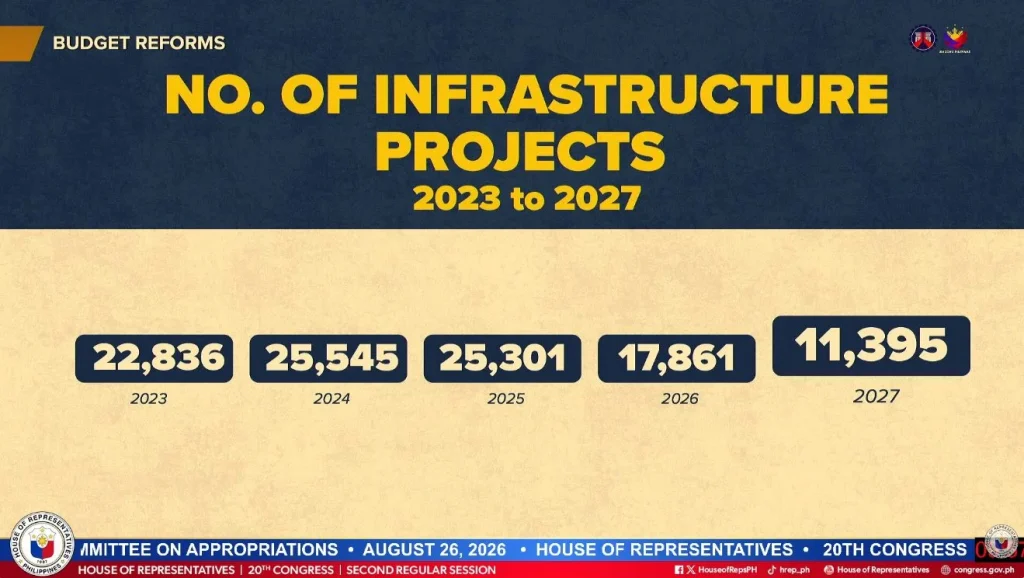
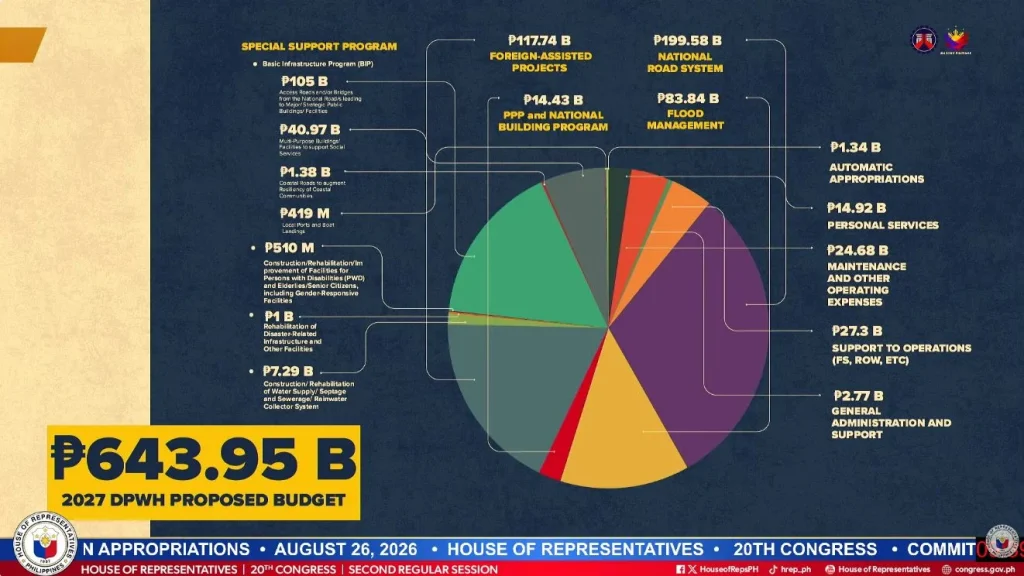
Public Works Secretary Vince Dizon said the agency is proposing 11,395 infrastructure projects for 2027, roughly half of the average annual projects from 2023 to 2026. He presented the proposed ₱643.95-billion budget for the department at the House of Representatives..
The tally of projects was 22,836 in 2023; 25,545 in 2024; 25,301 in 2025; 17,861 in 2026; and 11,395 in 2027. The general election will be held in May 2028.
“Ngayon po, talagang nagsumikap kami na ibaba po ang number of projects natin. And there are several reasons for this,” Dizon said.
[Translation: We really made an effort to bring down the number of our projects]
He noted the scrapping of duplicate and overlapping projects, fewer small-ticket projects, and a shift toward bigger and more critical infrastructure. The agency is also prioritizing unfinished projects, road and bridge maintenance, damaged flood mitigation structures and basic infrastructure needs.
Dizon said reducing the project load was also necessary because some project engineers are overseeing far more projects than the agency’s ideal ratio of one project engineer to seven projects.
“It really becomes a structural problem sa DPWH kung isang project engineer eh trentang project ang mino-monitor at sinu-supervise,” Dizon added.
[Translation: It really becomes a structural problem for DPWH when one project engineer is monitoring and supervising 30 projects.]
Local flood mitigation funding
The proposed budget includes ₱83.84 billion for flood management, an item that was scrapped this year under locally funded flood-control projects in light of alleged “ghost” and substandard projects. Ghost projects are those declared finished and paid but do not actually exist.
The restored expenditure item will have a stricter project screening process that, the DPWH said, will apply to other infrastructure projects.
The DPWH has scrapped the “parametric formula” previously used in project allocation and adopted stricter documentary requirements before projects can be included in the National Expenditure Program (NEP).
Dizon said some projects in previous budgets were entered with only a project title and estimated cost.
“Marami diyan walang plano, walang [feasibility study], ‘di base sa existing masterplans,” he added.
[Translation: Many of those projects had no plans, no feasibility studies and were not based on existing masterplans.]
Under the new system, projects must have an approved program of work, validated geotagged photos taken onsite, budget preparation documents, and a signed certificate of implementability.
The certificate requires district engineers and regional directors to certify that projects have no unresolved right-of-way issues, are not duplicates, have specific identified locations, and are properly identified as new, ongoing or for completion.
The onsite geotagging requirement was adopted to prevent the use of coordinates generated from maps rather than actual site visits.
“Di na po pwede ‘yung nasa opisina lang sila at mag-Google Maps sila,” Dizon said, emphasizing the required actual site visits.
[Translation: They can no longer just stay in the office and use Google Maps.]
Flood mitigation projects must also be based on available river basin or drainage masterplans, feasibility studies or local development plans, with coordination from regional and local governments.
Dizon acknowledged that some masterplans remain outdated or incomplete despite efforts to update plans for major river basins.
The department will upload supporting documents for projects in the proposed NEP to its transparency portal for public scrutiny.