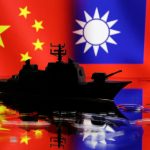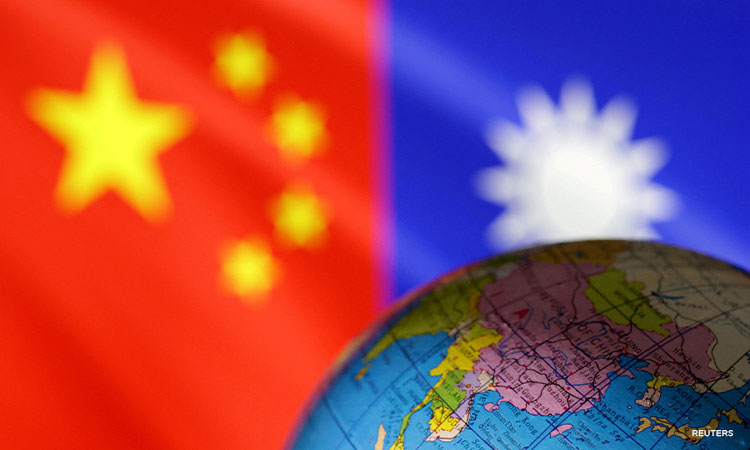


Taipei, Taiwan – Taiwan is urging the Philippines to use diplomatic and political channels to signal to China that any attempt to change the status quo across the Taiwan Strait by force would be unacceptable.
Taiwan Deputy Foreign Minister François Chihchung Wu said Taipei understands that Manila has its own relationship with Beijing and national interests to protect, even as the self-governing island seeks greater cooperation with its neighbors.
“Of course, for our security, we always hope that we can have more with our neighbor, with our friend. But we also understand that we are not naive,” Wu told visiting journalists in Taipei on Friday, Aug. 21.
“You have also your own relations that you need to maintain with China. And also, you have all your own interests to defend,” he added.
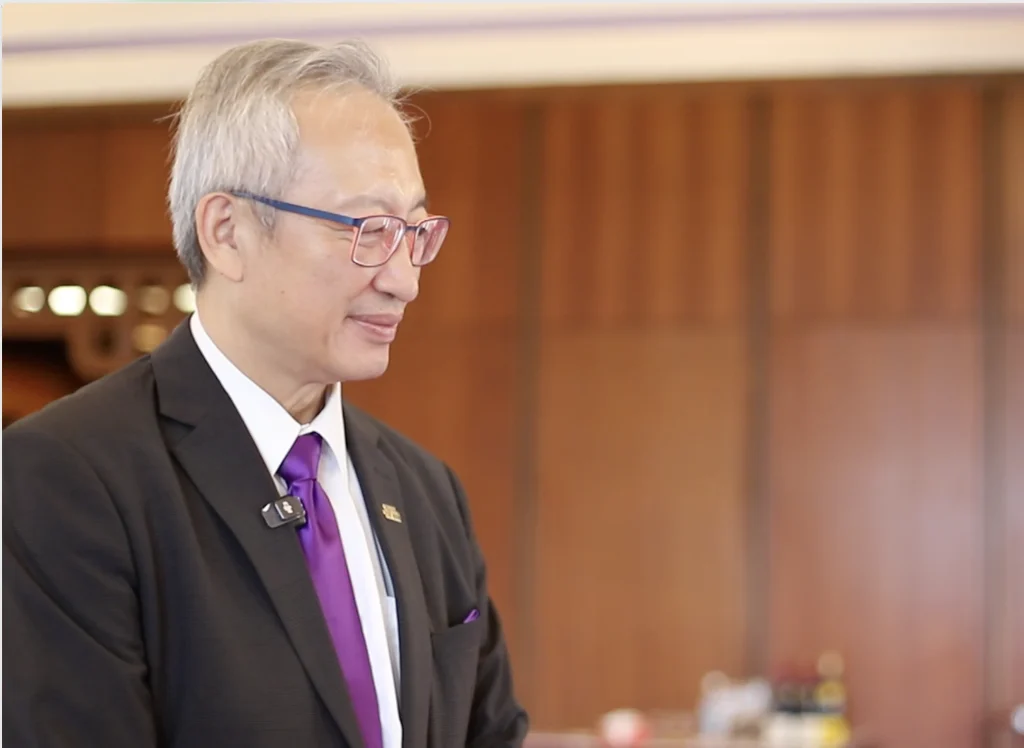
Wu made the remarks when pressed on whether President Ferdinand Marcos Jr.’s assurance that the Philippines would not serve as a “launching pad” for attacks in a potential Taiwan conflict was enough for Taipei.
Marcos has maintained that the Philippines does not want to become a belligerent in any regional conflict.
The president has also ruled out joint maritime patrols with Taiwan, citing Manila’s adherence to the One-China policy.
Wu indicated that Taiwan was not necessarily seeking a formal security arrangement with the Philippines.
“We of course need to have more from the Philippines. But for the moment, I think the best is still in terms of, for me, as the Deputy Minister of Foreign Affairs, in a much more diplomatic management or diplomatic declaration,” Wu said.
He argued that international political opposition to the use of force could contribute to deterring Beijing.
“We cannot let Xi Jinping feel that he will have the support or the international community will not react,” Wu said.
“For the moment, this is the best way… to [dissuade] China not to use major force against Taiwan,” he added.
Wu said peace across the Taiwan Strait should not be viewed solely as a Taiwanese concern, arguing that countries in the region have their own economic and security interests at stake.
He pointed to European countries that have sent warships through the Taiwan Strait, saying Taipei did not request them to deploy forces to protect the island.
“I don’t think it’s because we ask them to send their warships to come here or we say that you need to send your army here to protect Taiwan,” Wu said.
“It’s not our demand. It’s because they all feel they need to defend the peace and stability in the region.”
Wu said Manila could determine for itself how to communicate its position to Beijing.
“It is up to your country to find a way now, especially in a political way, in a diplomatic way, how to send a message to China: you cannot destroy the status quo, you cannot conquer Taiwan,” he said.
Taiwan Foreign Minister Lin Chia-lung earlier called for greater information sharing, joint training and exercises among regional partners as China steps up military and gray-zone activities across the Indo-Pacific.
Wu, however, acknowledged the political limitations facing countries such as the Philippines.
The Philippines recognizes the People’s Republic of China as the sole government of China under its One-China policy and maintains only unofficial relations with Taiwan.
Beijing considers Taiwan part of its territory and has not ruled out the use of force to achieve reunification.
Marcos has repeatedly said Manila remains committed to the One-China policy while stressing that any conflict across the Taiwan Strait would inevitably affect the Philippines because of its proximity and the large Filipino community on the island.