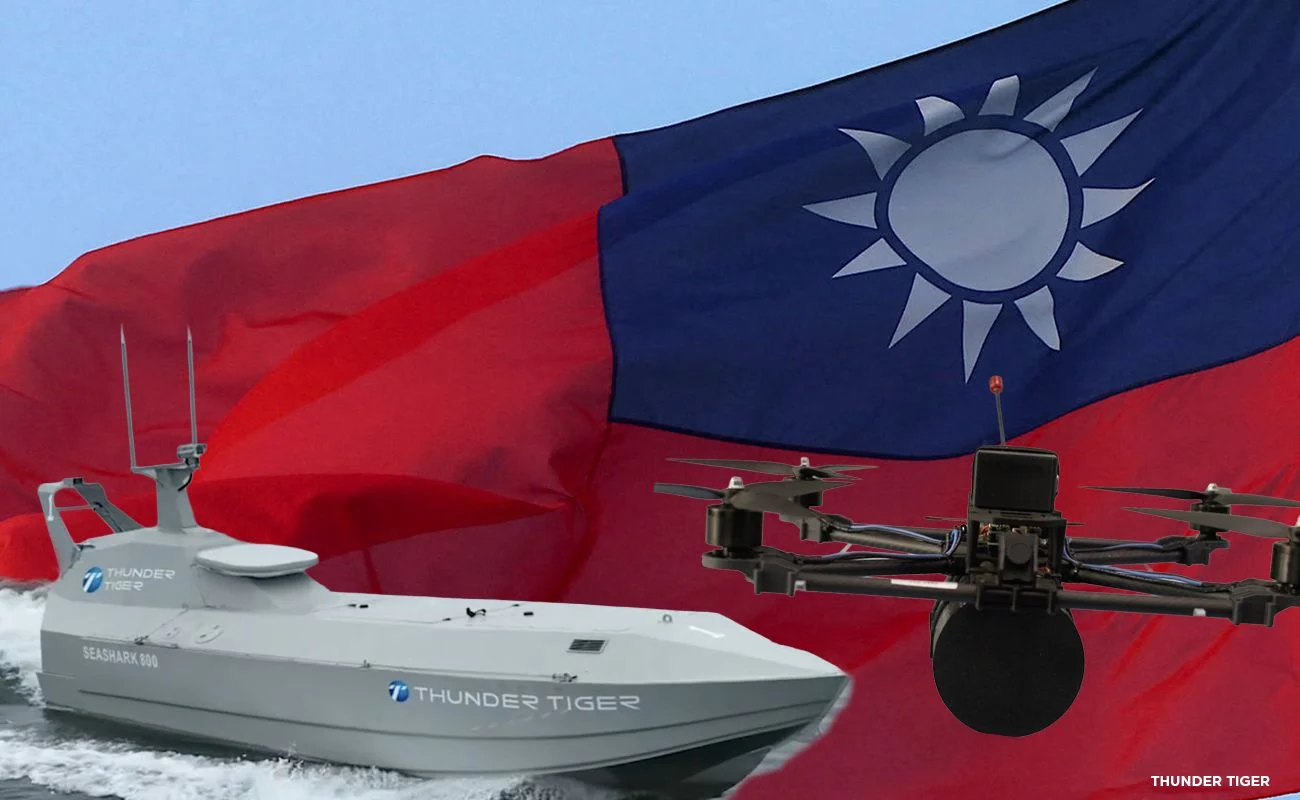


Taichung, Taiwan – Taiwan is accelerating the development of drones and unmanned systems as it looks to build a new layer of defense against mainland China and reduce reliance on traditional munitions, according to a local advanced weapons system producer.
The push has gained urgency in light of theRussia-Ukraine war, where relatively inexpensive drones have reshaped combat against a larger military force.
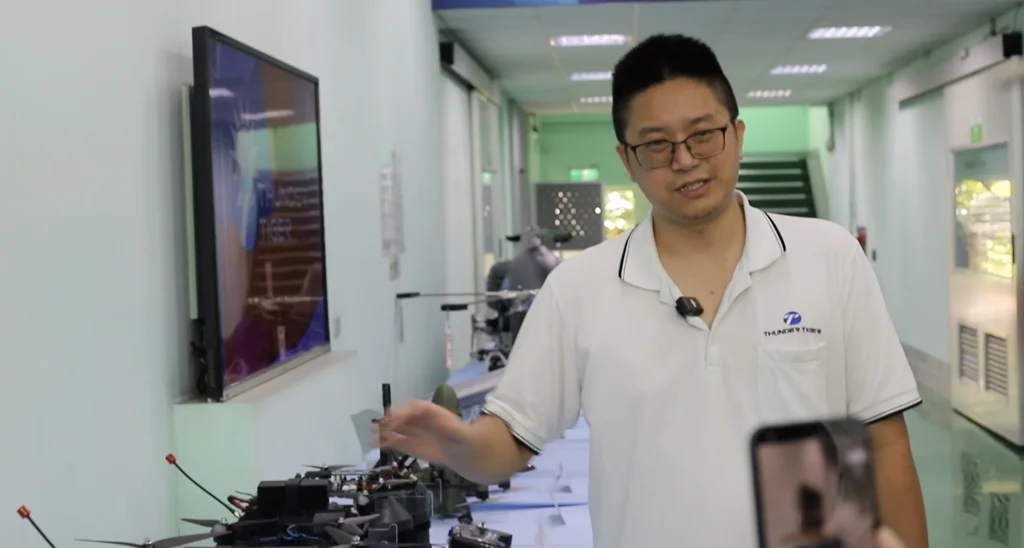
NewsWatch Plus visited the headquarters of Thunder Tiger in Taichung, about an hour from the capital Taipei by high-speed rail. The company traces its roots to the radio-controlled model industry but has expanded into unmanned systems with military and civilian applications.
The company said Taiwan wants to expand domestic production of unmanned aircraft and vessels as part of its asymmetric defense strategy.
The government has proposed a NT$210-billion, or about ₱400 billion, six-year program to buy locally produced unmanned systems. The plan – which still requires legislative approval – was targeted to run beginning this month through the end of 2031.
The proposal covers 1,446 coastal reconnaissance drones, 208,200 coastal attack drones and 1,320 unmanned surface vessels.
The self-governing island has been under China’s mounting military pressure particularly in the Taiwan Strait, as Beijing considers Taiwan as part of its territory. The island rejects Beijing’s sovereignty claims.
From model aircraft to defense drones
Among the systems shown to NewsWatch Plus was the SeaShark 800, an unmanned surface vessel that can reach speeds of around 50 knots, or 93 kilometers per hour
Thunder Tiger said the vessel is equipped with cameras, radar and thermal imaging systems for surveillance and target detection.
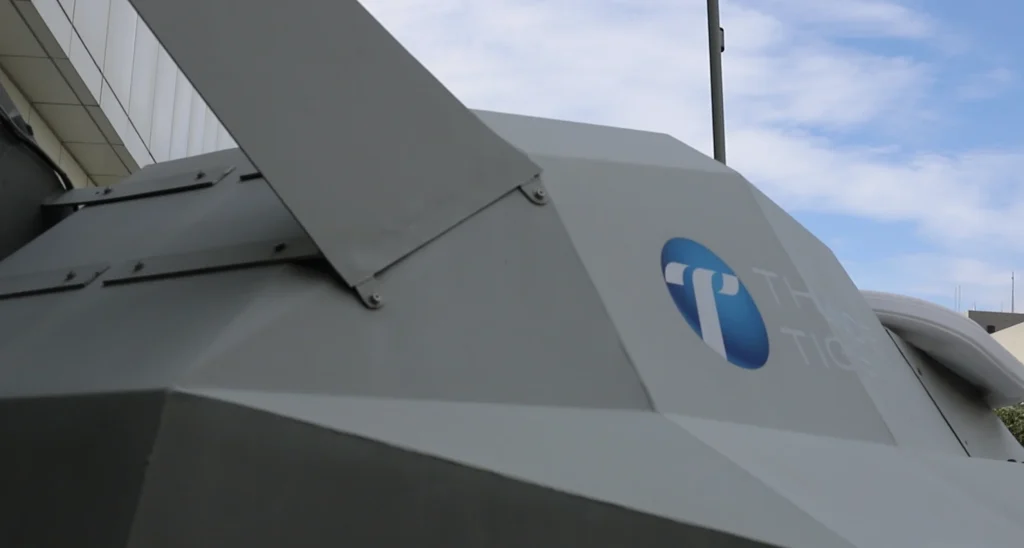
The company said different communication systems can also be incorporated into the vessel to maintain connectivity.
“For this, it has a lot of communication models. Just in case one doesn’t work, it can also use a low-orbit satellite,” Thunder Tiger sales specialist Allan Chi told visiting journalists.
“It’s fully customizable depending on what the client wants,” he added.
Chi said a SeaShark system could cost more than $1 million, or roughly ₱674 million, depending on its configuration. The company said it has received interest from potential foreign buyers.
“We have several interests from different clients, US, Japan and the Pacific region,” Chi said.
The company also said that the Philippines is among potential markets for drone technology.
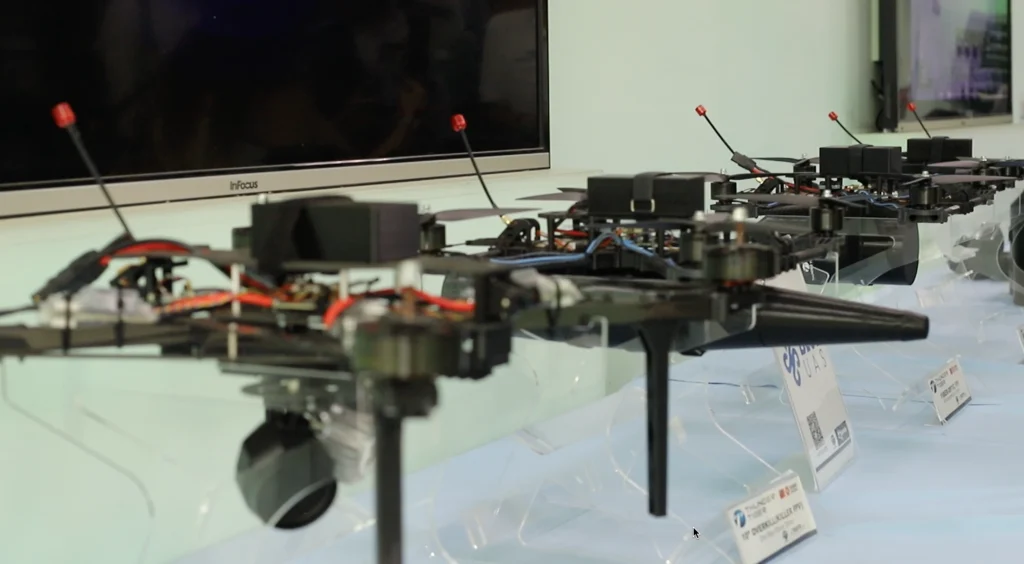
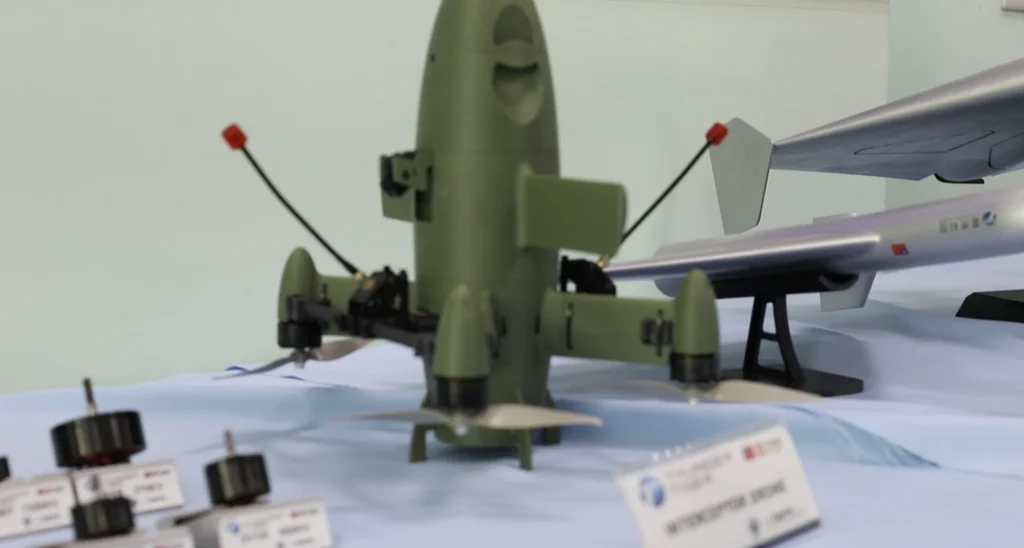
Thunder Tiger also displayed smaller first-person-view (FPV) drones.
FPV drones allow operators to maneuver the aircraft using a live video feed.
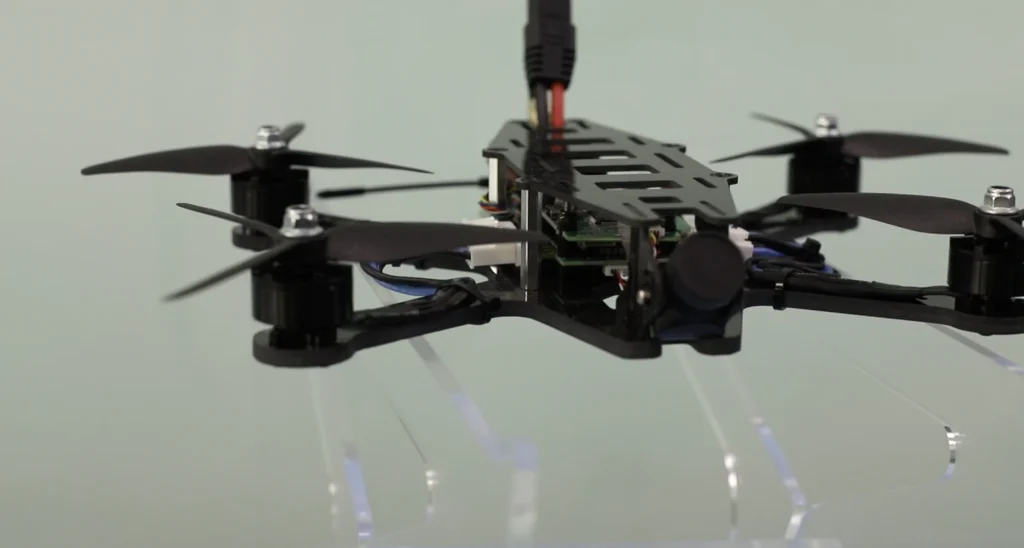
Their relatively small size and ability to fly at low altitude have made similar systems important in the Ukraine war for surveillance and attack missions.
‘Deploy drones first’
Taiwanese companies are developing the technology in the event of a conflict across the Taiwan Strait.
Thunder Tiger sees unmanned systems as equipment that could be deployed ahead of personnel in a confrontation.
“We don’t want that to happen, but we will deploy drones first,” Chi said, referring to a potential conflict with China.
“This will be at the front lines. When there’s a conflict with China, we will deploy the drones first,” he added.
The strategy reflects Taiwan’s emerging emphasis on asymmetric warfare.
Rather than attempting to match China platform for platform, Taipei is investing in systems that can be produced in larger numbers and potentially complicate an attempted blockade or invasion.
Lessons from Ukraine
The Russia-Ukraine war has provided Taiwan with a real-world example of how unmanned systems can alter the balance between militaries of vastly different sizes.
Drones have been used extensively in Ukraine for surveillance, targeting and strikes.
Unmanned surface vessels have also emerged as a significant weapon in maritime warfare.
Chi said Taiwan faces some of the same challenges that pushed Ukraine to rapidly expand drone production.
“Taiwan has the same situation with Ukraine,” he said.
In a report on “Focus Taiwan,” Taipei has the capacity to produce around 15,000 drones per month.
The government wants that capacity to exceed 100,000 units per month by 2030.