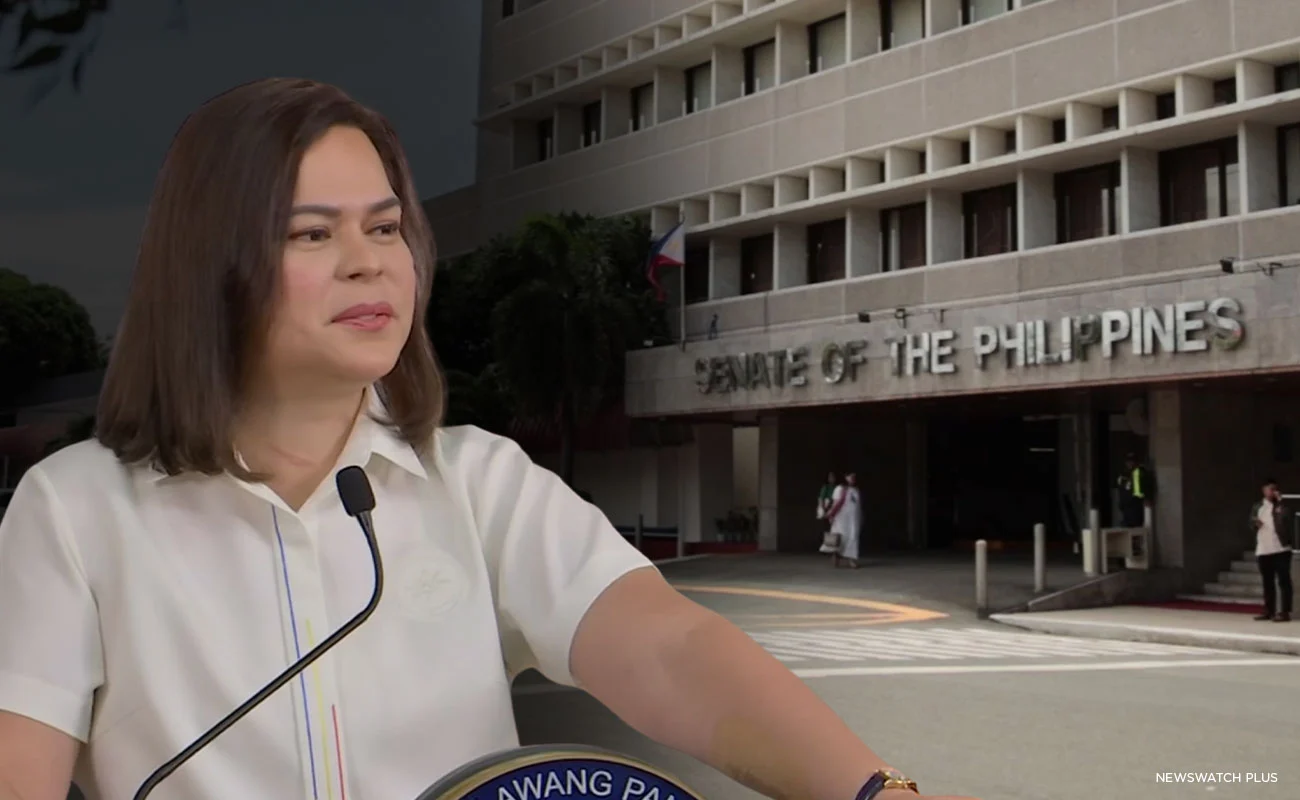


Metro Manila, Philippines – Fifteen years after they were last referred in the impeachment trial of then Chief Justice Renato Corona, the Senate impeachment rules will again govern proceedings — this time against Vice President Sara Duterte, with some amendments.
The Rules of Procedure on Impeachment Trials, adopted in 2011 under then Senate President Juan Ponce Enrile, lay out how impeachment proceedings are conducted — from the receipt of the articles of impeachment to a judgment of conviction or acquittal.
The rules were drafted for the 2011 impeachment trial of then Ombudsman Merceditas Gutierrez but were ultimately used in the trial of Corona after Gutierrez resigned before the Senate could convene as an impeachment court.
They were recently amended during the controversial June 3 session that ousted Alan Peter Cayetano as Senate president. Cayetano had earlier convened the impeachment court on May 18 after assuming the Senate presidency from Vicente “Tito” Sotto III.
Under the original rules, the Senate president automatically serves as the presiding officer when the official on trial is anyone other than the president. If the president is on trial, the chief justice presides.
The amended rules, signed by then Senate President Pro Tempore Sherwin Gatchalian — who has since been formally elected Senate president — now allow the Senate to elect a different senator as presiding officer by a majority vote of members present.
Duterte is the third official to face an impeachment trial, following the short-lived proceedings against former President Joseph Estrada in 2000 and the conviction of Corona in 2011.
Like Gutierrez, then Commission on Elections chairman Andres Bautista, who was impeached by the House of Representatives in 2017, resigned before the Senate could begin his trial.
Here’s a look at the rules that will govern Duterte proceedings.
Public trial schedule
The rules state that the impeachment trial shall commence at 2 p.m., or any other time that the Senate may order.
In its pre-trial order, the Senate Impeachment Court scheduled proceedings at 2 p.m., Mondays to Wednesdays, from July 6 to 27.
After the State of the Nation Address on July 28, the trial will shift to 3 p.m., Tuesday through Thursday.
The schedule was agreed upon by both the prosecution and the defense after five days of pre-trial proceedings, during which procedural matters were discussed and evidence was marked.
The prosecution requested 62 trial days, while the defense asked for 30, meaning the impeachment trial could stretch to around seven months if proceedings are held three days a week.
The rules require that the impeachment trial be open to the public and that visitors observe silence throughout the proceedings — or risk being removed from the session hall.
Gatchalian earlier said 150 members of the public will be allowed inside the Senate session hall, subject to registration through the Visitor Management System.
The presiding officer
When the trial opens on July 6, Gatchalian is expected to preside. However, it remains uncertain whether senator-judges will elect another presiding officer under the amended rules. Senator Panfilo “Ping” Lacson has previously disclosed plans to elect Senator Francis “Chiz” Escudero for the position.
Under the rules, the presiding officer may issue orders, mandates, and writs authorized by the Senate and enforce rules governing the proceedings.
The presiding officer also rules on questions involving the admissibility, relevance, materiality, and competency of evidence, as well as other incidental matters. Such rulings stand as the judgment of the Senate unless challenged by a senator.
If a ruling is challenged, both the motion and the opposing side are limited to two minutes each, with a one-minute rebuttal for the proponent before the senator-judges vote.
Examination of witnesses
Under the rules, one member from each side will conduct the direct examination and cross-examination of witnesses.
During the pre-trial, the prosecution asked the impeachment court to allow one House prosecutor and one private prosecutor to jointly present each witness. The impeachment court has yet to rule on the request.
Each senator-judge may also question witnesses, prosecutors, or defense counsel for up to two minutes.
Preliminary or interlocutory matters, including procedural disputes and motions, may be argued for up to one hour per side, unless the court grants additional time.
Meanwhile, one representative from each side will deliver the opening statement. During closing arguments, each side may designate up to two speakers, with the House prosecution opening and closing the arguments.
Verdict
Duterte was impeached by the House of Representatives on May 11, sending the articles of impeachment to the Senate for trial. She faces allegations of misusing confidential funds, amassing unexplained wealth, bribing procurement officials, and threatening the lives of President Ferdinand Marcos Jr. and members of his family.
Under the rules, the impeachment court must first complete the trial on all articles of impeachment before the senator-judges vote on each article separately.
When called, each senator-judge must stand and vote either “guilty” or “not guilty” and may explain the vote for up to two minutes.
If two-thirds of all senator-judges vote to convict Duterte on any article of impeachment, the court shall render a judgment of conviction. The presiding officer votes last.
The rules also provide that the judgment is final, with no motion for reconsideration allowed.