

(Reuters) — Elderly survivors in Japan’s Nagasaki are getting ready to mark the 70th anniversary of the dropping of an atomic bomb on their city.
At 11:02 a.m. on August 9, 1945, three days after the atomic bombing of Hiroshima, the United States dropped the atomic bomb nicknamed “Fat Man” on the industrial port city of Nagasaki.
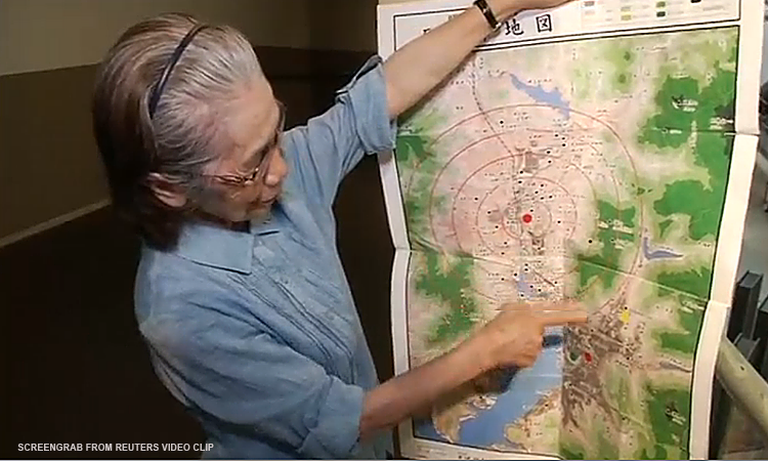
The bomb blasted about 300 meters (100 feet) above the ground and totally destroyed an area of about 1.6 km (1 mile) in radius from the hypocenter.
Toru Mine, then nine, first thought it was lightning.
“It was a clear sunny day and there was a sudden blinding flash. My first thought was that it should be a thunder, but I soon realized it’s bizarre to have thunder in a clear sky,” said Mine, who survived the blast at his home located about 2.5 kilometers (1.6 miles) southwest from the hypocenter.
“Few seconds later, the blast wind hit our house and blew away the roof,” he said. “Seventy years have passed since the bombing, but I vividly remember the day as if it was yesterday,”
The fierce blast wind and heat rays that reached several thousand degrees swiped the city, flattening or damaging buildings.
More than 150,000 died in the attack and from the subsequent radiation sickness. Japan surrendered six days later, ending World War Two.
Mine was nearly unharmed. But he never saw his mother who left the house in the morning to borrow food from relatives to feed her five children.
After retiring from a career as a ship-building engineer, Mine has been volunteering at the Nagasaki Atomic Bomb Museum to tell of his experience to young Japanese.
Another Nagasaki A-bomb survivor, 79-year-old Reiko Hada, hoped the world would learn from Japan’s experience and get rid of nuclear weapons.
Hada whose parents and three siblings seemed to be unharmed immediately after the blast, thanks to a mountain which shielded the heat and rays from reaching her home 2.5 km from the drop-zone.
Two months later, however, Hada lost her second brother due to cancer developed from radiation exposure.
Hada has been actively involved in Japan’s anti-nuclear weapon movement during her 40-year career as a school nurse.
“We hope to keep conveying our earnest message that we really wish that all nuclear weapons will disappear from the earth”
The world is believed to have more than 10,000 nuclear weapons, according to Bulletin of the Atomic Scientists Nuclear Notebook 2014.