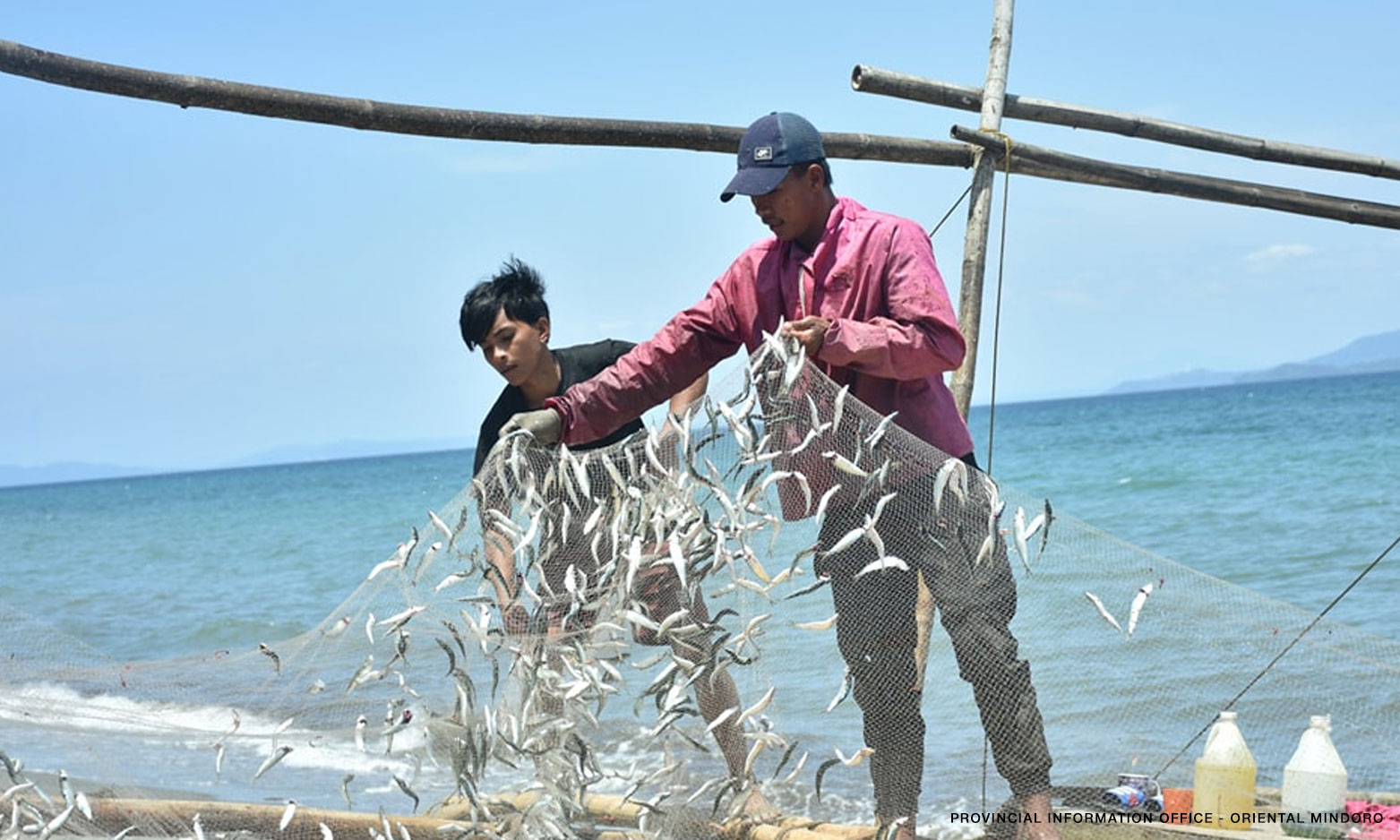


Metro Manila (CNN Philippines, April 13) — The Bureau of Fisheries and Aquatic Resources (BFAR) has recommended keeping the fishing bans in oil spill-hit towns in Oriental Mindoro, as it admitted that the agency is still “fast-tracking” its laboratory analyses to show the current situation of marine products in the area.
In its latest bulletin on Wednesday, the BFAR said fish samples collected and analyzed from select areas in the province showed low-level contaminants or polycyclic aromatic hydrocarbons (PAH). The contaminants were also found in seaweeds from Caluya, Antique, it added.
\”PAH are harmful to humans and other living organisms, and may accumulate in the flesh of marine organisms over time,\” the agency explained. \”Seaweeds and other sessile organisms have greater chances of accumulating PAHs due to their immobility.\”
It said the minimal amounts of PAH levels present in seafood collected from sampling sites in Oriental Mindoro were consistent in the bureau’s first and second batches of analyses.
But it still recommended retaining the fishing bans, as well as the harvest ban on seaweeds in Caluya, Antique, \”since the initial analyses are not yet conclusive evidence as far as food safety is concerned.\”
\”These samples were collected during the early days of March, making the current situation unknown due to the possibility that the spill had spread further due to ocean current and wind direction, and more PAHs (polycyclic aromatic hydrocarbons) may have accumulated in marine organisms,\” the bureau said.
The BFAR said it will conduct more analyses of fish and seaweed samples, assuring that it will fast-track its efforts without compromising the accuracy of data.
Pola town, the most affected in Oriental Mindoro, has been under a fishing ban for more than five weeks now.
Authorities are still rushing to contain the spillage from the MT Princess Empress, an oil tanker carrying at least 800,000 liters of industrial fuel oil when it sank in waters off Naujan town last Feb. 28.
In a statement, the BFAR said it has already allocated ₱4.4 million worth of livelihood aid through post-harvest technology packages for 10 fisherfolk associations and cooperatives.
“About ₱1.5 million was also earmarked for the provision of food assistance to 5,000 affected fisherfolk in MIMAROPA, while ₱580,500 was spent to help displaced fishing groups in Western Visayas,” it added.
The latest data from the National Disaster Risk Reduction and Management Council (NDRRMC) showed the oil spill has affected 38,871 families or 178,306 individuals in Calabarzon, Mimaropa, and Western Visayas.
Disaster response officials also said 16,930 fisherfolk were impacted, incurring around ₱263 million in production losses.
The NDRRMC added that 208 people got ill.
The agency said over ₱235 million worth of assistance was provided to oil spill-hit areas.
On April 10, environmental groups — citing residents of Calapan City and Pola — disclosed that the oil spill’s effect on people’s livelihood is worse than that of COVID-19.