

Metro Manila (CNN Philippines, December 17) — President Ferdinand Marcos Jr. said his administration is striving to settle the West Philippine Sea dispute so that new energy exploration projects could begin before the Malampaya gas field starts to run dry.
“We are still at a deadlock right now. It is in a conflict area. So, that’s another thing that we have to try and resolve to see what role any countries play,” Marcos said in an interview with Japanese media when asked about maritime issues and the Malampaya gas field.
“It’s still of course the position of the Philippines that this is not in a conflict area. This is very clearly within our EEZ (exclusive economic zone)… within our baselines, within the maritime territory of the Philippines,” he said.
The president is in Tokyo for the Commemorative Summit for the 50th Association of Southeast Asian Nations (ASEAN)-Japan Friendship and Cooperation.
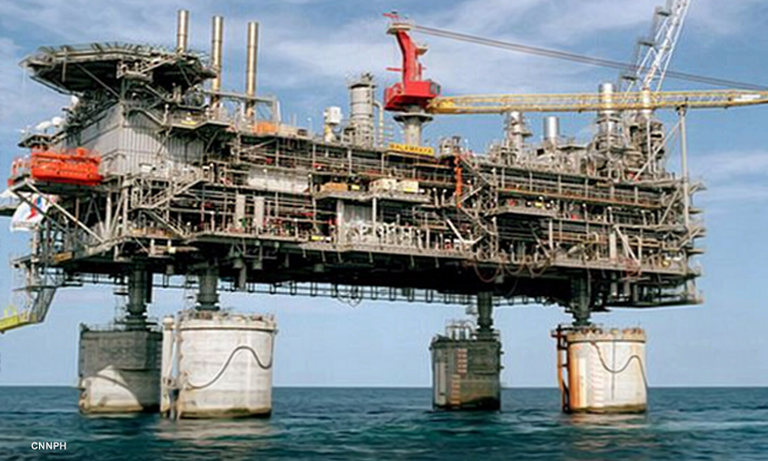
The Malampaya gas field, which is expected to dry out by 2027, is located off the coast of Palawan and lies near the West Philippine Sea, a region believed to be rich in petroleum resources. Maritime tensions with China have hindered energy exploration efforts in the area.
“The discovery of additional reserves in the Malampaya gas field will boost the country’s quest for energy security. It is also expected to encourage opportunities for further exploration in the country, which to date remains underexplored, and to add to the Philippines’ energy portfolio,” the Department of Energy earlier said.
Earlier this year, the president approved the extension of operations of the Malampaya gas-to-power facility by another 15 years.
Marcos said negotiations regarding energy exploration in the area have been going on for over three years, but very little progress has been made about the talks.
READ: Marcos eyes more renewable energy, gas exploration in PH
He emphasized that the supply of liquefied natural gas (LNG) is becoming increasingly important to the Philippines as it switches to renewable energy.
\”That’s why LNG has become more and more important and so it’s imperative for the Philippines to find a way to move the process forward so as to be able to assure ourselves of that transition, the fuel supply during that transition period,\” Marcos said.