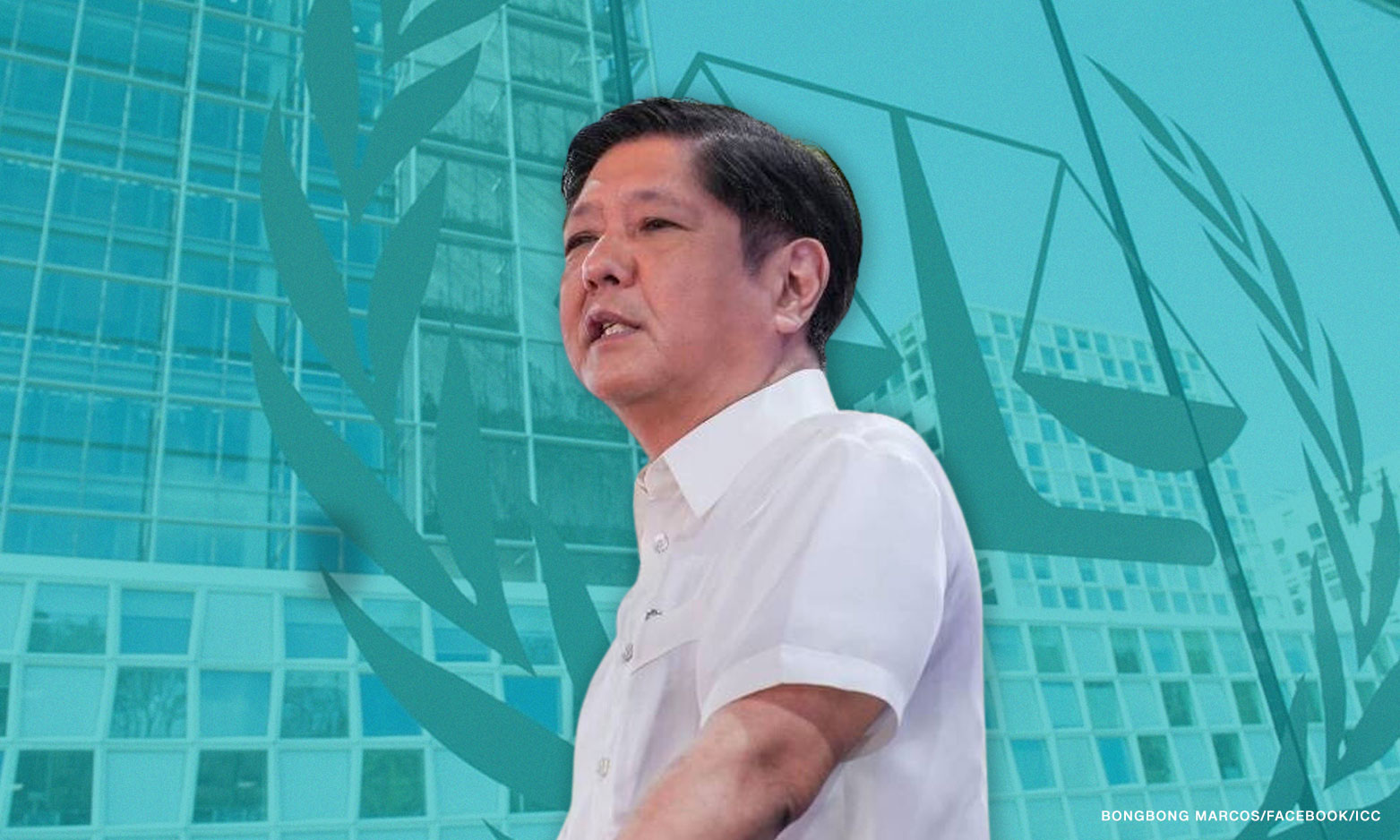


Metro Manila (CNN Philippines, November 29) — President Ferdinand Marcos Jr. can accept ad hoc jurisdiction of the International Criminal Court (ICC) even without the need to rejoin the international court, a lawyers’ group argued on Wednesday.
In a statement, the National Union of Peoples’ Lawyers (NUPL) cited Article 12 paragraph 3 of the Rome Statute, the ICC’s founding treaty, which provides that a non-state party may accept the jurisdiction of the ICC by lodging a declaration with the court’s Registrar.
“In doing so, that State agrees to take on obligations of cooperation with and judicial assistance to the Court,” the NUPL said.
“Being an exclusive exercise of the president’s powers as chief architect of foreign policy, it would arguably not require Senate concurrence,” it added.
The Philippines officially stopped being a member state of the ICC in March 2019, a year after former President Rodrigo Duterte’s administration submitted a written notice to withdraw from the Rome Statute.
Marcos previously said the idea of the Philippines rejoining the ICC was “under study” but he reiterated issues of jurisdiction and sovereignty.
Marcos’ statement came after three resolutions were filed in the House of Representatives to urge the government to cooperate with the ICC’s investigation into the Duterte administration’s bloody war on drugs.
OSG: To rejoin ICC, we have to accede to Rome Statute again
But during the joint hearing of the House Committees on Justice and Human Rights, Solicitor General Menardo Guevarra said the Philippines needs to do the accession process again to come back to the ICC.
“We need not sign the Rome Statute all over again because we already signed it. What we need to do is simply to accede to it,” Guevarra told lawmakers.
“That is done by repeating the process all over, meaning the president will ratify our joining the ICC and the Senate will express its concurrence by two-thirds vote,” he added.
Once done, the government would then deposit the instrument of ratification to the United Nations Secretary-General, he explained.
How about rescind?
In a message to CNN Philippines, Kristina Conti of NUPL’s National Capital Region chapter, said she also takes the same position on Senate concurrence as the ICC already accepted Manila’s withdrawal.
But she also floated another suggestion: overturn the withdrawal.
“Rescinding the withdrawal of the Philippine government in 2018 will be a pure act of the executive,” Conti explained. “It will have a retroactive effect, meaning, it would be as if the Philippines did not withdraw at all.”
With such a move, she said the Senate concurrence to the treaty in 2011 will be “considered as still binding.”
On Tuesday, former Senate President Franklin Drilon also argued that in his view, rejoining the tribunal is purely an executive action, given the Senate’s prior ratification of the Rome Statute of the ICC.
“[I]n the end it matters very little,” Conti also said. “Whichever way, the Philippines is still obliged to cooperate with the court in the ongoing investigation into the ‘war on drugs.\”