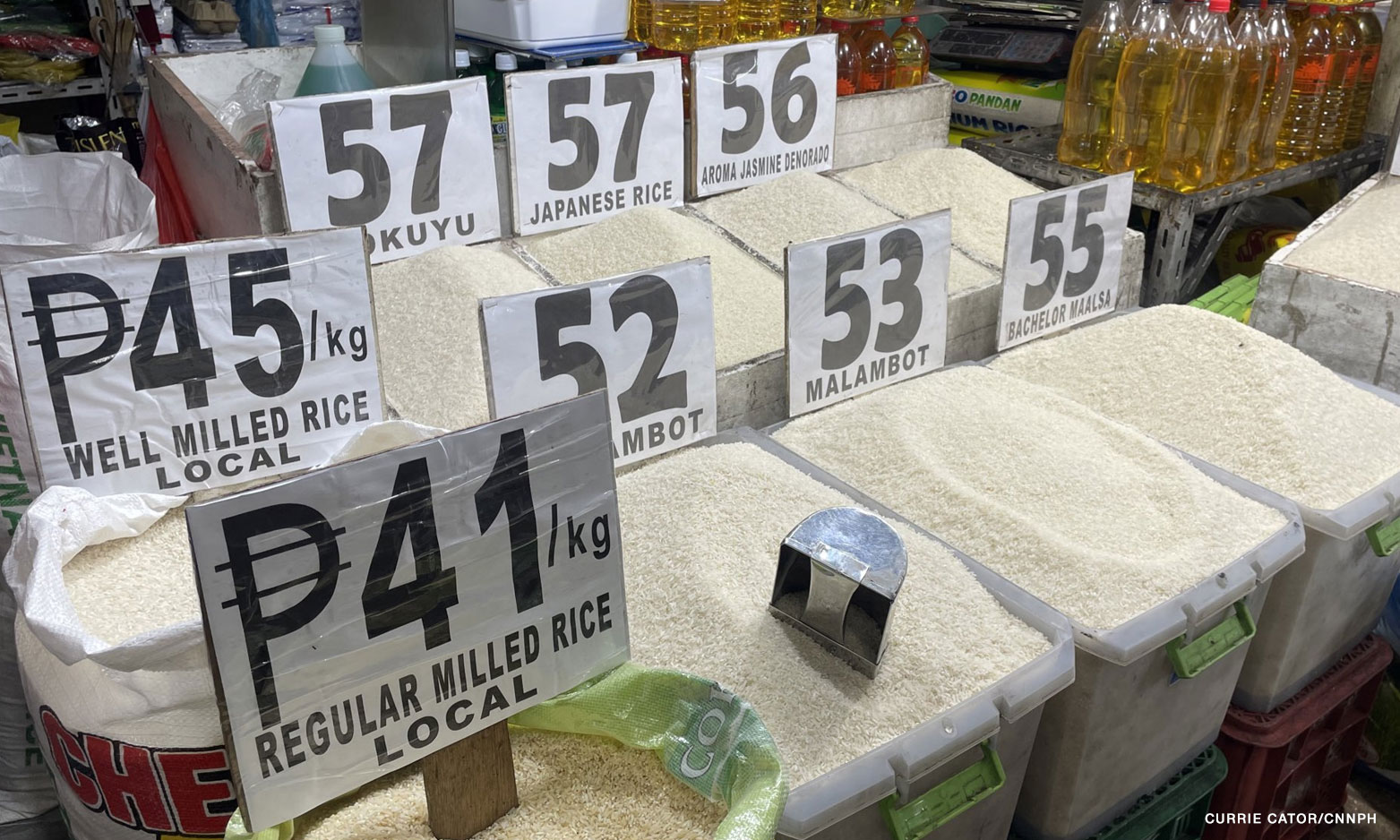


Metro Manila (CNN Philippines, October 19) — An agricultural group on Thursday called on the Marcos administration to reimpose the price cap of ₱45 on well-milled rice in November “to pre-empt new attempts to artificially increase the retail price of rice.”
The Samahang Industriya ng Agrikultura (SINAG) cited that some rice millers and traders are offering to buy freshly harvested palay for ₱21- ₱23.50 per kilo, and dry palay for ₱26- ₱29 per kilo.
\”We are all worried of a possible repeat of the rice price spikes last August where traders tried to justify the increase in rice prices because of the high farmgate prices of palay,” the group said in a statement.
“They are again wanting to create another artificial rice price crisis. So we are asking again our President to intervene and address this potential problem,” SINAG added.
President Ferdinand Marcos Jr. earlier lifted the price cap on both regular-milled and well-milled rice after the Department of Agriculture (DA) and the Department of Trade and Industry noted improvements in rice supply and prices.
Marcos added that excess collections from the Rice Tariffication Law would also be tapped to increase funding for the assistance to farmers and poor families.
But the Agriculture department said it is not in favor of the call to reimpose the price ceiling on well-milled rice, noting that such a policy is only a short-term solution.
“You know the price cap should really be a short-term one. We’ll have to study, there are probably other measures that we can do,” said DA Undersecretary Mercy Sombilla in a chance interview.
“Napilitan lang talaga mag-price cap noon (We were just forced to impose a price cap) because we were not seeing the local prices going down,” she added.
According to DA’s price monitoring for the week of October 9-13, the average per kilo price of rice in Metro Manila markets is at ₱43 for regular-milled and ₱45.41 for well-milled.
Meanwhile, the Indian government allowed the exportation of 295,000 metric tons of non-basmati white rice to the Philippines despite its export ban.
Although there’s no timeline yet on when will it arrive to the Philippines, the DA said that the imported rice from India will surely help stabilize the price of rice in the market.
“Well, if that comes in, that will definitely provide us with the supply that we’ll be needing […] That will be important for us to be able to go through El Niño if that happens,” said Sombilla.