Metro Manila (CNN Philippines, January 17) — Chinese Ambassador Huang Xilian has expressed optimism that talks between the Philippines and China on joint oil and gas exploration in the West Philippine Sea will resume even after the Supreme Court recently declared a 2005 tripartite maritime seismic undertaking in the area as unconstitutional.
‘
Huang reiterated the commitment made by both Chinese President Xi Jinping and President Ferdinand Marcos Jr. to discuss joint oil and gas exploration during the state visit of Marcos early this month.
‘
“Our top leaders have agreed to resume the discussions and negotiations on the joint oil exploration and we believe that the two countries will engage each other and discuss the details and we hope to make some improvements in the future,” he told reporters on the sidelines of the Chinese Embassy’s New Year clebration on Monday.
‘
The Chinese envoy added that both Manila and Beijing should work together to remove obstacles in areas of cooperation to sustain the momentum of Philippine-China ties.
‘
The diplomat, however, said that appealing the Supreme Court decision on the joint maritime deal in the West Philippine Sea is an internal affair of the Philippine government.
‘
“We do believe that it is in the fundamental interest of the Philippines and the Filipino people to develop oil and gas jointly,” he said.
RELATED: Roque to SolGen: Appeal SC decision on joint exploration deal
‘
‘
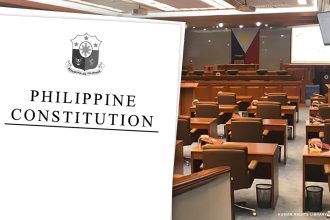
Voting 12-2-1, the Supreme Court en banc ruled last week that the 2005 Joint Maritime Seismic Undertaking (JMSU) between the Philippines, China and Vietnam was unconstitutional because it allowed wholly-owned foreign companies to explore the Philippines’ natural resources without observing safeguards provided under the Constitution.
‘
Former Presidential Spokesperson Harry Roque, an international law expert, said the SC decision does not bode well for Philippine-China and Philippine-Vietnam relations.
‘
“Under the UNCLOS the area covered by the JMSU is subject to sovereign rights,” he said. “In other words, the 60-40 rule by the constitution should not have been applied in an area covered by EEZ.”
‘