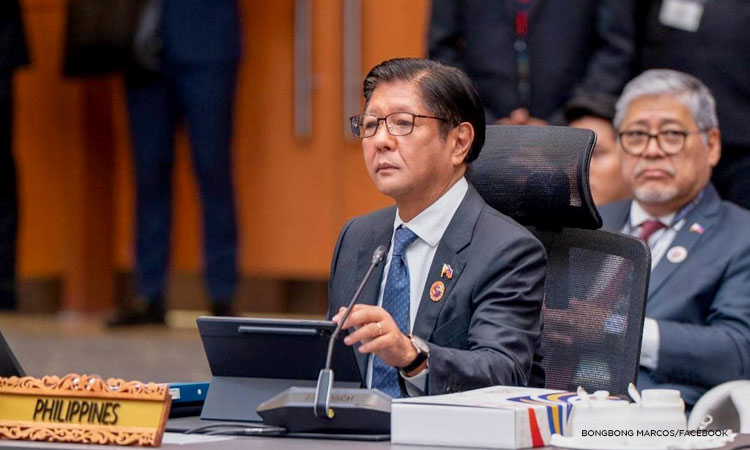


Metro Manila, Philippines – President Ferdinand Marcos Jr. opened the ASEAN summit plenary by urging regional leaders to harness artificial intelligence (AI), boost maritime cooperation, and press for an immediate ceasefire in the Middle East as rising tensions threaten energy and food security.
In his opening remarks on Friday, May 8, Marcos said the fast-changing geopolitical environment has begun to directly affect Southeast Asian economies and households, with supply disruptions and rising costs already being felt across the region.
“We meet at a defining moment for our region and the global community,” he said.
AI for energy and food security
In pushing for solutions on energy and food security, Marcos underscored the need for ASEAN to adopt responsible and inclusive AI use.
“In this effort, we must also harness innovation, including inclusive and responsible applications of artificial intelligence to improve energy forecasting, strengthen grid management and system flexibility, and support the clean energy transition,” the president said.
He added that digital innovation can also help address food challenges, citing new innovation that can help anticipate shortages, improve agricultural productivity, and support responsive decision-making.
Stronger maritime cooperation
Marcos also stressed the importance of deeper maritime cooperation and highlighted the Philippines’ proposal to establish an ASEAN Maritime Center.
He said ASEAN must recognize “the importance of maritime cooperation” and expressed hope for the adoption of the ASEAN Leaders’ Declaration on Maritime Cooperation.
The cooperation includes proposals to establish the center as “an important platform for maritime cooperation in coordination with relevant ASEAN and ASEAN-led mechanisms.”
Middle East ceasefire
The president also called for an immediate stop to tensions in the Middle East, citing the escalation of conflict involving Israel, the United States, and Iran.
“The immediate cessation of hostilities, the peaceful settlement of disputes, the protection of civilians and civilian infrastructure, and the restoration of safe, unimpeded and continuous transit passage in the Strait of Hormuz,” he said, outlining ASEAN’s call for de-escalation.
He warned that the conflict has already disrupted global trade routes and raised costs in the region, adding that these challenges are deeply felt by ASEAN nations through “higher living costs, supply disruptions, threatened livelihoods, economic strain, and growing vulnerability.”
“In an increasingly uncertain world, we call for our collective action and it has never been more urgent,” Marcos said, emphasizing the need for unity among member states.
Marcos chairs the ASEAN Summit as the Philippines hosts the biannual event in Cebu from May 6 to 8.