

Metro Manila, Philippines – The International Criminal Court rejected former President Rodrigo Duterte’s challenge to its jurisdiction, clearing the way for a possible trial of the high-profile crimes against humanity case linked to the bloody drug war.
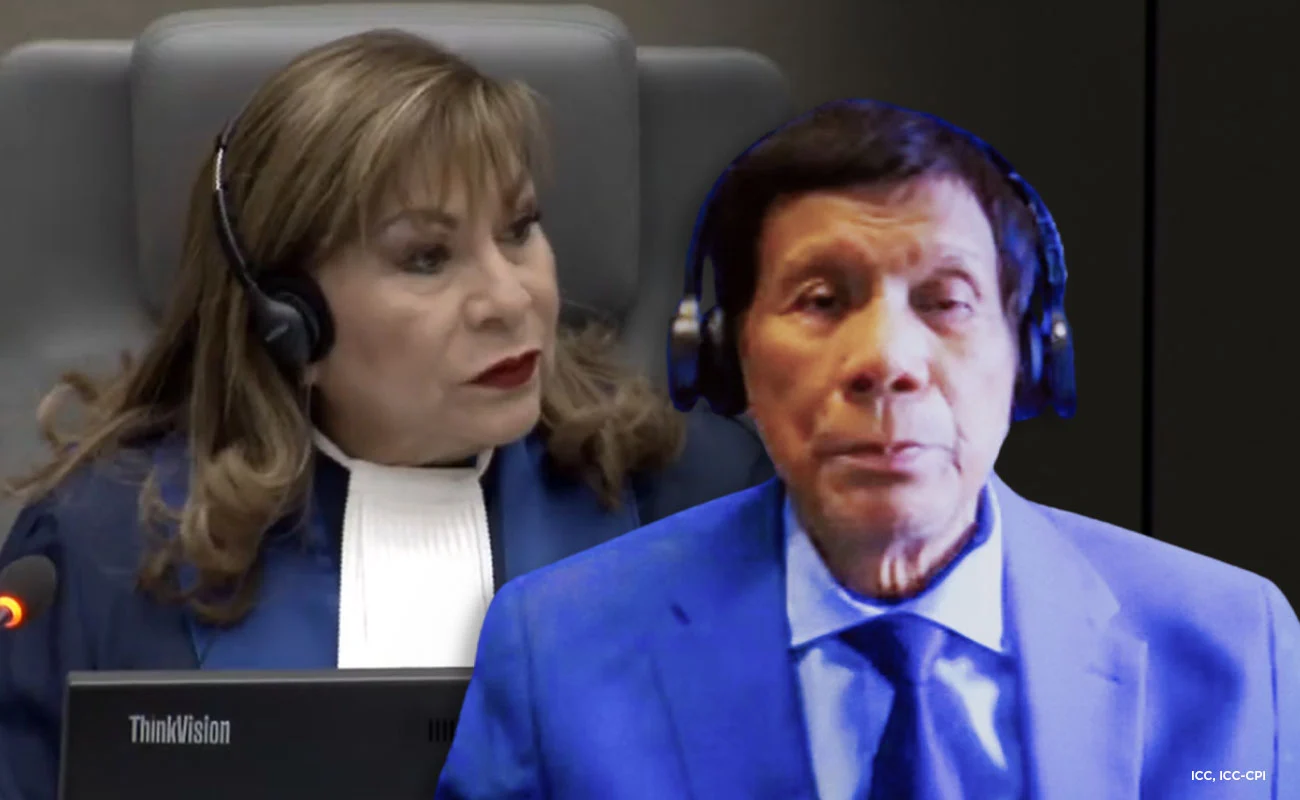
Presiding Judge Luz del Carmen Ibáñez Carranza delivered the Appeals Chamber’s ruling Wednesday, April 22, in open court in The Hague, Netherlands.
The chamber rejected all four grounds of the defense.
“In the present case, the Appeals Chamber by majority confirms the impugned decision,” she read.
It affirms an earlier ruling by the Pre-Trial Chamber, which found that the court retains jurisdiction over alleged crimes committed while the Philippines was still a member of the Rome Statute, the treaty that created the ICC.
The defense challenged the ICC jurisdiction after the Philippines withdrew from the treaty in March 2019.
Carranza said the statute’s purpose would be undermined if states could avoid scrutiny by withdrawing: “It would be incompatible with this object and purpose to enable a state party to evade this its responsibilities under the statute by depositing a written notice of withdrawal once it discovers that alleged crimes committed on its territory or by its nationals are being examined by the prosecution.”
The chamber also ruled that actions taken before the country’s withdrawal — including the preliminary examination — were sufficient to maintain court authority over the case.
Moving forward
With the jurisdiction challenge rejected, the case now proceeds to the next stage, where judges will determine whether to confirm the charges and advance the case to a full trial.
Duterte is facing charges of crimes against humanity, including murder and attempted murder, in connection with thousands of killings linked to his administration’s anti-drug campaign between 2011 and 2019.
Court records state that the killings were carried out as part of a widespread and systematic attack against civilians.
If charges are confirmed, the case could move to trial, a process that typically takes years at the ICC.
Duterte had requested to waive his appearance at the hearing.
‘All or nothing’
Ahead of the ruling, Duterte’s lead counsel, Nicholas Kaufman, described the decision as decisive for the case.
“It really is all or nothing,” Kaufman said, stressing that a ruling in favor of the defense would have ended proceedings.
“If the appeals chamber decides in favor of the defense, that’s the end of it — the end of the case,” he said.
Kaufman had said Duterte could have been released immediately if the court ruled in his favor.
“Obviously, if the judgment is in our favor, then the former president should be released immediately,” he said.
With the Appeals Chamber ruling against the defense, that scenario has been ruled out.
Test of ICC authority
Legal observers have described the case as a major test of the ICC’s authority, particularly in situations where countries withdraw from the court while investigations are ongoing.
In an earlier interview, ICC assistant to counsel Kristina Conti said the case presents an “issue of first impression” for the court, meaning it could set an important precedent.
She warned that a ruling rejecting jurisdiction could have opened a path for countries to evade accountability, while affirming jurisdiction would reinforce legal avenues for victims seeking justice.
Impact on victims, global cases
Families of drug war victims have closely followed the proceedings, with advocates saying the decision carries significant implications not only for Duterte’s case but also for international justice efforts.
A ruling upholding jurisdiction keeps the case alive and preserves a legal pathway for victims, while also signaling that withdrawal from the ICC does not automatically shield states or leaders from prosecution.