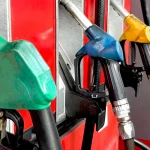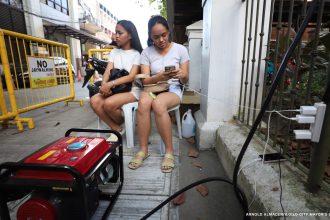


Metro Manila, Philippines – A comprehensive bill responding to the Middle East crisis has been filed in the Senate, proposing temporary regulation of the oil industry and additional taxes on the wealthy to fund expanded government assistance programs.
Senator Loren Legarda filed the “Bayanihan 3: Power to the People” bill on Monday, April 6, the first working day after the Holy Week break. The measure is reminiscent of the Bayanihan law during the COVID-19 pandemic.
The bill notes the state of national energy emergency declared by President Ferdinand Marcos Jr. and institutionalizes a whole-of-government response to the global oil crisis. It also grants the chief executive additional emergency powers to stabilize prices and ensure supply.
These powers include directing the Department of Energy (DOE), in coordination with the Departments of Finance and Trade and Industry and the Philippine Competition Commission, to “regulate, direct, and manage the oil industry, and to implement temporary and targeted energy supply management measures.”
The measures include temporary price controls, rationalization of distribution margins, mandatory reallocation of energy supply, and maintaining minimum strategic fuel and energy resource stockpiles.
Notwithstanding the oil industry deregulation law, the bill seeks to allow the president to direct the DOE, in coordination with the Department of Justice and other regulatory agencies, “to temporarily direct, control, or assume, whether partially or fully, the operations of any person or entity engaged in the importation, refining, storage, distribution, or sale of petroleum products, including related logistics and supply chain facilities.”
Specific powers include directing production levels, prioritizing supply to critical sectors, managing inventories, and coordinating or utilizing publicly owned utilities or businesses affected with public interest.
Relief measures
The bill outlines relief measures for consumers burdened by rising prices.
It directs the Energy Regulatory Commission to review electricity bills and enforce relief measures, including the suspension, deferment, or staggered collection of bill payments without interest, penalties, or other charges.
“No consumer shall be disconnected solely on account of nonpayment of any amount validly deferred, suspended, staggered, or placed under an ERC-approved installment arrangement under this Section,” the bill states.
It also seeks to require financial institutions to implement a minimum 30-day grace period for loan payments without interest or penalties. Government institutions such as the Social Security System, Government Service Insurance System, PhilHealth, and Pag-IBIG will study the temporary suspension or deferment of employee contribution premiums and loan moratoriums for at least 60 days. The Department of Trade and Industry is directed to study the feasibility of a 30-day suspension of commercial rent payments.
The Bangko Sentral ng Pilipinas will waive remittance fees for overseas Filipino workers.
The measure also seeks to mandate emergency fuel subsidies of ₱5,000 to ₱10,000 monthly for public utility vehicle drivers, small-scale farmers, fisherfolk, and agricultural transporters during the emergency
Meanwhile, the bill also seeks to suspend or reduce value added tax on essential medicines and basic commodities.
Senator Sherwin Gatchalian said he is also studying his version of Bayanihan 3, which he said would include up to ₱406 billion in aid programs.
Revenue augmentation
While providing relief to vulnerable sectors, the bill also proposes temporary increases in taxes on luxury goods and services, including luxury vehicles, jewelry, high-end fashion items, yachts, private aircraft, premium real estate, and similar items, with a VAT cap of 15%.
It further calls for a windfall levy on public utilities and other regulated entities operating in essential sectors such as energy, transport, and water.
The Department of Finance and other relevant government agencies will study the possibility of a “Solidarity Wealth Contribution,” or wealth tax, on ultra-high net worth people. Proposed rates range from 1% on net assets exceeding ₱1 billion to 4 percent on net assets above ₱4 billion.
“Revenues generated from measures validly authorized under this Act shall accrue to a special purpose fund to be used exclusively for emergency response measures, including but not limited to fuel subsidies, social protection, food security, energy stabilization, and
other interventions necessary to address the national emergency,” the bill states.
The bill mandates the suspension of non-essential government expenditures to reallocate funds toward crisis response.
The bill has an initial budget of ₱230 billion from savings in the 2025 budget, available funds in the current budget, and revenues from the Malampaya gas project.
Since Congress is on break, the bill can only be passed when the session resumes in May, although the chamber may opt to call a special session.