

Cebu, Philippines – China’s ambassador to the Philippines, Jing Quan, said he would leave the country “immediately” if President Ferdinand Marcos Jr. were to declare him persona non grata, as political pressure mounts in Manila over recent statements by the Chinese Embassy attacking Filipino officials amid tensions in the West Philippine Sea.
The remarks were made in a strongly worded statement issued Wednesday, Jan. 28, by the Chinese Embassy in Manila, responding to calls from some Philippine lawmakers to take action against Chinese diplomats for what they described as disrespectful and interfering public statements.
“There is but one person who has the authority to ask Ambassador Jing Quan to leave, and that is President Marcos,” embassy spokesperson Ji Lingpeng said.
“If he were to receive such notice from President Marcos, he would depart immediately,” he added.
Ji said Jing would leave “with immense pride and honor,” adding that the ambassador had fulfilled his duty to defend China’s interests and dignity.
The controversy follows a series of public exchanges between the Chinese Embassy and Philippine officials, including Coast Guard West Philippine Sea spokesperson Jay Tarriela. The embassy accused Filipino officials of spreading what it called “lies and smearing remarks” about China and its leadership — language that drew sharp reactions from Philippine lawmakers.
Several senators said the embassy’s statements crossed diplomatic lines and amounted to interference in the Philippines’ internal affairs. During Senate plenary deliberations, Senator JV Ejercito suggested that Jing be replaced, while Senate President Tito Sotto urged lawmakers to study the option of declaring Chinese Embassy deputy spokesperson Guo Wei persona non grata.
Ji appeared to challenge the lawmakers’ criticism, saying they could “simply declare Ambassador Jing Quan persona non grata” if they wished. He stressed that as ambassador, Jing bears responsibility for all statements and actions of the embassy.
The spokesperson highlighted Jing’s 29-year diplomatic career, including 23 years focused on US affairs, saying he had navigated some of the most difficult moments in China-U.S. relations, such as the closure of consulates, expulsions of diplomats, sanctions and trade wars.
“Throughout all of this, Ambassador Jing never blinked his eyes,” Ji said, describing such confrontations as part of a diplomat’s duty.
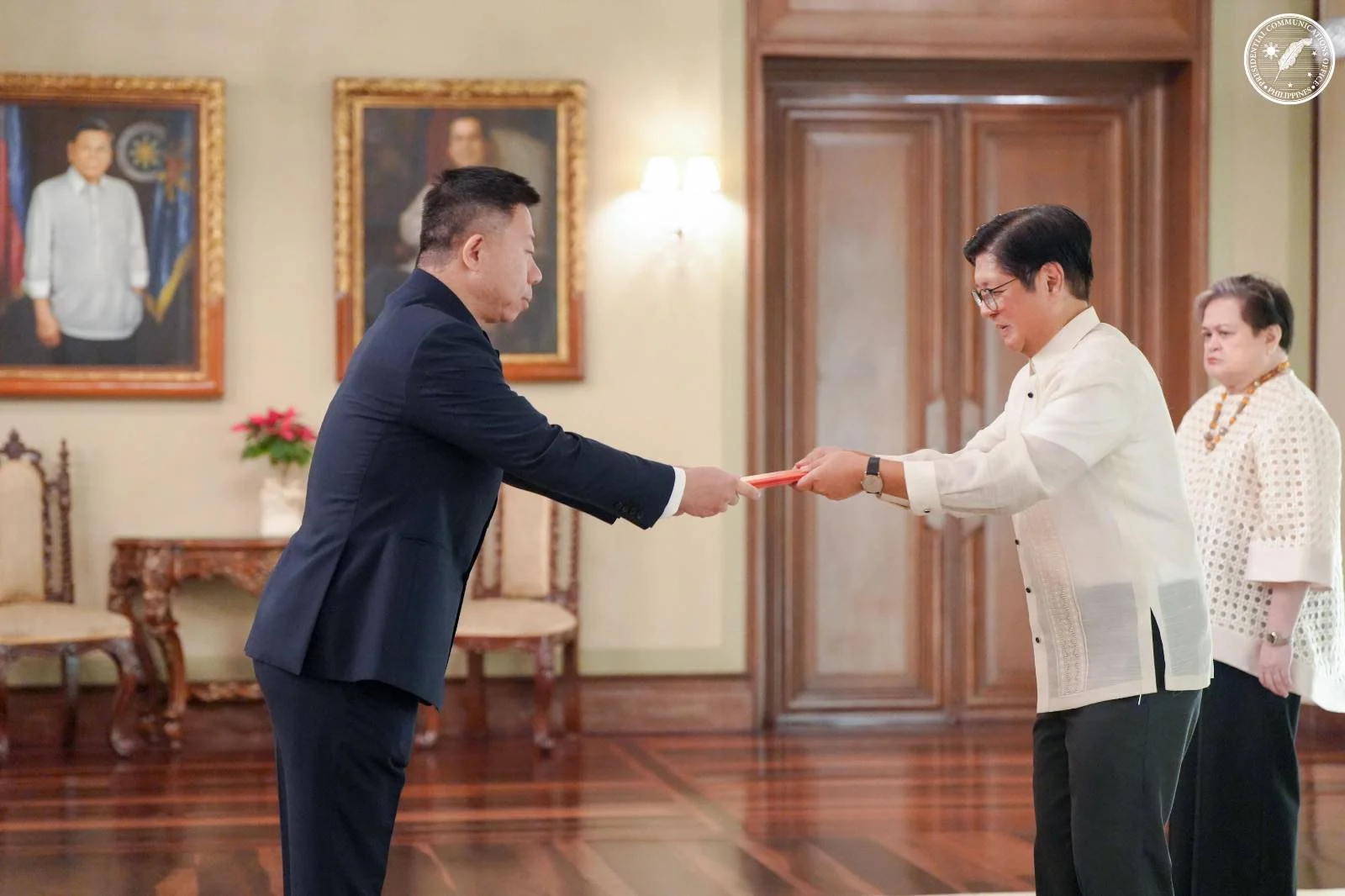
Ji also underscored that Jing was appointed by Chinese President Xi Jinping and formally accepted by President Marcos, noting that under diplomatic practice, only the Philippine president has the authority to expel a foreign ambassador.
The issue has also escalated at the local level. Earlier, the municipality of Kalayaan in Palawan, located at the forefront of the Philippines’ assertion of maritime rights in the West Philippine Sea, declared Jing persona non grata over what it described as violations of diplomatic protocol and affronts to Philippine officials.
A persona non grata declaration by a local government is a symbolic political statement expressing strong disapproval. The authority to expel a diplomat rests with the national government.
Ji acknowledged the growing calls but said the embassy would not be deterred. He added that if any Chinese diplomat were to be declared persona non grata, the entire 12-member media affairs and public diplomacy team should be included.
“As a team, we stay or leave, together,” he said.
He added that even if the embassy were to be closed, Chinese diplomats would continue to push back against what they described as slanders and smears against China “through various channels.”