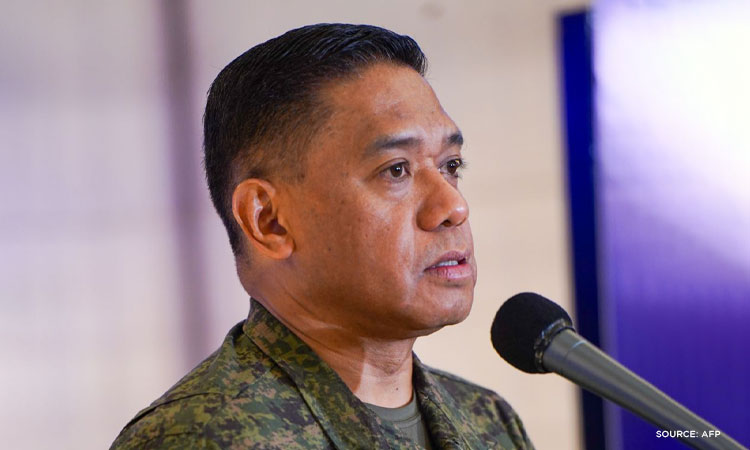


Manila, Philippines – The military, with its Corps of Engineers, can handle the finances and construction of infrastructure works within its camps and bases to safeguard quality and accountability, Armed Forces of the Philippines (AFP) chief Gen. Romeo Brawner Jr. said on Friday.
Brawner said there was a proposal in the last Senate budget hearing that the funds for the Tatag ng Imprastraktura para sa Kapayapaan at Seguridad (Tikas) projects be transferred to the AFP or the Department of National Defense. Military facilities like barracks, drainage systems, firing ranges and training facilities fall under the Tikas program.
“I am very much in favor of that para masiguro namin na walang magiging ghost project. Masiguro naming na talagang high quality ang mga projects,” Brawner told reporters.
[TRANSLATION: I am very much in favor of that to ensure that there will be no ghost projects. We can guarantee that the military projects will be of high quality.]
“Dahil puede namang gawin ng ating AFP, ng ating mga army, navy or air force engineers… kung di kaya ng ating mga engineers sa Armed Forces, seseguruhin namin na ang mga contractors na gagawa nito ay mahusay and proper ang pag-implement,” he added.
[TRANSLATION: Because we, the AFP, can do it, our army, navy and air force engineers… If our engineers from the armed forces could not build themselves, we will make sure that the contractors will be screened to be excellent and that they can implement properly.]
Tikas funds are, currently, directly released to the Department of Public Works and Highways (DPWH), which handles the procurement process from planning to bidding to construction.
“Yung Tikas projects ay hindi po naire-release yung pondo sa AFP [The AFP never handles the budget for the Tikas projects]. We are the end-user,” Brawner clarified.
Military infrastructure works that have been completed so far include the grandstand within the AFP headquarters in Camp Aguinaldo, and facilities at the 4th Infantry division of the army.
Tikas projects are divided into phases and booking them as completed are also done in phases, Brawner said.
“At the end of the year ang pino-proklama na completed is for the phase only,” he said.
[Translation: At the end of the year, phases completed are the only ones proclaimed as such, not the project in its entirety.]